
Updated:
A pet photo release form is a pet owner's signed consent to photos. The form names the pet, the owner and the photographer, and lists the uses the owner allows. Photographers, shelters and pet businesses use one, especially before putting an animal's image in ads.
This page explains what the release covers, when to use it, how it differs from other release forms, and how to fill out and sign each line.
Key facts

Build Your Document
Answer a few simple questions to make your document in minutes
Save and Print
Save progress and finish on any device, download and print anytime
Sign and Use
Your valid, lawyer-approved document is ready
A pet photo release form gives a photographer the owner's written permission to photograph or film a pet and to use the images for the purposes the form names. The form is also called an animal photo release or a dog release.
The document is a type of photo release form: the owner's consent to photograph the pet and use the images. The release is not a waiver of liability and does not cover injuries or damage; a risky activity calls for a separate release of liability form. The owner keeps the pet; the release records the uses of its pictures the owner agreed to.
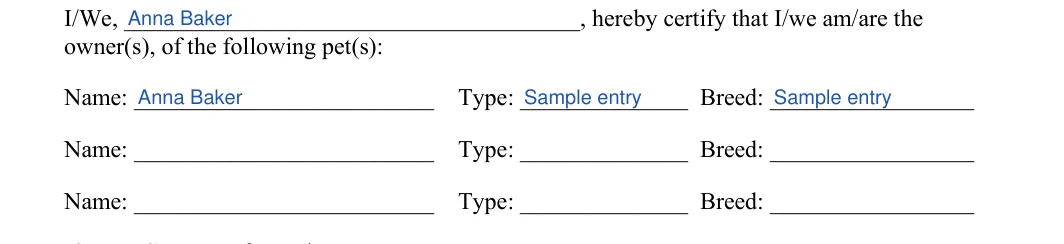
The pet section identifies each animal by name, type and breed, so the consent attaches to the right pet. Each row of the pet section has a Name, Type and Breed field. A household with several animals lists each pet on its own row, and unused rows stay empty.
The permission paragraph lists the uses the owner allows, such as advertising, website content, social media, a portfolio or a contest entry. A narrow list of uses keeps the owner in control. A broad list gives the photographer room to reuse the images later.
The release covers video only when its permission paragraph says so. A photographer who plans to film as well as photograph names both in that paragraph before the owner signs.
A pet photo release form does not guarantee the owner any payments or royalties for the pet's images. An owner who expects a fee or a share of sales settles that with the photographer before signing, in a separate agreement.
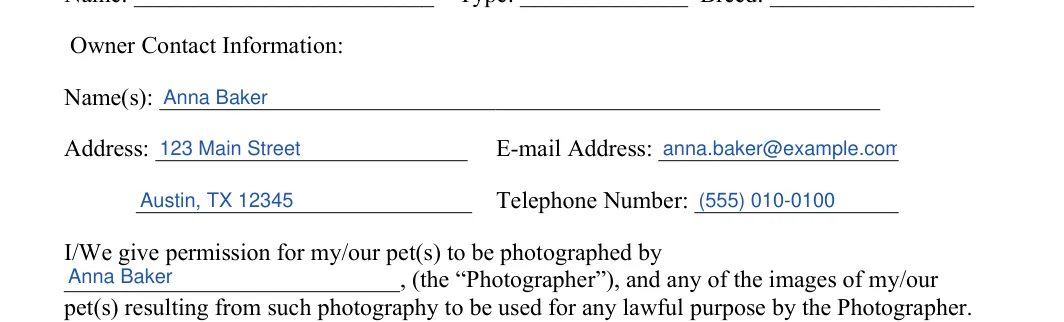
The Owner Contact Information block holds the owner's name, address, e-mail and telephone number. These details let the photographer reach the owner about a new use or a question about the images. The photographer's name sits in the permission paragraph, after the words I/We give permission.
A pet photo release is used whenever a pet's image will appear in public, such as an advertisement, a website, a printed brochure or a contest. Veterinary clinics and groomers often ask owners to sign one before posting patient photos online. Professional pet photographers use it to show client sessions in a portfolio.
Common situations for an animal photo release:
| Document Name | Pet Photo Release Form |
| Other Names | Animal Release, Dog Release |
| Avg. Time to Fill Out | 8 minutes |
| # of Fillable Fields | 20 |
| Available Formats | Adobe PDF |
A pet photo release covers the images of an animal, not injuries or damage during the shoot and not the image of a person. Each related release answers a different question.
| Document | What it covers | Who signs |
|---|---|---|
| Pet photo release | Use of a pet's photos and videos | The pet's owner |
| Photo release form (model release) | Use of a person's image | The person photographed |
| Release of liability form | The risks of an activity | The participant |
A photo with the owner in the frame calls for a model release signed by the owner as well. A shoot with a risky activity, such as horse riding, calls for a separate release of liability form for that activity, and the wording of that form can matter.
In Kansas, every written contract a domestic animal professional enters into with a participant for professional services, instruction or the rental of equipment, tack or a domestic animal must contain the statute's warning notice in clearly readable print (Kan. Stat. Ann. § 60-4004). In Ohio, a written waiver of liability for harm from an inherent risk of an equine activity must be signed by the participant or a parent, guardian, custodian or other legal representative, and must specify each inherent risk listed in the statute that the waiver covers (Ohio Rev. Code Ann. § 2305.321). A generic release of liability form may lack the wording these two sections ask for.
A pet photo release works best when both sides agree on purpose, parties, uses and copies before anyone signs. The owner and the photographer go through these points together:
The release starts from a purpose: promotion, filming, a portfolio or something similar. The photographer explains where the photos and videos will appear before the owner signs. The permission paragraph then reflects that purpose in plain words.
The release names both sides: the owner in the opening line and the photographer in the permission paragraph. Both sides talk through the shoot in advance, including the pet's temperament, who handles the animal and how long the session runs.
The owner's list of allowed photos and purposes shapes the whole release. An owner who wants limits writes them in, for example "website and social media only" or "no paid advertising".
The owner's signature completes the release. Before you start filming or taking pictures, ensure that the owner has signed the form and all the details included in the document are correct.
The Pet Photo Release is completed from top to bottom: the owner line, the pet rows, the contact and photographer lines, then the signature lines. Each step below names a part of the document and says what to enter. To fill in a PDF copy on screen, open it in the online PDF editor.
The screenshots under each step show the FormsPal Pet Photo Release template filled with sample entries in blue, so you can see where each answer goes. The names, addresses, dates and amounts are examples only.
The form has three rows for pets. If you have more pets, fill out a second copy for the extra animals.




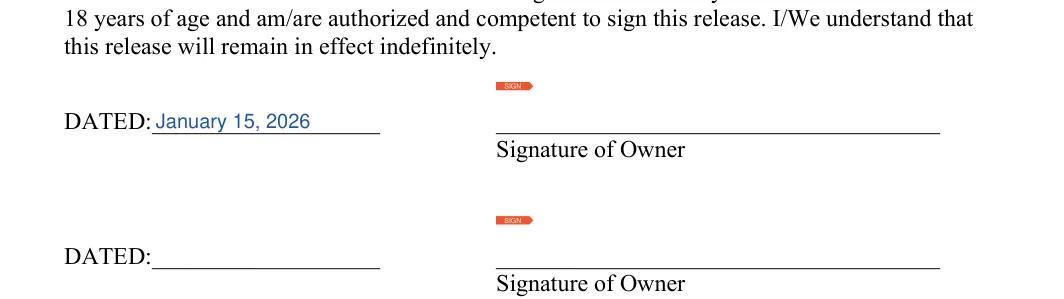

The owner's signature and date complete the pet photo release, and the photographer keeps a copy with the paperwork for the shoot. These steps take the filled-in form from the blanks to a signed agreement both sides hold.
A pet photo release form is a document where a pet owner gives a photographer permission to photograph a pet and use the images. It ends with the owner's signature and the date.
Either side can fill in the blanks, and the owner signs the finished form. Many photographers prepare the document before the shoot, then ask the owner to check every detail.
The template has three rows for pets, and each row has a Name, Type and Breed field. If you have more than three pets, fill out a second copy for the extra animals and have the owner sign it too.
The pet photo release gives the owner no payment or royalties for the images. An owner who wants a fee agrees on it with the photographer before signing, in a separate agreement.
A vet clinic uses a pet photo release to get the owner's written consent before posting a patient's photos on its website or social media. The clinic's name goes on the photographer line of the permission paragraph.
The average is about 8 minutes, because the template has 20 fillable fields that you can complete on a computer or print and fill in by hand.
General information, not legal or tax advice.
