
A parking lease agreement is a rental agreement that lets an owner rent out a parking space to a driver for an agreed time and price. Download our free parking lease agreement template or use the step-by-step builder to create a personalized document. The guide below covers the benefits and shows how to fill out the form.
Last Updated: October 2026. This guide is reviewed and updated regularly to reflect current law. If you notice an error or outdated information, please contact us.
Build Your Document
Answer a few simple questions to make your document in minutes
Save and Print
Save progress and finish on any device, download and print anytime
Sign and Use
Your valid, lawyer-approved document is ready
A parking space lease agreement is a document that sets the terms of a parking rental. The owner who leases out the space is the “Lessor,” and the person who rents it is the “Lessee.”
The lessor usually sets the terms of the lease:
If you find a good parking spot for your vehicle, you can prepare a document yourself and offer it to the parking lot owner. Most leases run for a month or a year. Daily or hourly leases are rare.
Here are some definitions that may be useful to know:
A parking space lease agreement can come in handy in both big cities and small towns. However, these agreements are more common for crowded urban areas, where it is almost impossible to find a good parking spot. Whether you are looking for a parking lot or have an extra space ready for rent, a parking space rental agreement can be profitable in both of these cases.
When you have an extra parking space you would like to rent out, the process has four steps: advertise the space, screen the tenants, prepare the agreement, and sign it. Follow them in order to rent out the space with fewer surprises.
1. Advertise
First, let people know that you have a parking space available for lease. Use different rental apps, websites, and social media. Describe your parking space in as much detail as possible, and add:
2. Filter the tenants
To avoid unpleasant surprises, do a thorough background check to see whether your potential tenants have criminal records or are known for committing some rental violations. For this purpose, you can use a state’s official government website or seek assistance from services like Checkr, MyRental, or Zumper.
Don’t hesitate to request a copy of the tenants’ bank statements to check the income and see if they have enough to pay rent.
3. Prepare the agreement
The next step is to set out the appropriate terms of the lease. Think through these basics:
These basic details should be identified before the lease begins. However, it is possible to change the agreement during the negotiations with a potential tenant.
4. Sign the agreement
After all the revisions are done, both parties must sign the agreement and notarize it, which gives the lessee permission to station the vehicle on the owner’s premises. Keep a signed copy for your records.
If you are looking for a parking space, work through three tasks. Research the area, compare rental apps, and negotiate the terms before you sign. Each task is explained below.
1. Research
Research is a good way to find the most suitable area, for example, near your workplace or residential unit. Doing a little background check of the lessor will also help to make the right choice. You can get in touch with previous tenants, ask for recommendations, and read some reviews about potential leased premises.
2. Use rental apps
Use different rental apps to find parking spaces in your area. Such apps allow you to compare rental propositions and find a good correlation between location and price, for example:
3. Negotiate the terms of the agreement
Although the terms of the agreement are mostly prepared by the lessor, you could negotiate some of them and reach a compromise. In any case, make sure that the rental agreement includes all the details about lease requirements, how to access the rental space, and whether there will be parking lot attendants. After signing the agreement, you will get a green light to place your vehicle on the leased premises.
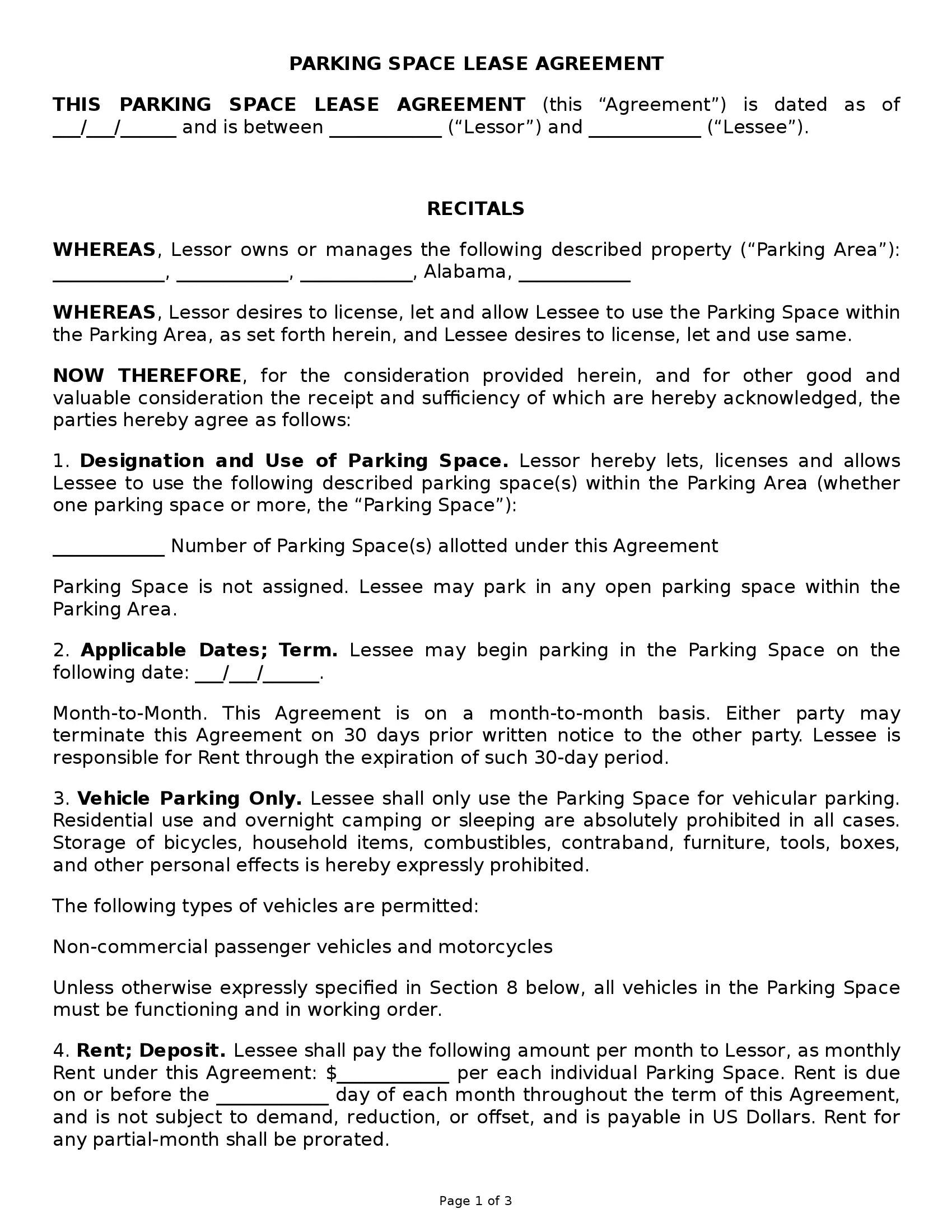
This parking lease agreement template is a fillable PDF for leasing one parking space or several spaces in the same lot. The Lessor and the Lessee can choose a month-to-month lease or a set term, and mark which types of vehicles are allowed.
| Document Name | Parking Lease Agreement Form |
| Other Names | Parking Space Agreement, Car Parking Agreement |
| Avg. Time to Fill Out | 12 minutes |
| # of Fillable Fields | 41 |
| Available Formats | Adobe PDF |

Leasing a garage instead? Our Garage Lease Agreement is made for leasing a garage for parking or storage.
A parking space rental agreement is simpler than other rental lease agreements. The steps below follow the FormsPal template on this page, in the order the form lists them. To type your answers, download the PDF and open it in the online PDF editor.
It is necessary to describe all the information about the lease duration, type of lessee’s vehicle permitted for parking, security deposit amount, and rental costs.
Step 1. Opening paragraph: date and parties
Enter the date of the agreement, then the names of the Lessor and the Lessee. At the beginning of the document, the “Lessor,” who owns the parking space, and the “Lessee,” who would like to rent the property, must be identified.

Step 2. Recitals: describe the Parking Area
Add the Parking Area on the bracketed line in the recitals. Give the address, the name or a description of the parking area, and say whether you are leasing one parking space or more.

Step 3. Designation and use of the parking space
Enter the number of parking spaces, then check the box that fits:
Step 4. Applicable dates and term
Enter the start date, then check one box: “Month-to-Month” or “Term of ___ months.” Add your initials on any Initial line next to your choice.
Step 5. Vehicle parking only
Check each type of vehicle you want to allow:
Step 6. Rent and deposit
Enter the monthly rent for each parking space, the day of the month the rent is due, and the security deposit amount. Write N/A if there is no deposit.

Step 7. Sections 5 to 7: requirements, towing, indemnification
These preprinted sections have no blanks. Read them together with the other party.
The agreement should contain legal requirements connected with the appropriate usage of the parking space, vehicle conditions, and the possibility and terms of towing the vehicle.

Step 8. Other terms and provisions
Write any extra terms on the lines provided, or write N/A if there are none.
Step 9. Contact information
Enter an address, phone number and email for the Lessor and for the Lessee. In the document, it is important to include the parties’ contact information, such as addresses, phone numbers, and emails. This information may be updated from time to time by written notice to the other party.

Step 10. Sections 10 and 11: read before signing
These preprinted sections have no blanks either. Read them with the other party before you sign.
Although a parking space rental agreement is governed by state laws, it is crucial to note some parties’ responsibilities. They include the non-liability of the lessor for any damage or theft to any vehicle or the contents of the vehicle in the parking area and the liability of the lessee for holding the parking area harmless. The only object that should be contained on the leased premises is the lessee’s vehicle.

Step 11. Signature blocks: Lessor and Lessee
Each party signs on the “By” line, then prints a name and title below it. Keep a signed copy for your records.
A parking lease agreement usually covers the points below. The FormsPal template has a place for each of them, so you can fill in the details one by one and keep the whole arrangement in one document that both sides can read, sign and save.
In some cases, you may have to warn your insurance company and make sure your insurance policy permits you to rent your parking space. You may also need to verify such a possibility with your mortgage company.
Yes, in case you own the property. Write down the rules of the driveway rent. For example, say during what time the lessee is allowed to use this parking space, and what kind of vehicles can be parked there. Also warn about the possibility of towing the vehicle.
However, if you rent the building, or if it’s a part of a homeowners organization, you may face some rental restrictions connected with a driveway space. Also, consider local regulations on this issue because renting out a driveway can be illegal (for example, in Portland, Oregon).
Any violation can make the owner remove the lessee from the rental area. These violations include sublease, storage of bicycles, household items, furniture, tools, and other personal stuff, or using rental premises for illegal activities. But whatever the decision could be, the lessor has to notify the lessee and warn them about the consequences.
Yes. The FormsPal builder asks a few simple questions and creates your parking lease agreement. You can save your progress, finish on any device, then download and print the document.
General information, not legal or tax advice.
