
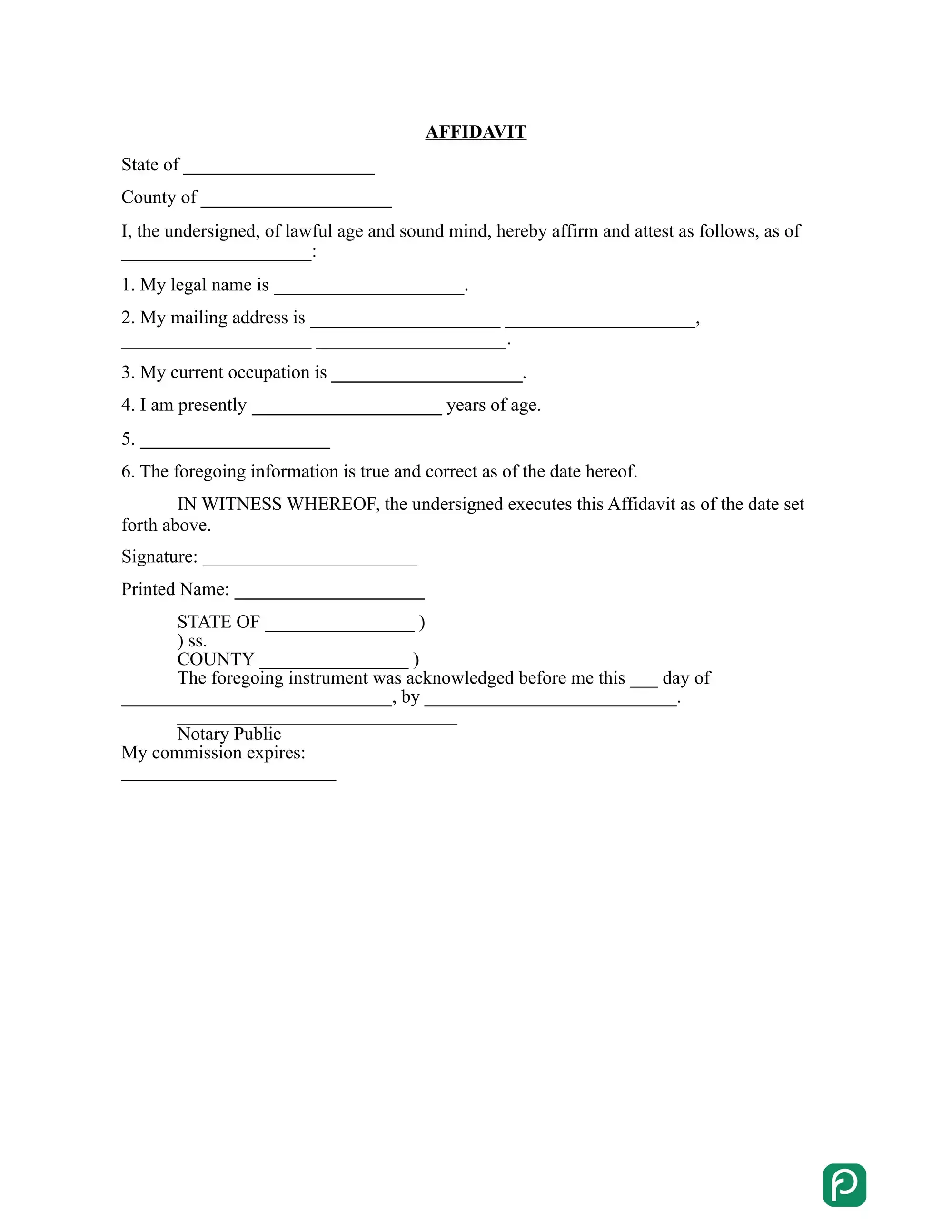
A Washington affidavit is a written statement of facts made under oath. Washington affidavit forms give you a ready layout for that statement. These documents are beneficial when a person must verify their identity, confirm their residence, or claim a property. As a rule, affidavits must be signed by the affiant (the person making the statement) and a notary public. Sometimes, it’s required to provide the signatures of the witnesses.
Last Updated: October 2026. This guide is reviewed and updated regularly to reflect current law. If you notice an error or outdated information, please contact us.
Build Your Document
Answer a few simple questions to make your document in minutes
Save and Print
Save progress and finish on any device, download and print anytime
Sign and Use
Your valid, lawyer-approved document is ready
An affidavit is a written statement of facts that the person making it swears is true. That person is called the affiant. People use affidavits to put facts such as an identity, a home address or the ownership of property into clear written form. A good affidavit sticks to facts the affiant knows firsthand and states each one in plain words.
A free affidavit template saves you from starting with a blank page. You fill in the names, dates and facts, and the finished document is ready to download and print. The FormsPal builder walks you through each part with short questions, so you never have to guess what to write next.
According to the statement of facts the affiant wants to confirm, there are official affidavit forms they may use in Washington. One of these forms is a real estate excise tax affidavit, indicating the total excise tax imposed on the property. You are recommended to read carefully through the form before filling it out.
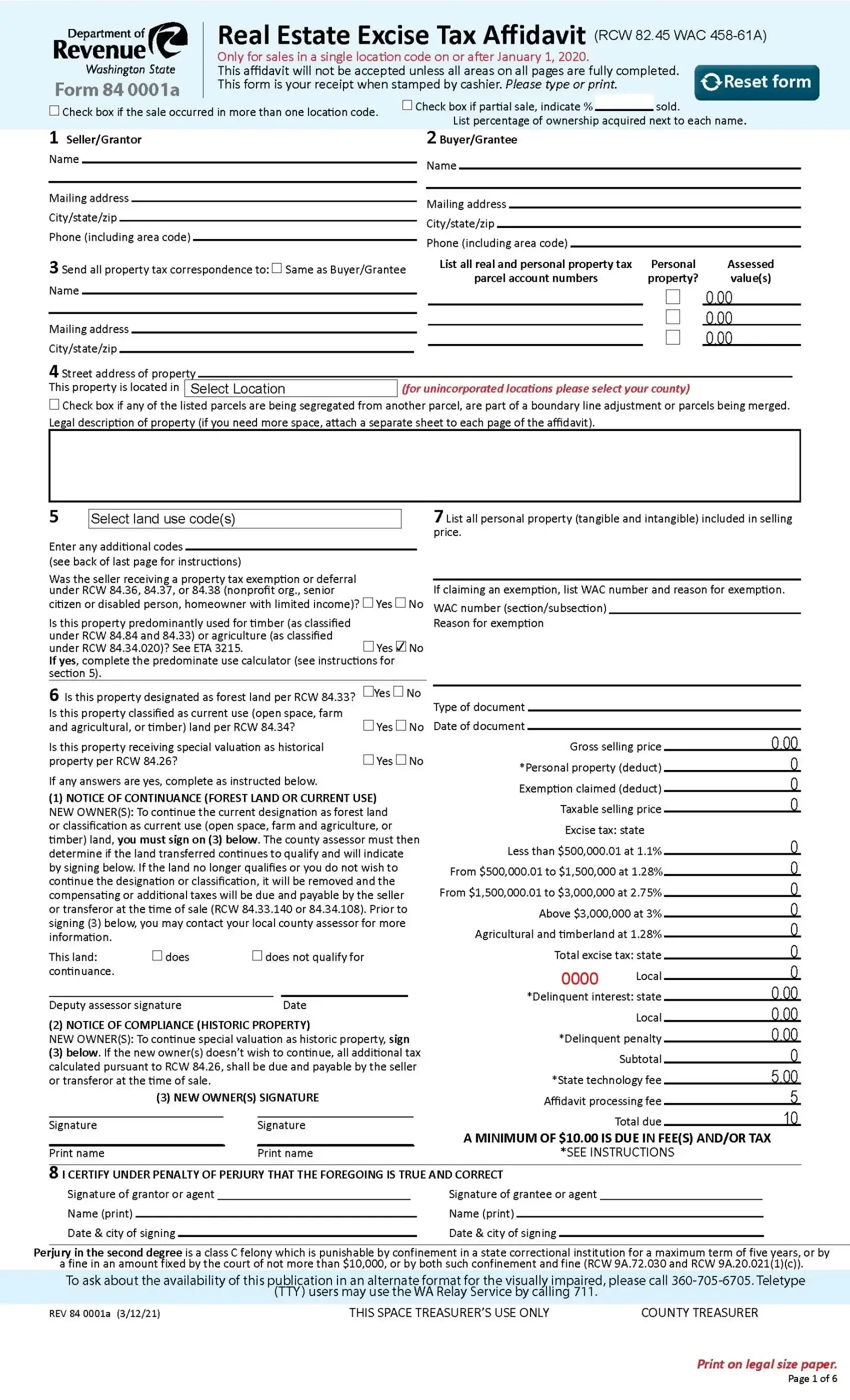
Washington Real Estate Excise Tax Affidavit reports the transfer of ownership of real property in Washington. This form is typically used by individuals who have recently transferred property ownership, such as through sale or inheritance. The form requires detailed information about the property being transferred, including the address, the date of transfer, and the names of the new and previous owners. Filing this form is crucial for determining the total excise tax imposed on real estate.
You can build your affidavit with the FormsPal form builder. It asks you simple questions and turns your answers into a ready document that you can save, print and share.
Each statement should say one thing in plain words. Short, specific sentences are easier to read and easier to check later. Compare the two examples below, which use made-up details.
Vague: Anna Baker has lived at the house for a long time.
Clear: Anna Baker has lived at 123 Main Street, Anytown, WA since June 2019.
Most affidavits follow the same simple layout, with the name of the person making the statement, a list of facts and a signature line. Gather the details below first, so you can finish the form in one sitting without stopping to look things up.
Small slips make an affidavit harder to read and harder to rely on. Take a few minutes to look over the finished document and watch for the points below before you print it.
Click Create My Document, answer the questions on screen, then save, download and print your affidavit. You can save your progress and finish later on any device, so there is no need to complete it in one sitting.
You can open the Washington Real Estate Excise Tax Affidavit from this page. FormsPal also has a page for the Washington Small Estate Affidavit.
An affiant is the person who makes the statement in an affidavit. The affiant swears that the facts in the document are true, so every statement should come from what that person knows firsthand.
A general affidavit is a written statement of facts that you build with the FormsPal builder. The Real Estate Excise Tax Affidavit is a separate form for reporting a property transfer, so it has its own page with its own fields. Read the form carefully before you fill it out.
General information, not legal or tax advice.
