A South Carolina boat bill of sale is a written record of a boat sale that names the seller, the buyer and the boat. A buyer's application for a certificate of title must include a bill of sale, so the document is part of the standard paperwork.[1.3] This free SC boat bill of sale from FormsPal covers the parties, the boat, the price and the signatures. Fill it in online or download the PDF.
Last Updated: October 2026. This guide is reviewed and updated regularly to reflect current South Carolina law. If you notice an error or outdated information, please contact us.
Create a free high-quality South Carolina Boat Bill of Sale online now!
Build Your Document
Answer a few simple questions to make your document in minutes
Save and Print
Save progress and finish on any device, download and print anytime
Sign and Use
Your valid, lawyer-approved document is ready
... or download your South Carolina Boat Bill of Sale Form as a PDF file
You might also read our guide to learn the basics of bills of sale.
South Carolina Boat Bill of Sale Requirements
A bill of sale is part of the application for a South Carolina boat title. Under Section 50-23-60(A) of the South Carolina Code of Laws, the person who acquires the boat signs the application, and the application must include a bill of sale.[1.3] The same section lists the details the application carries, so your bill of sale should give the same details.
According to Section 50-23-60(A), the application contains these items.[1.3]
The date of acquisition by the applicant, who is the buyer.
The name and address of the person from whom the watercraft or outboard motor was acquired, who is the seller.
The buyer's name, domiciled address with the county, date of birth and state-issued identification number.
For a boat, its make, model, model year, length, the principal material used in construction and the hull number, plus the manufacturer's engine serial number if it is an inboard.
For an outboard motor, its make, model, model year, horsepower and manufacturer's serial number.
The names and addresses of anyone with a security interest in the boat, in the order of their priority.
The South Carolina Department of Natural Resources (SCDNR) adds that all purchasers must be listed on the title.[2] If two people buy the boat together, put both names on the bill of sale as well.
Keep a signed copy for each side. The buyer will want one on hand when the titling application is filled in.
A boat sale does not end with the bill of sale. The seller hands over the certificate of title, the buyer applies for a title in their own name, and the seller tells the state about the transfer. These rules come from the South Carolina Code of Laws and from SCDNR guidance.
Section 50-23-55(C) puts the first duty on the seller:
No person may dispose of a watercraft or outboard motor subject to the titling provisions of this chapter without transferring to the person acquiring the watercraft or outboard motor a certificate of title reflecting the transfer of the watercraft or outboard motor.
In plain words, the title must be transferred to the buyer, and the buyer must receive a certificate of title that reflects the transfer.[1.2]
Some watercraft need no title at all. Under Section 50-23-30, watercraft documented by the United States Coast Guard, water skis, aquaplanes, surfboards, windsurfers and similar devices, and watercraft propelled exclusively by human power are not required to be titled.[1.7]
Steps for the Seller
Sign the title over. At the time of delivery, the seller must sign the assignment and warranty of title to the transferee (the buyer) in the space provided on the back of the certificate of title, and deliver the title.[1.4]
Release any lien. When a lien is discharged, the lienholder must note that fact on the face of the certificate of title or discharge the lien electronically through the system the department prescribes.[1.6]
Notify the state. An owner of a watercraft or outboard motor titled in South Carolina must notify the department within thirty days if ownership is transferred to another person or entity, transferred out of state, or otherwise disposed of.[1.1]
Steps for the Buyer
The buyer must file the application for a certificate of title within thirty days after the delivery of the watercraft or outboard motor. You can count those days with our deadline calculator.[1.5]
The SCDNR guidance for a boat bought from a South Carolina owner with South Carolina titles adds three points. All purchasers must be listed on the title. All the information on the back side of the titles must be completed and signed by the owner(s). Original titles from SC do not have to be notarized.[2]
Create a free high-quality South Carolina Boat Bill of Sale online now!
How to Write a South Carolina Boat Bill of Sale
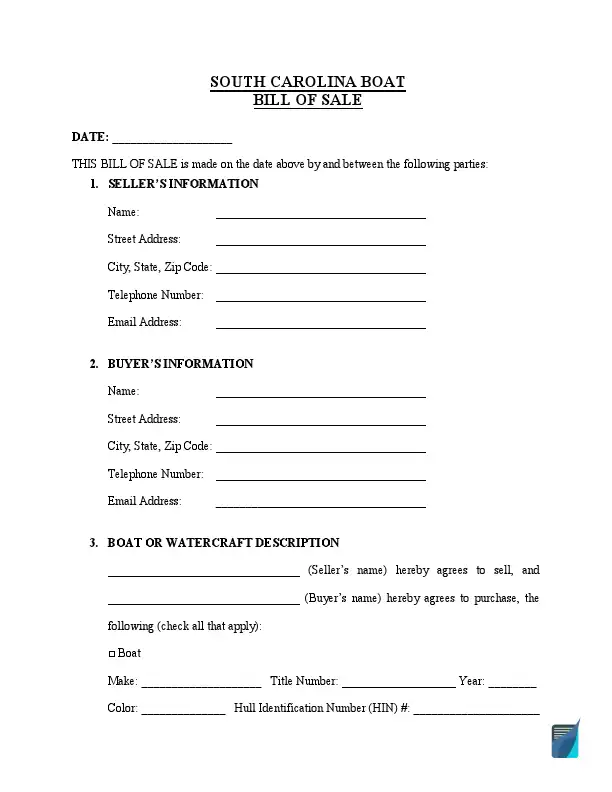
The FormsPal South Carolina boat bill of sale template has 14 parts, from the date line on page 1 to the notary acknowledgment on page 4. Work through them in order. If you download the PDF first, you can fill in the PDF with our online editor.
Page 1 holds the date, the seller, the buyer and the start of the boat description.
Page 2 covers hours, value, the trailer and motor boxes, the purchase date, the price and the payment method.
Page 3 has the taxes line, the miscellaneous provisions and the signatures.
Page 4 is the notary acknowledgment.
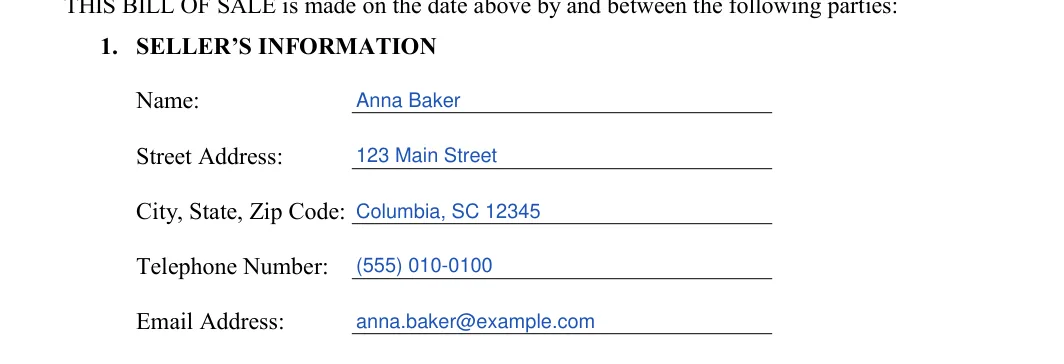
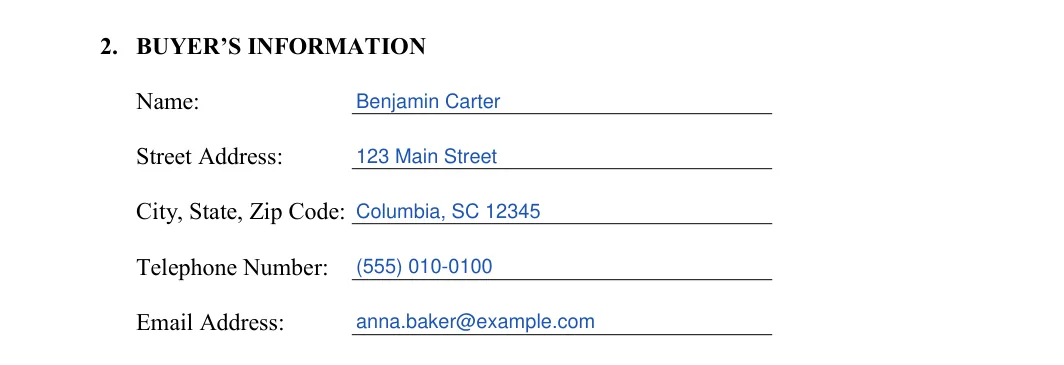
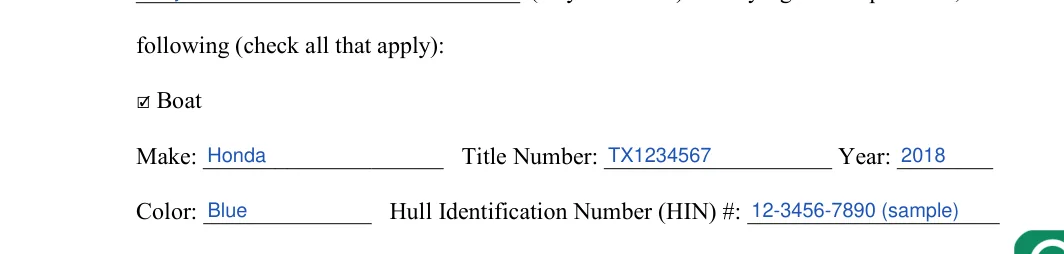
The screenshots under each step show the FormsPal South Carolina boat bill of sale template filled with sample entries in blue, so you can see where each answer goes. The names, addresses, dates and amounts are examples only.
Date of the bill of sale. Enter the date the bill of sale is made on the DATE line at the top of page 1.Step 1: sample entries, not a real document.
Seller's information. Fill in the seller's name, street address, city, state and zip code, telephone number and email address.Step 2: sample entries, not a real document.
Buyer's information. Fill in the buyer's name, street address, city, state and zip code, telephone number and email address.Step 3: sample entries, not a real document.
Boat or watercraft description: the parties. Write the seller's name and the buyer's name again in the sentence that opens paragraph 3.Step 4: sample entries, not a real document.
Boat details. Check the Boat box, then enter the make, title number, year, color and Hull Identification Number (HIN).Step 5: sample entries, not a real document.
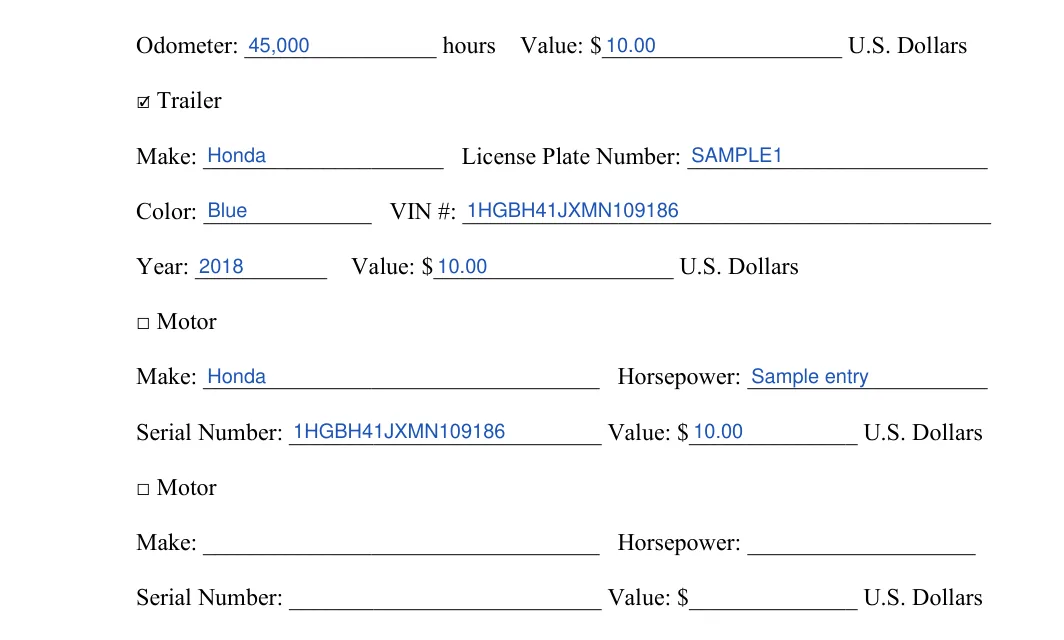
Boat hours and value. On page 2, enter the hours reading and the dollar value of the boat. The form labels the hours line Odometer.Step 6: sample entries, not a real document.
Trailer and motors. Check Trailer and enter its make, license plate number, color, VIN, year and value if a trailer is sold. Check Motor for each motor sold and enter its make, horsepower, serial number and value. Leave unused boxes blank.Step 7: sample entries, not a real document.
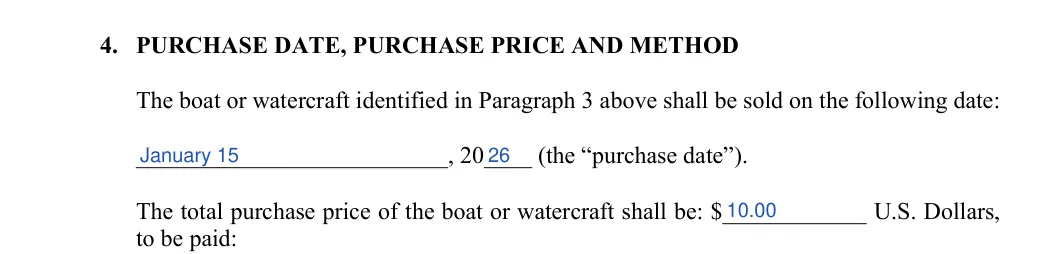
Purchase date and total price. Enter the purchase date and the total purchase price in dollars.Step 8: sample entries, not a real document.
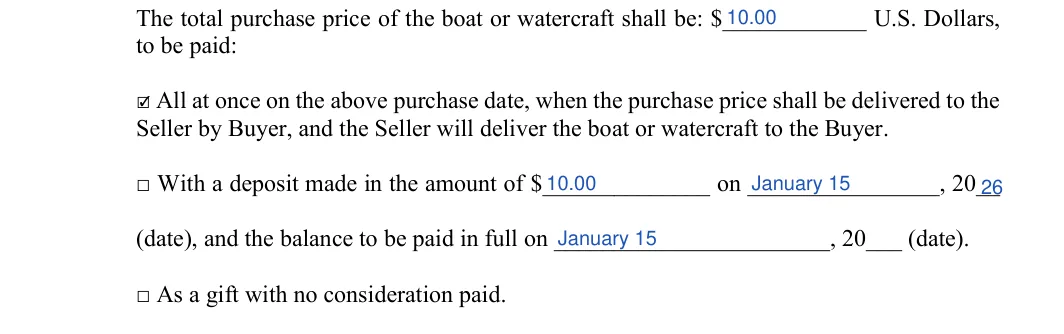
How the price is to be paid. Check one option: all at once on the purchase date, a deposit with the balance due later (add the deposit amount, its date and the balance due date), or a gift with no consideration paid.Step 9: sample entries, not a real document.
Payment method. Select one method: cash, check (add the check number), cashier's check or money order.Step 10: sample entries, not a real document.
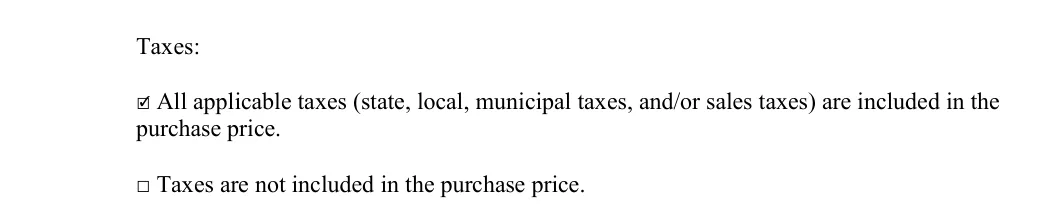
Taxes. On page 3, check whether taxes are included in the purchase price or are not included.Step 11: sample entries, not a real document.
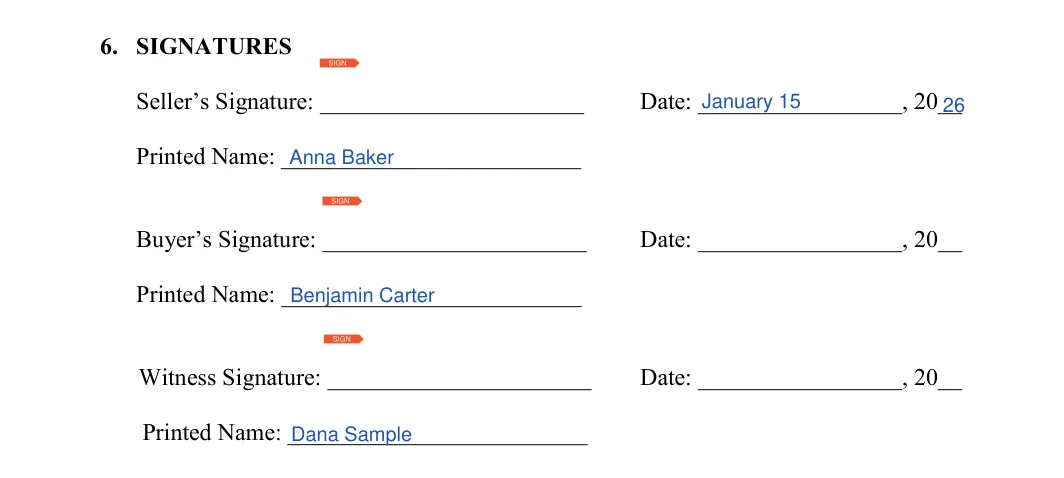
Miscellaneous provisions and signatures. Read paragraph 5 above the signature block. In it the seller confirms ownership and that there are no liens, and both sides agree the boat is sold as is. Then the seller, the buyer and the witness each sign, print their name and date their line.Step 12: sample entries, not a real document.
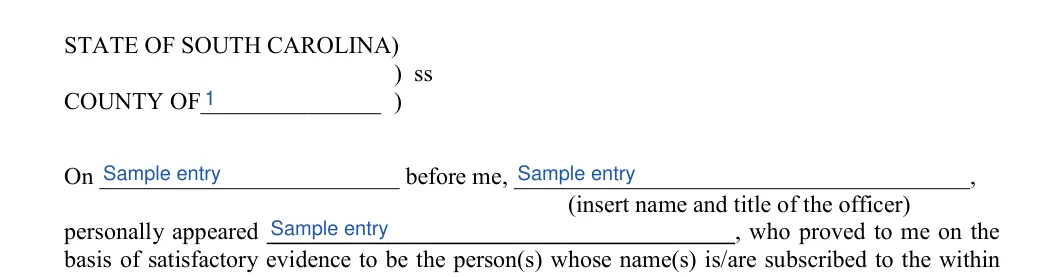
Acknowledgment: county, date and parties. On page 4, the county, the date, the officer's name and title, and the name of the person appearing go in the acknowledgment block.Step 13: sample entries, not a real document.
Acknowledgment: officer's signature and seal. Sign before the notary in the acknowledgment. The notary or other officer signs on the signature line and adds the seal.Step 14: sample entries, not a real document.
What to Check Before You Sign
Read the finished boat bill of sale line by line with the other side before anyone signs. The checks below come from the parts of the template and from the title papers described above, and they take only a few minutes.
Compare the Hull Identification Number (HIN) on the form with the one on the boat and on the certificate of title.
Use the full legal name of each person or business, and make sure the addresses are complete.
Check the sale date, the total price, how the price is paid and whether taxes are included.
If a trailer or motor goes with the boat, list each one in its own box.
Ask whether a lender still holds a lien on the boat, and get the release noted on the title before the sale closes.
These answers cover the paperwork for a South Carolina boat sale. The legal points come from the SCDNR guidance and the state code listed under Sources, so check them for the latest wording.
Whose signature is required on a bill of sale in South Carolina?
The SCDNR says all the information on the back side of the titles must be completed and signed by the owner(s).[2] That guidance is about the certificate of title. The FormsPal bill of sale has signature lines for the seller, the buyer and a witness.
What should a South Carolina boat bill of sale include?
It should give at least the details the titling application asks for.[1.3]
The date of acquisition.
The name and address of the seller.
The buyer's details.
A description of the boat, including its hull number.
The FormsPal form adds the price, how it is paid, taxes and the signatures.
How long does a buyer have to apply for a title after buying a boat in South Carolina?
The buyer has thirty days. The application for a certificate of title must be filed within thirty days after the delivery of the boat or outboard motor.[1.5]
Can I fill in a South Carolina boat bill of sale online?
Yes. Use the FormsPal online builder, or download the boat bill of sale in PDF format and fill in the PDF. Either way you complete the same 14 parts, from the date line to the notary acknowledgment.
Mara has been practicing estate planning and trust law in California since 2003, taking pride in helping clients of all backgrounds and asset profiles form a complete and customized estate plan. Her specialties are: estate planning, wills and trusts, trust and probate administration.