
Updated:
Get Form Now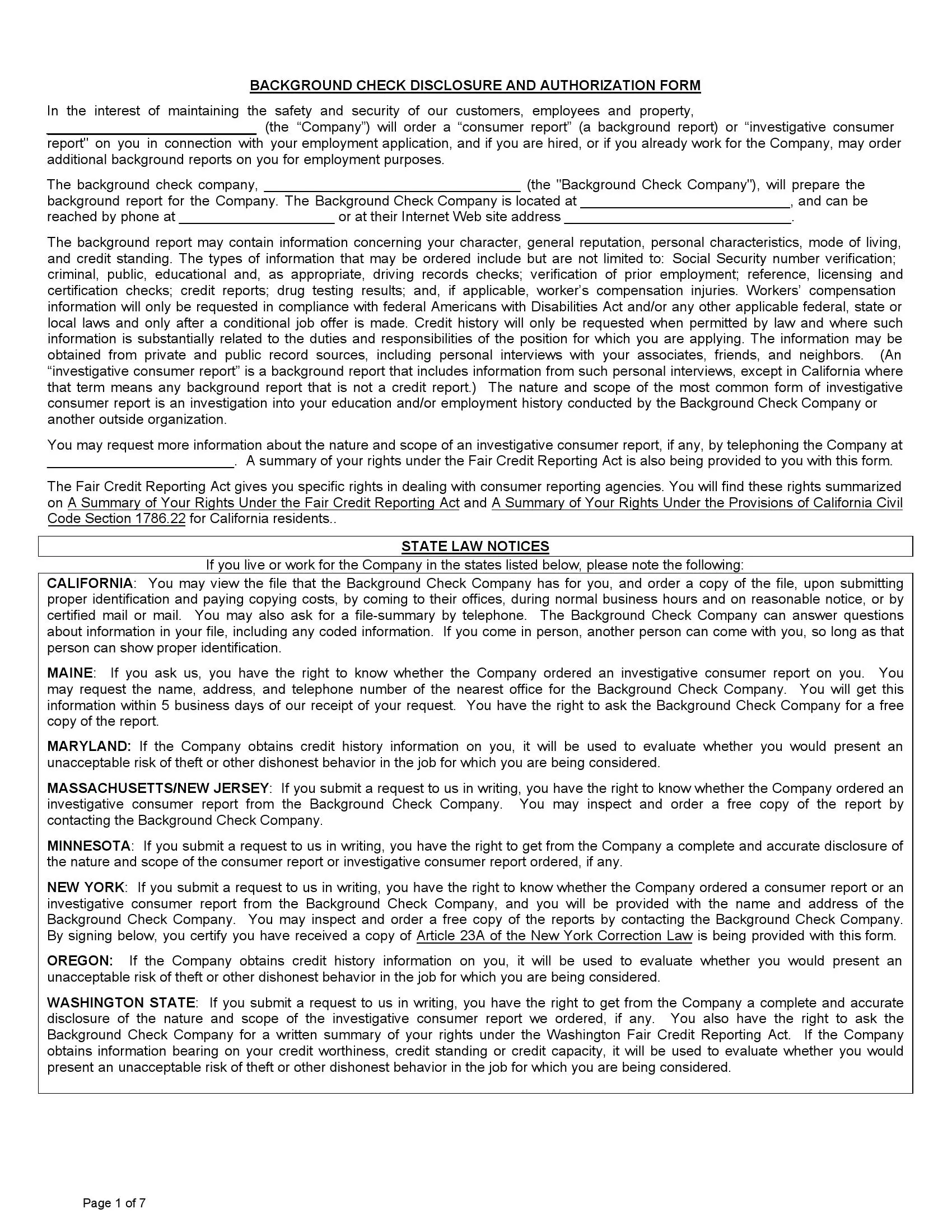
A background check form is a signed consent to a background screening. The form names the person checked, the party asking, and the screening company. Job applicants and rental applicants sign one before a hiring or lease decision.
On this page you get a free background check authorization template, a walk through every part of it, and plain answers to common questions about consent. Once it is signed, keep a copy for your own records.
Tenant Background Check Form: a document that allows landlords to conduct a thorough review of a potential tenant’s background.
Credit Report Authorization Form: a document that authorizes the release of your credit information to a third party.
A background check authorization form is a signed document in which a job candidate, tenant, or volunteer gives an employer, landlord, or organization permission to run a background check on them.
Employers and landlords use it to confirm what an applicant has told them. The check can pull a credit report, criminal history, past employment, or education details. It is one kind of consent form, limited to a screening.
The same document goes by several names in searches and on job applications:
Each name points to one idea: the written permission of the person being checked.
A typical form names these things:
An employer that orders a background report from a company in the business of compiling background information needs the applicant’s written permission first, under the Fair Credit Reporting Act, as explained in EEOC and FTC, Background Checks: What Employers Need to Know.
The same federal guidance lists the steps an employer takes before it gets such a report:
| Step | What the employer does | Source |
|---|---|---|
| Notice | Tells the applicant or employee in writing that the report may be used for job decisions; the notice must be a stand-alone document and cannot be in an employment application | EEOC and FTC, Background Checks: What Employers Need to Know |
| Permission | Gets the applicant’s or employee’s written permission; this can be part of the notice document | EEOC and FTC, Background Checks: What Employers Need to Know |
| Investigative report | Only when the report is based on personal interviews about character, reputation or lifestyle: tells the person of the right to a description of the nature and scope of the investigation | EEOC and FTC, Background Checks: What Employers Need to Know |
| Ongoing checks | Only when the permission is to cover reports throughout the person’s employment: says so clearly and conspicuously | EEOC and FTC, Background Checks: What Employers Need to Know |
| Certification | Certifies to the screening company that it gave notice, got permission, and will not misuse the information | EEOC and FTC, Background Checks: What Employers Need to Know |
Some states and municipalities also regulate how employers use background information, so the rules differ by place (EEOC and FTC, Background Checks: What Employers Need to Know).
Federal rules also bar checking an applicant’s background because of race, national origin, color, sex, religion, disability, genetic information, or age (40 or older) (EEOC and FTC, Background Checks: What Employers Need to Know).
The steps above come from federal guidance written for employers (EEOC and FTC, Background Checks: What Employers Need to Know). For a rental application, use our tenant background check form.
A background check is usually run when a person applies for a job, a professional license, a property purchase, or a rental, and the other side wants to confirm the person’s identity and past.
Most commonly, a person is asked to fill out the form when applying for:
How far the screening goes usually depends on the role or situation. Most companies verify the candidate’s education, professional license, and employment history.
A role that handles money often adds a credit history check. A security role often adds a criminal history check. If more than one kind of check will run, the form lists each one, so the signer knows what they agree to.
The three most common types of background check are employment screening, an FBI criminal history check, and tenant screening, and each one pulls a different mix of a person’s history.
An employment background check verifies a job candidate’s work history, education, and licenses before an offer becomes final. The employer often contacts past employers or coworkers. For some roles it adds a credit or criminal history check.
An FBI criminal background check is a federal-level search of a person’s criminal history across the country. If a form asks for one, ask the requesting party why the role needs it.
A tenant background check, also called a rental background check, lets a landlord review a rental applicant’s credit report and criminal history before signing a lease. It helps the landlord choose a tenant who pays rent on time and looks after the property. For this case, use the tenant background check form.
A background check consent form includes the signer’s identity details, the requesting party, the screening company, the kinds of checks allowed, and a signed and dated line of permission.
The template on this page follows this order: the disclosure first, then the requesting party and the screening company, then your permission and personal details.
The applicant signs this template to give the employer written permission to do the background check (EEOC and FTC, Background Checks: What Employers Need to Know).
Follow these five steps to fill it out, and keep every page of the form together.
Step 1. Get the form
Download the template from our website. Read the background check disclosure part so you understand the conditions and nature of the consent.
Step 2. Identify the issuing party
Enter the name of the organization that requests the background check, the party the employee gives permission to. At the bottom of the first page, the employer must type in their contact number so that the applicant can get in touch for more information.

Step 3. Specify the background check provider
On the upper side of the document, you must provide the complete information regarding the company that will conduct the background check. These details include their location, website address, and contact number.

Step 4. Grant authorization
On the second page, the employee must provide their full name, including maiden or other names, and the period they lived under them. If the template offers a box for a free copy of the report, tick it if you want one. At the bottom of page two, leave a signature and the date when the form is completed.
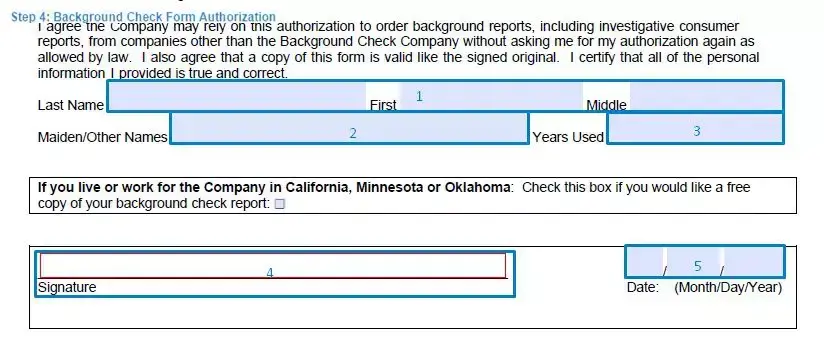
Step 5. Provide the personal information
Fill in the personal details the form asks for so the check can go ahead. Have these ready:
(Include street address, state, and zip code of all temporary and permanent places of residence among all the states).
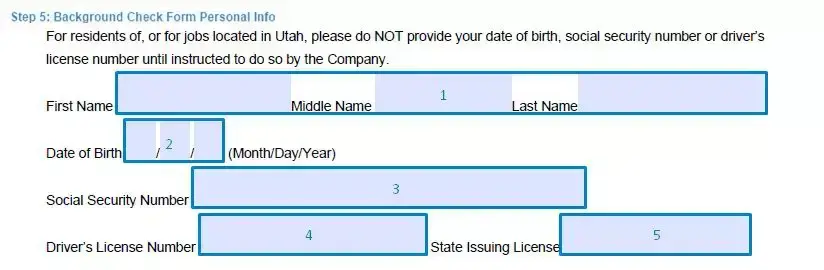
After you sign the background check form, the requesting party passes your details to the screening company, which gathers the report and returns it to the employer or landlord.
If an employer plans to reject you based on a report from a screening company, it first gives you a notice with a copy of the report and “A Summary of Your Rights Under the Fair Credit Reporting Act” (EEOC and FTC, Background Checks: What Employers Need to Know).
After such a decision, the employer tells you the name, address, and phone number of the company that sold the report, and that this company did not make the decision (EEOC and FTC, Background Checks: What Employers Need to Know).
That notice also tells you of your right to dispute the accuracy or completeness of the report and to get an additional free report from the reporting company within 60 days (EEOC and FTC, Background Checks: What Employers Need to Know).
Read your copy carefully. If a detail in it is wrong, contact the screening company named in the notice.
Yes, in everyday use a background check release form, a consent form, and an authorization form all mean the signer’s written permission for a screening. The wording differs between forms, so read what each one allows before you sign.
An employer that gets a background report from a company in the business of compiling background information needs your written permission first (EEOC and FTC, Background Checks: What Employers Need to Know). Read the disclosure so you know which checks you allow.
Only if it says so: permission covers reports throughout your employment when the authorization states this clearly and conspicuously (EEOC and FTC, Background Checks: What Employers Need to Know).
Read the disclosure part of the form first. Then make sure your name and contact details are correct and that the organization named on the form is the one you expect. Add your signature when everything looks right.
Write your full name first, then add the rest in this order:
Keep a signed copy for your own records and give the original to the organization or landlord who asked for it. The screening process can then begin. If a detail changes, such as your address, let them know so the information stays accurate.
General information, not legal or tax advice.
