
Updated:
A child medical consent form is a parent's written permission for treatment. It names a trusted adult, such as a grandparent or coach, to approve care in your absence. Parents often sign one before trips, daycare and time with sitters, especially when a child has allergies.
On this page you can create the form online or download a printable template, follow the fill-out steps field by field, and find answers on signing, sharing and ending your consent.
Build Your Document
Answer a few simple questions to make your document in minutes
Save and Print
Save progress and finish on any device, download and print anytime
Sign and Use
Your valid, lawyer-approved document is ready
A child medical consent form is a signed authorization in which a parent or legal guardian names another adult to approve medical treatment for a minor while the parent is away. The form gives a doctor, nurse or school a named person to ask before care starts.
You can name any adult you trust: a grandparent, a nanny, a babysitter, a teacher, a coach or a close friend. That person speaks for your child at the clinic until you can be reached.
You may also see this document called a consent to treat a minor form, an authorization to treat a minor, a Minor Medical Authorization Form, a Child Medical Release Form, or a Caregiver Consent Form.
The form covers medical decisions only. It does not hand over custody, school decisions or money matters, and you can end it early.
A consent to treat a minor form helps whenever your child stays with an adult who is not a parent or guardian, such as a teacher, coach, sitter or grandparent, and that adult may have to take the child to a doctor. A clinic, school or camp may also ask for one.
Without the form, clinic staff often try to reach a parent before routine care starts. A signed form lets the caregiver answer their questions right away. These are the most common cases:
Give medical consent for your child by choosing one caregiver, writing down the child's health details, setting start and end dates, and signing a form that the caregiver carries. Each step keeps the form clear for the doctor, nurse, or school that reads it:
This page lists no state rules on who may approve a minor's care for an absent parent, because we print a rule only with a link to its official source.
What helps in every case is a form that is complete, signed, dated and easy for staff to read.
For a long absence, or when the caregiver also needs to handle school and other decisions, look at a power of attorney for a child instead.
Before you rely on a signed form in a new place, ask the clinic or school what it accepts.
Fill out the template in order: date and parent name, the people involved, the dates, the child's health details, insurance, and your signature. Download the PDF from this page, then fill it in online or print it. These six steps walk you through each part of the form. Keep your child’s medical details and insurance card nearby before you start:
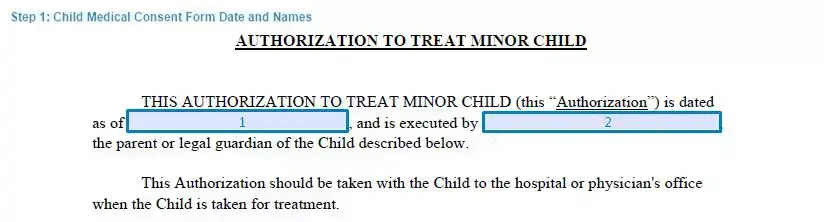
Step 1: Fill in the Authorization Date and Applicant’s Name
Enter the date you sign the form and the name of the parent or legal guardian who gives the consent.
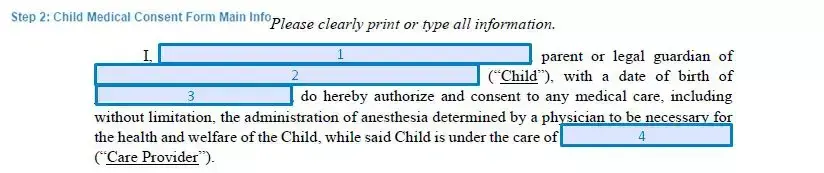
Step 2: Provide Child, Parent, and Medical Care Provider Details
This part names everyone on the form. Enter the child's full name and date of birth, then your own name and contact details as the parent. Under Care Provider, write the full name of the adult who will look after your child while you are away.
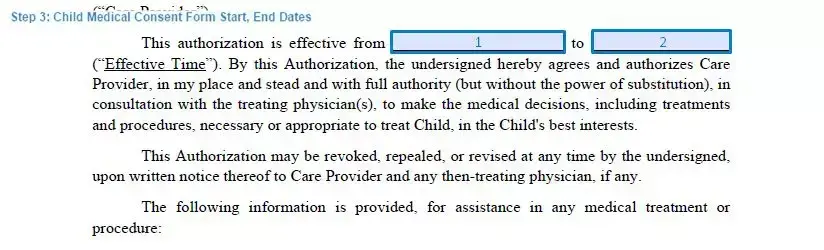
Step 3: Specify the Effective Time
Write the start date and the end date of the consent. Match them to the trip or the care period, so the form does not stay open longer than you need.
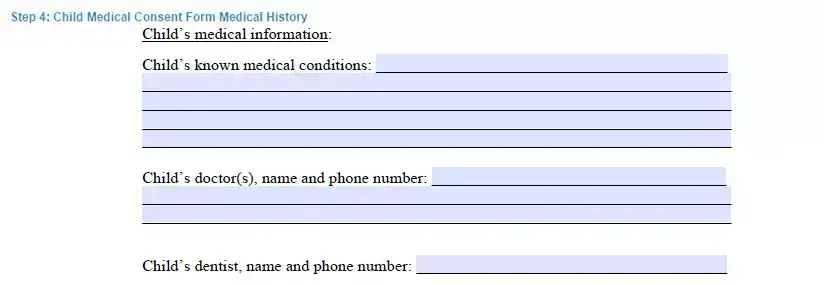
Step 4: Include the Child’s Medical Information
List the child's health details that a doctor would ask about first:
Use current details. An old medication list can mislead the person treating your child.
Step 5: Fill in the Insurance Information
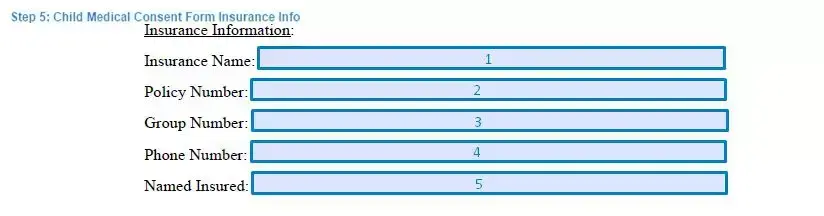
Copy the insurance company's name, the policy number, the group number, the insurer's phone number and the name of the insured person from the card. The clinic uses these details to bill the right plan.
Step 6: Authorize and Sign the Form
Sign the form, print your name under the signature and write the date. Read the whole form once more before you sign it.

A child medical consent form fits a short absence where only health decisions are at stake; other documents fit trips abroad, school outings and longer care arrangements.
This form covers treatment on a trip, but it does not show that you agree to the trip itself. Carry a child travel consent form as well. If the travel consent already has a medical release section, that section may be enough on its own.
This form is made for that case: it lets the adult who is with your child approve care when no parent can be there. A signed form spares the clinic the wait to reach you.
The answer depends on who will read the form and what that office accepts. Ask the provider or school whether it wants the form notarized.
Absolutely not. The child medical consent form only grants a designated person temporary rights to make medical decisions on behalf of your child.
To end the form before its end date, tell the caregiver and your child's providers that you withdraw it, in writing if you can. Ask them to return or destroy their copies.
Fill out a separate form for each child, so every form carries only that child's name, date of birth, health history and insurance details. One child per form keeps it clear for clinic staff.
Give a copy of the signed form to everyone who may need it in an emergency:
Keep the original with your own papers.
General information, not legal or tax advice.
