
A child travel consent form is a signed letter that lets a minor travel without a parent or legal guardian. When a kid goes on a trip without a parent or legal guardian, migration officers can require to show a letter of consent. This document is a preventive measure against an increasing number of child abduction cases, so customs can ask you to clarify the situation even if you’re a single parent. Use our free child travel consent template to create yours in minutes.
Last Updated: October 2026. This guide is reviewed and updated regularly to reflect current law. If you notice an error or outdated information, please contact us.
Build Your Document
Answer a few simple questions to make your document in minutes
Save and Print
Save progress and finish on any device, download and print anytime
Sign and Use
Your valid, lawyer-approved document is ready
Undoubtedly, it may be an unpleasant surprise when the immigration officer requests the child travel consent form from you, but this document protects your child from being abducted and trafficked. U.S. Customs and Border Protection (CBP) recommends having consent to travel for both domestic and international travel. It can be handy if you and your child won’t have the same surname for school trips or sports events.
There are no explicitly strict rules regarding minors traveling between states within the USA. Usually, there is no need for a parental consent form if the child travels within the state or country by car, bus, or train, besides the cases when the court restricts the ability to travel. For example, after the divorce, the court may forbid a child to travel with a parent without another parent’s consent.
Moreover, airlines can require check-in documents and a consent letter for traveling.
Consider the child is about to go on a cruise with their grandparents. Should the grandparents bring travel consent letters? It depends on the type of cruise they’re about to take. You are highly encouraged to clarify this information with the travel agency or cruise staff in most cases.
A child travel consent form will be required for traveling abroad, including air, land, and cruise.
International travel requirements for children traveling can differ from country to country, so you’re strongly encouraged to check entry requirements from the embassy. In some cases, you will need a child travel consent template translated into the local language and notarized.
The child travels with a non-parental guardian. A travel child consent form is required if people who accompany a minor during vacation or travel are not their legal guardians. For example, during a school trip, tournaments, or sports event, the responsibility for the child lies on the adult who travels with them.
Usually, the parent or guardian will have to provide a child travel consent form for a school trip or if the child travels abroad with a friend of a family, family members, grandparents, or other adults who don’t possess parental authority.
The child travels with only one parent. Many parents can be pretty bewildered by the fact that their presence is not enough for crossing the border with their child. However, there are many situations of parental kidnapping where one parent takes a child abroad after a divorce or separation and thus violates the other parent’s custodial rights.
To prevent it, the U.S. customs verify if both parents are acknowledged and agree for the child to go abroad. A travel child consent form is a document that a parent must have if traveling alone with their kid, regardless of their marital status.
You need to get written permission from a second parent even if you’re divorced, were never married, or have shared custody over the child. Every non-accompanying person who obtains custody rights or parental authority over the minor must sign the child travel consent form.
Thus, be sure you have a valid child travel consent signed by the other parent. If you have sole custody, make sure you carry the notarized legal custody documents proving it for travel.
Even though this form is rarely required for travel within the US, foreign officials can be vigilant regarding its content and deny the form if it’s filled out incorrectly. You can be asked to show the travel consent form both when you’re crossing the border of the US (leaving or returning to the state) and entering a foreign territory.
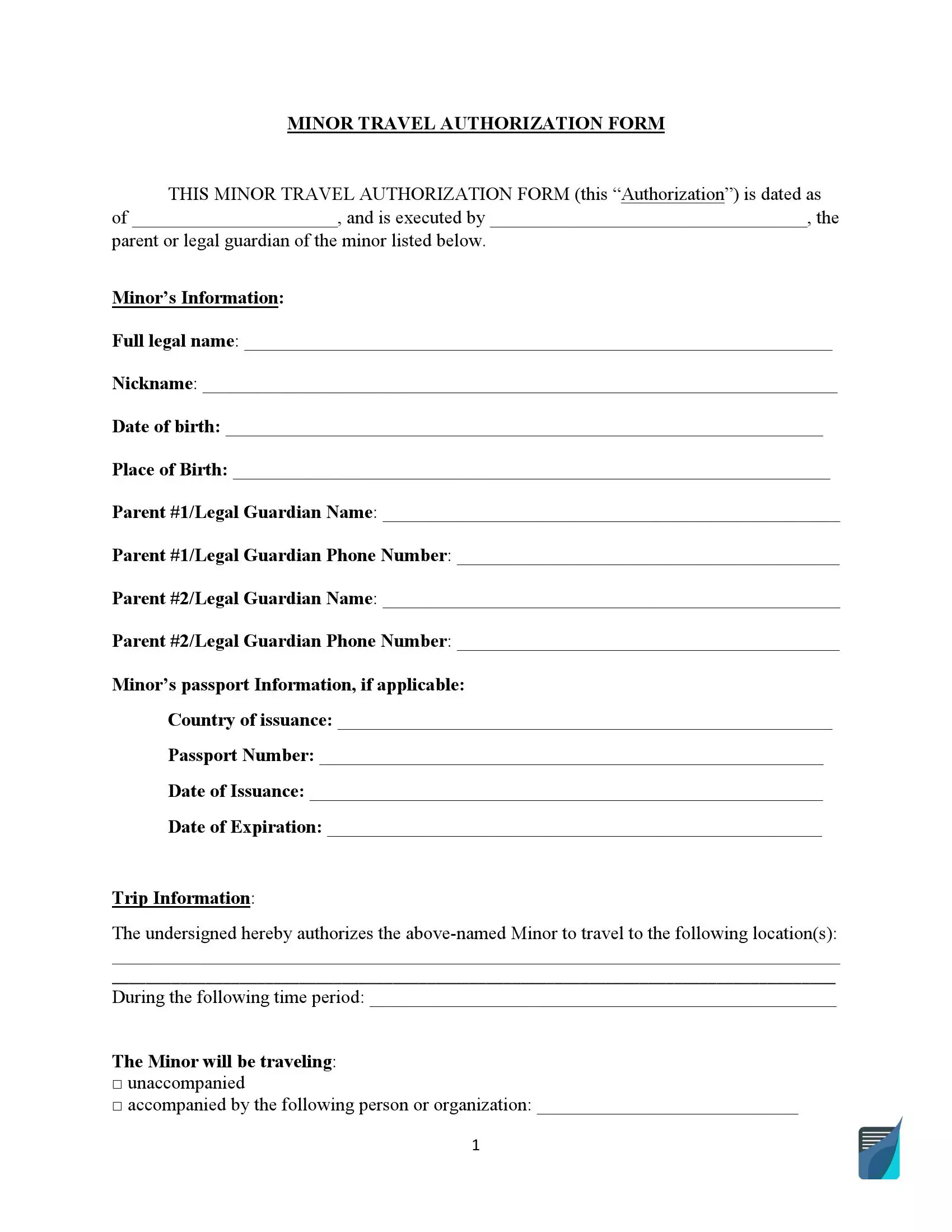
The US government doesn’t offer a common template for child travel consent. Make sure the child travel consent form is made properly and includes all the details listed below:
If you need a template for parental permission, you can find a free child travel consent form on our website.
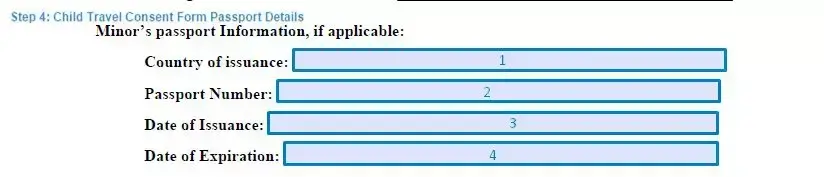
Now, when you know the essentials that must be included in the travel consent for a minor, it’s time to fill out the template. If you’re afraid to make a mistake, here is a quick guide to follow.
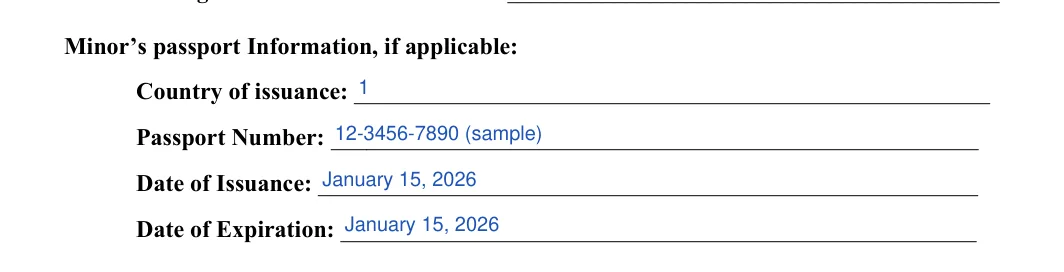
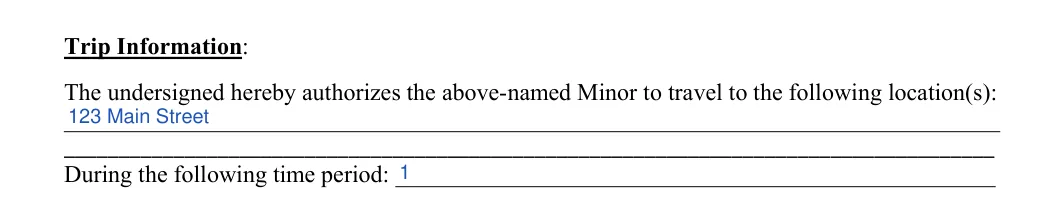
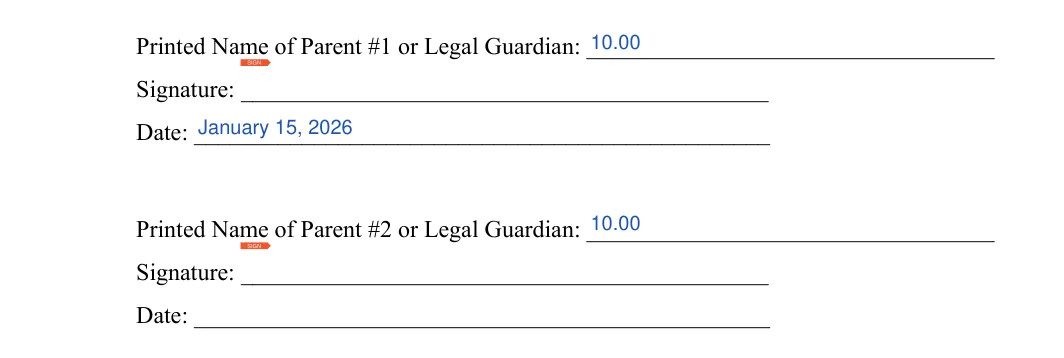
The screenshots under each step show the FormsPal Child Travel Consent template filled with sample entries in blue, so you can see where each answer goes. The names, addresses, dates and amounts are examples only.


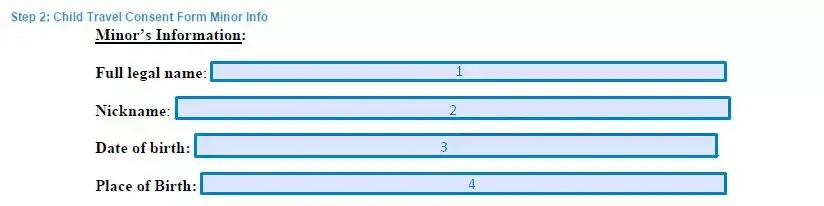
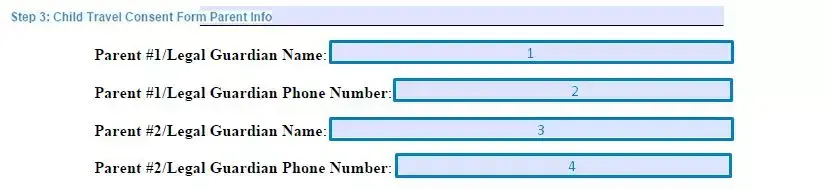
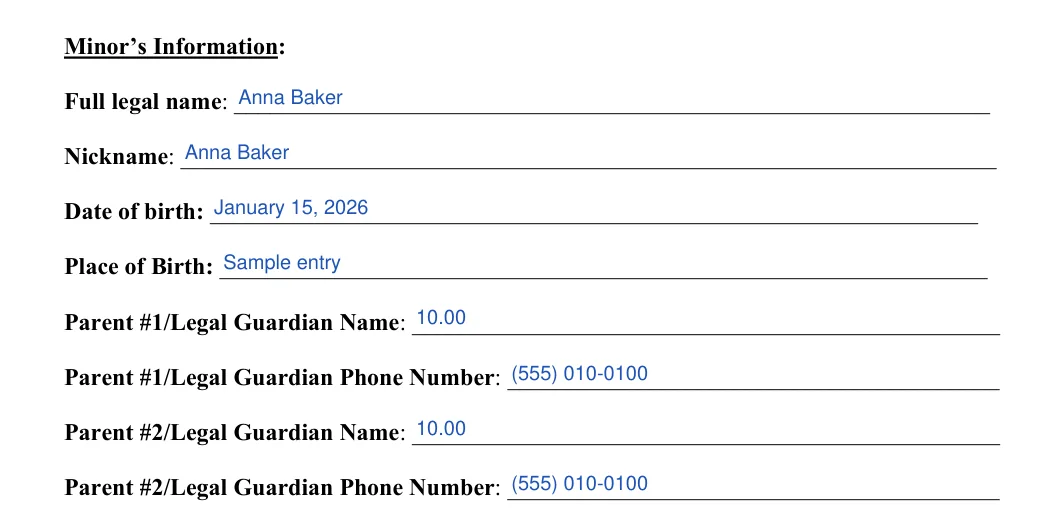




Parents most often ask about medical care, grandparents, notarizing and trips inside the country. Your own trip may raise other questions, so ask the people running it before you leave:
A child travel consent form is a document you can use as proof of permission from a lawful parent or legal guardian for a minor to travel without their presence. A parental consent form comes in handy when an adult accompanies a minor without legal authority over a child or when one of the parents is absent.
Although there is no mandatory rule that the child consent form must be notarized, when the child is to travel abroad without one of the parents, both parents, or accompanied by a non-legal caretaker, U.S. customs can demand the notarized document that validates the guardian’s right to travel with a child.
No, this type of document is only valid for authorizing a child’s domestic and international travels without a legal guardian. To secure yourself from unexpected events and emergencies, you need to additionally prepare a child medical consent form or power of attorney for guardianship.
Yes, any relative who is not a legal guardian or parent can be asked to demonstrate a parental permission letter for child travel if about to pass state borders. However, if it’s domestic travel or an all-around cruise, the consent form is usually not required. It’s better to verify in the respective travel agency, airline, or cruise services if any specific documents are required.
There is no clear and hard rule for the notarization of the document. We recommend the child travel consent form be notarized to prevent issues on the border or questions regarding the document’s credibility. The best way to receive precise information regarding the requirements is at the embassy of the visiting country. In some cases, a certified translation of the form is also needed.
Make sure that your travel consent letter is signed in the presence of a witness. It can be anyone older than 19, but you’re encouraged to have a letter signed by a notary public. You can also ask for more details from the transport company you use to check the policies concerning traveling with a minor.
For domestic trips with a child, you won’t need to obtain a child travel consent form from another parent to travel with a child.
General information, not legal or tax advice.
