
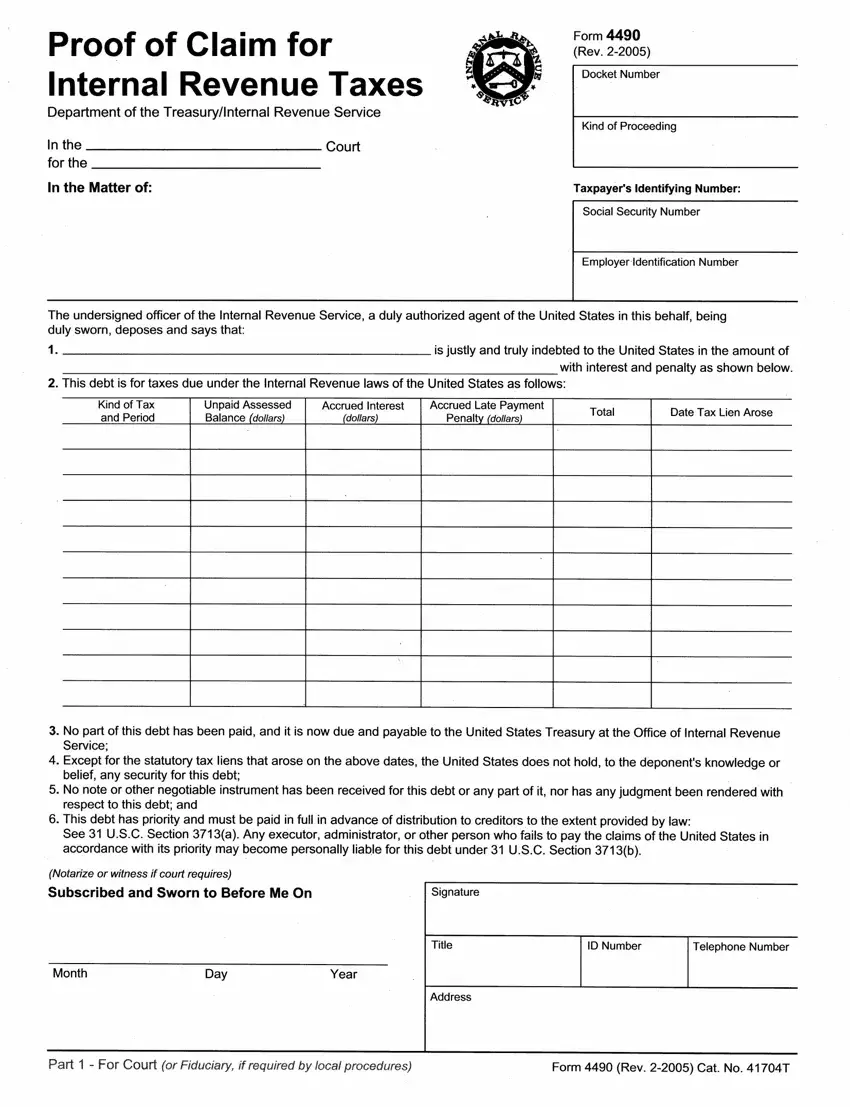
The world of tax documentation and estate management often intertwines, presenting challenges that demand both attention to detail and an understanding of IRS requirements. Among these, the 4490 form emerges as a crucial tool for executors and trustees managing the estates of deceased U.S. citizens who held assets in foreign countries. This form serves as a proof of claim for U.S. estate taxes, a key step in ensuring that the estate is handled in compliance with both U.S. tax laws and international protocols. Specifically, it allows executors to officially notify foreign entities of the estate’s tax liabilities in the United States, thus facilitating the process of claiming assets located abroad. With the globalization of finance, the significance of the 4490 form has only grown, underscoring the importance for executors to navigate its complexities accurately. Failure to comply with the appropriate procedures not only complicates the estate settlement process but can also lead to potential tax penalties, making it imperative for those involved to possess a thorough understanding of how to properly complete and leverage this document in the context of international estate management.
| Question | Answer |
|---|---|
| Form Name | Form 4490 |
| Form Length | 5 pages |
| Fillable? | No |
| Fillable fields | 0 |
| Avg. time to fill out | 1 min 15 sec |
| Other names | form 4490 pdf, irs 4490, proof internal revenue taxes, claim internal taxes |