
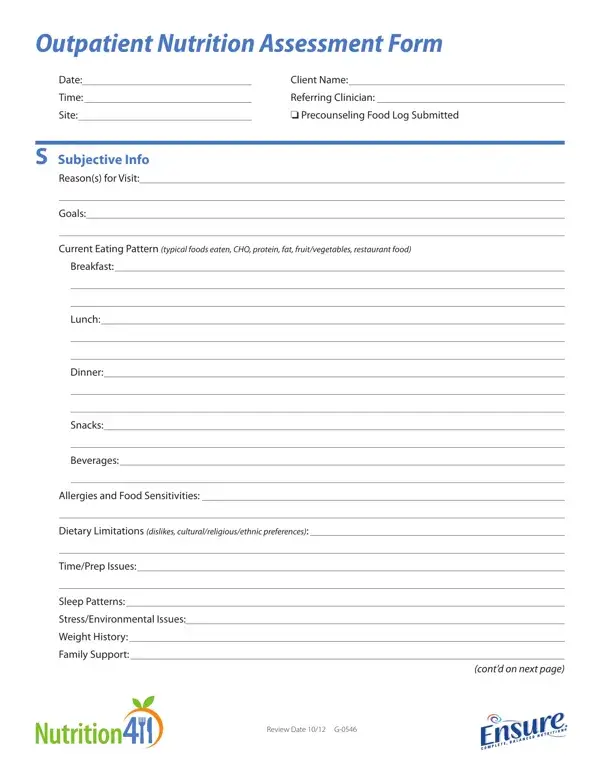
The assessment form for nutritionist professionals is a structured clinical document. It guides registered dietitians through a complete client evaluation. The form covers four core areas: subjective information, objective measurements, nutrition assessment, and the intervention plan. Filling in all sections gives the dietitian a full picture of the client's health and nutrition needs.
The subjective section is completed with direct input from the client. It starts with identifying information: the client's name, the date, the time of the appointment, and the referring clinician. Clients then describe their reason for seeking nutrition counseling. Common reasons include weight management, chronic disease support, sports nutrition, or recovery from disordered eating.
This section also captures daily eating patterns. Clients list typical meals, snacks, and beverages throughout the day. Food allergies, intolerances, and dietary restrictions such as vegetarian or gluten-free diets are recorded here. Lifestyle factors like sleep quality, physical activity level, and daily stress are noted as well. These factors directly affect dietary needs and the success of the nutrition plan.
The objective section captures clinical and physical measurements. The nutritionist records the client's sex, age, height, weight, and body mass index (BMI). This anthropometric data forms the basis for estimating caloric requirements and setting realistic health goals.
Laboratory values are also documented in this section. Common values include fasting blood glucose, HbA1c, total cholesterol, LDL, HDL, and serum albumin. The client's medical history covers diagnoses such as diabetes, hypertension, kidney disease, or cardiovascular conditions. Medications that affect nutrient absorption or appetite are noted as well. All of this objective data helps the nutritionist make evidence-based dietary recommendations.
The assessment section is where the nutritionist synthesizes the collected data. Estimated energy needs are calculated using established clinical formulas, adjusted for the client's activity level and health status. Protein, carbohydrate, fat, and micronutrient targets are set based on these estimates.
The nutritionist records a formal nutrition diagnosis in this section. Specific and measurable dietary goals are documented for the client to work toward between sessions. These goals may include increasing daily fiber intake, reducing sodium consumption, or reaching a target caloric range.
The intervention plan outlines the practical steps the client will follow. The nutritionist lists foods to prioritize and foods to limit or avoid. Educational handouts may be attached to support the client's learning at home. A follow-up appointment schedule is set to review progress and adjust the plan as needed. This structured approach keeps clients engaged and helps track improvement across multiple visits.
Registered Dietitians (RDs) and Licensed Dietitian Nutritionists (LDNs) use this type of form across many settings. These include outpatient nutrition clinics, hospital dietetic departments, private nutrition counseling practices, and community health programs. School nutrition programs and corporate wellness initiatives also use nutrition assessment forms to monitor dietary health.
Healthcare providers who work alongside dietitians also benefit from this form. Primary care physicians, endocrinologists, and gastroenterologists use it as a referral tool. A completed nutritionist assessment form gives referring providers insight into the client's current nutrition status. Related forms on our platform include the nutrition assessment form and the nutritional assessment form.
Using the same form for every client improves the consistency and completeness of nutrition evaluations. It ensures that no critical data points are missed during the intake visit. A standardized structure also makes it easier to compare findings across multiple sessions and track changes over time. When clients see a documented plan with specific targets, they are more likely to follow through with dietary changes. For broader intake documentation, the ADA health history form works well alongside this nutrition assessment.
| Question | Answer |
|---|---|
| Form Name | Assessment Form For Nutritionist |
| Form Length | 3 pages |
| Fillable? | No |
| Fillable fields | 0 |
| Avg. time to fill out | 45 sec |
| Other names | nutrition assessment form pdf, outpatient nutrition assessment form pdf, nutritional assessment form pdf, nutrition assessment form |
Assessment Form For Nutritionist isn’t the one you’re looking for?