Please rate Blank Pip Form

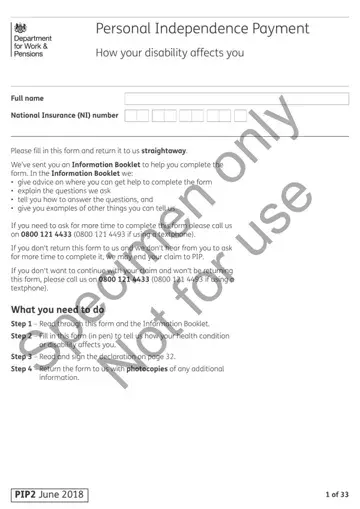
The Personal Independence Payment (PIP) form is a key document for people whose health condition or disability affects their daily activities. The DWP uses it to decide whether someone qualifies for financial support and at which rate.
You must return your completed blank PIP form within one month of receiving it. Missing the deadline can result in your claim being refused. If you need more time, contact the DWP before the deadline to request an extension.
The form comes with an accompanying booklet that explains each question, gives examples of the type of evidence that can strengthen your application, and provides guidance on where to find help. Read the booklet in full before filling in the form.
You can choose whether to receive a paper copy or complete a sample form digitally. The DWP will contact you by telephone first before sending any paperwork. Once you have the form, fill it in using pen, sign the declaration, and return it together with photocopies of supporting documents. Do not send original documents.
Health professionals listed on the form, such as your GP or consultant, may be contacted directly by the DWP to provide a report about your condition. Listing all relevant professionals and giving their up-to-date contact details strengthens your claim. The DWP also considers whether your condition fluctuates and whether it is likely to change over time.
| Question | Answer |
|---|---|
| Form Name | Blank PIP Form |
| Form Length | 37 pages |
| Fillable? | Yes |
| Fillable fields | 0 |
| Avg. time to fill out | 9 min 15 sec |
| Other names | pip form download, pip application form download pdf 2020, pip claim form download, pip form template, dwp pip application form download, pip form online, pip application form, pip form to print off, pip form, pip2 form download, pip application form online, pip application form pdf, download pip form, pip online form, pip application form download |
Blank Pip Form isn’t the one you’re looking for?
Please rate Blank Pip Form