
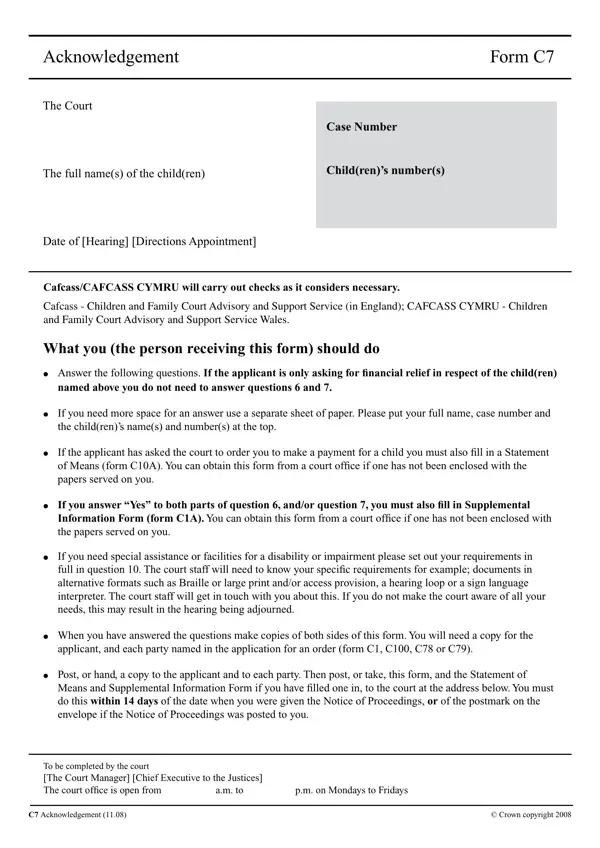
The C7 Acknowledgement Form is a required legal document in UK family court proceedings. When an applicant files a C100 or similar application about child arrangements, contact orders, or prohibited steps, the court serves the C7 form on the respondent. The respondent must complete and return it to the court, typically within 14 days of receiving the application documents.
The form captures key information including the respondent's full name, address, date of birth, and legal representative details. It also asks whether the respondent intends to oppose the application and requires disclosure of any concerns about domestic abuse, child abduction, or risk to the child's welfare. In England, Cafcass (Children and Family Court Advisory and Support Service), and in Wales, CAFCASS CYMRU, use this information to conduct initial safeguarding checks before the first hearing.
Completing the C7 form accurately is critical for the legal process. If a respondent fails to return the form within the required timeframe, the court may proceed with the child arrangements application in their absence. Legal advice is strongly recommended before completing this form, especially if the respondent plans to oppose the application or has concerns about the child's safety or welfare.
Who needs to complete the C7 Acknowledgement Form? The respondent in a family court child arrangements case must complete this form. The respondent is the person who has received a court application from another party, such as the other parent or a family member, seeking an order about the child's living arrangements, contact, or other matters.
What happens if I oppose the application? If you indicate on the C7 form that you intend to oppose the application, you will need to attend the first hearing and explain your reasons to the court. The court will then decide on next steps, which may include mediation, a fact-finding hearing, or a full court hearing. Opposing the application does not mean you will lose. Legal advice is important before making this decision.
Do I need a solicitor to complete the C7 form? You are not required to have a legal representative to fill out the C7 Acknowledgement Form, but legal advice is strongly recommended. A family law solicitor can help you understand your rights, assess the application, and determine whether opposing it is in the best interest of the child and your family situation.
What is the deadline for returning the C7 form? The deadline is printed on the application documents served on you. In most cases, you must return the completed C7 form to the court within 14 days. Missing this deadline may result in the court proceeding with the application without your input.
| Question | Answer |
|---|---|
| Form Name | C7 Acknowledgement Form |
| Form Length | 7 pages |
| Fillable? | Yes |
| Fillable fields | 56 |
| Avg. time to fill out | 45 sec |
| Other names | c7 formhttps assets publishing service gov uk government uploads system uploads attachment data file 687764 c2 eng pdf, court order c7 form, irs c7 form, c7 court form |
C7 Acknowledgement Form isn’t the one you’re looking for?