
What Is a Client Ledger Card?
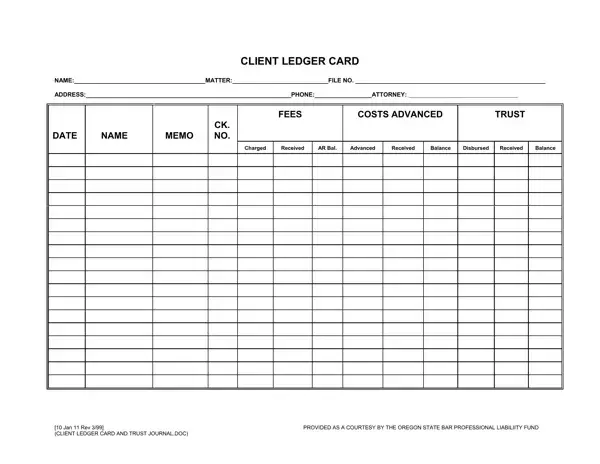
A client ledger card tracks all financial activity for a single client matter at a law firm. It captures fees, costs, trust deposits, and disbursements in one organized record. Attorneys rely on these cards to keep client accounts balanced and to meet bar association record-keeping requirements.
What the Form Tracks
The identifying section records the client name, matter description, file number, address, phone number, and the responsible attorney. The transaction section captures each of the following for every financial event:
- Date of each transaction
- Description or memo of the transaction
- Check or reference number
- Fees charged and costs advanced
- Trust account deposits and withdrawals with a running balance
- Accounts receivable balance after each billing cycle
How to Complete the Client Ledger Card Step by Step
- Fill in the header. Enter the client name, file number, matter name, address, phone number, and attorney name at the top of the form.
- Log each transaction in sequence. For each fee, cost, or payment, add a new row with the date, a short description, and the dollar amount in the correct column.
- Record trust account entries immediately. Each time you deposit or withdraw from the client trust account, enter the amount and update the running balance before the next entry.
- Update accounts receivable after billing. After each invoice is sent, note the outstanding balance in the AR column. Reduce it when payments come in.
- Verify and file the completed record. Cross-check the ledger against bank statements and billing records. Store the form in the client file for future reference.
Bar Compliance and Retention Requirements
State bar associations require attorneys to keep client ledger records for a set period after each matter closes. Most jurisdictions set a minimum of five years. The Oregon State Bar Professional Liability Fund designed this ledger card format to help firms meet IOLTA trust accounting standards.
During bar audits, these records are among the first documents examiners review. Firms with current and accurate ledgers resolve audit findings faster and avoid disciplinary action. Many legal malpractice insurers also review trust account record-keeping practices when renewing policies.
Related Financial and Legal Forms
You may also need these related financial tracking forms:
- Ledger Sheet - A general-purpose debit and credit tracking form
- Ledger Template Debit Credit - A structured debit and credit entry template
- Self-Employment Ledger Template - For independent contractors tracking income and expenses
- Legal Templates - A full library of legal document templates
Common Questions About Client Ledger Cards
What is the difference between a client ledger card and a general ledger?
A client ledger card covers one client matter only. A general ledger covers all accounts across the entire firm. Law firms typically maintain both types of records side by side.
Who is required to maintain a client ledger?
Any attorney who holds client funds in a trust account must maintain individual ledger records for each client. This requirement applies in most U.S. states. Solo practitioners and large firms are both subject to the same rules.
How long must client ledger records be kept?
Most state bar associations require law firms to keep these records for at least five years after a matter closes. Some states set longer retention periods. Check your state bar rules for the exact requirement that applies to your practice.
Can this form be completed digitally?
Yes. This ledger card is available as a fillable PDF. You can type directly into the form fields in your browser, then save or print the completed record for your client file.
