
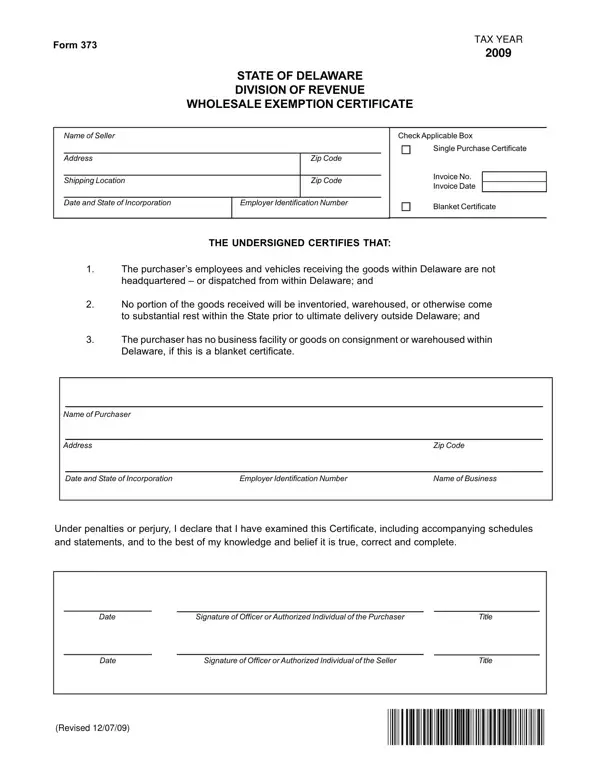
This certificate must be secured from the purchaser before or at the time of sale. Use the FormsPal editor above to fill in and download your copy at no cost.
How to Complete the Certificate
Step 1: Click the "Get Form" button at the top of this page to open the PDF editor. No software download is required.
Step 2: Complete the Seller section. Enter the selling company's legal name, address, Federal Employer Identification Number, the applicable invoice number, and the date of the transaction.
Step 3: Have the out-of-state purchaser fill in their section with their business name, state of incorporation, address, and FEIN. Both parties then decide whether this will be a single purchase certificate for one transaction or a blanket certificate covering ongoing purchases from the same wholesaler.
Be careful when completing the signature fields. An officer or authorized representative of the purchasing company must sign and date the certificate under penalty of perjury.
Step 4: Both the seller and the purchaser keep a signed copy. The seller must retain their copy for at least three years after the transaction date.
Single vs. Blanket Certificates
A single purchase certificate covers one transaction only and must cite the specific invoice number for that sale. A blanket certificate is the right choice when your business sells regularly to the same out-of-state wholesaler, as one signed certificate covers all future qualifying purchases. Sellers should confirm the purchaser's continuing eligibility at least once a year because the blanket certificate does not expire automatically when the buyer's circumstances change.
Key Compliance Points
The exemption applies only when goods are physically picked up in Delaware by a purchaser who will then deliver and consume them outside the state. The Director of Revenue may request additional details about the nature of the sale or the organizational structure of the purchaser at any time. If a valid certificate cannot be produced during an audit, the Division of Revenue may revoke the exemption and assess unpaid taxes against the seller.
Common Questions
Who signs the certificate?
An officer or authorized representative of the purchasing business signs and dates it. The seller retains the original and the purchaser keeps a copy for their own records.
What happens if the certificate is missing at audit?
Without a valid signed certificate on file, the seller may owe wholesale gross receipts tax on the transaction even if the goods were genuinely delivered outside Delaware. Always collect the signed form before shipping or releasing the goods.
How long must the certificate be kept?
Delaware law requires sellers to retain a signed copy for a minimum of three years after each covered sale. Organizing records by invoice number makes retrieval straightforward when a review is requested.
Related Tax Exemption Forms
For businesses managing tax compliance across multiple states, you may also need a Tennessee Exemption Certificate, a Texas Sales Tax Exemption Certificate, or a Maryland Sales and Use Tax Resale Certificate. You can also find related Delaware documents including Delaware Form 1027 and Delaware Form 321 on FormsPal.
