
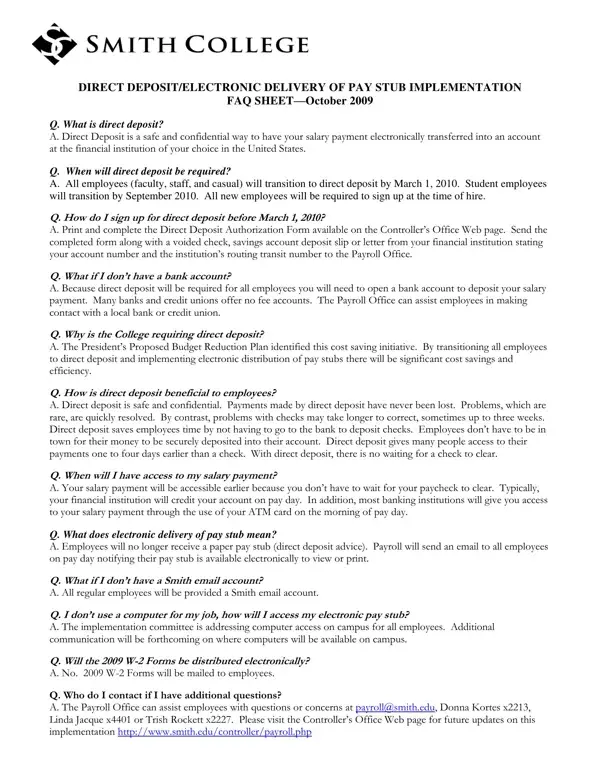
A payroll delivery stub documents the transition to electronic payroll, covering direct deposit authorization and electronic pay stub delivery. As organizations move from paper checks to digital systems, employees use this form to log their banking information and authorize recurring transfers. Keeping a personal log of submitted payroll documents helps employees verify that electronic payments start on schedule and resolve any discrepancies quickly.
The move to electronic payroll gained widespread adoption in the late 2000s, with many institutions requiring mandatory enrollment by 2009-2010. Faculty, staff, casual workers, and student employees needed to log their bank account details and submit authorization forms before specific deadlines. HR departments maintained a permanent administrative log of each submission to confirm that all staff had completed the transition before the cutoff date.
Electronic pay stub delivery offers clear advantages over paper. Employees can log in and access their complete earnings history at any time, without waiting for physical mail delivery. Payroll departments maintain a digital audit log of all transactions, making it straightforward to verify payment amounts and resolve disputes. Each payment generates an automatic transaction log entry, creating a searchable record that employees can reference for tax preparation, loan applications, and financial planning.
When completing this form, you will need to provide your bank routing number and your personal account number. Most financial institutions list these numbers on personal checks or within online banking portals. Employees without home computer access can visit HR kiosks to log in and review their pay records, ensuring all workers can participate regardless of their technical resources or work location.
Direct deposit systems maintain a detailed transaction log for each payment, recording the transfer date, amount, and destination account. This transaction log is accessible to both payroll staff and employees, supporting transparency and accountability in compensation management. For employees new to direct deposit, many community banks and credit unions offer accounts specifically supporting direct deposit enrollment, with secure portals where account holders can maintain a complete payment activity log.
Organizations that implement electronic pay stub delivery must maintain a compliance log of employee authorizations and signed consent records. This administrative log demonstrates adherence to labor regulations and provides documentation if payment questions arise. Electronic payroll systems make it practical to audit and log every transaction automatically, an operational improvement that was logistically difficult with paper-based payroll processes.
Employees transitioning to electronic payroll should verify their first deposit to confirm the amount matches their expected pay. If a discrepancy appears, contacting the payroll department immediately allows for a timely review of the transaction log. Most employers process corrections within one to two business days, especially when employees have kept their own record of banking submissions and deposit authorization dates.
| Question | Answer |
|---|---|
| Form Name | Delivery Stub Form |
| Form Length | 1 pages |
| Fillable? | No |
| Fillable fields | 0 |
| Avg. time to fill out | 15 sec |
| Other names | 2009 deposit stub, direct deposit delivery stub, 2009 deposit electronic, 2009 direct deposit |