
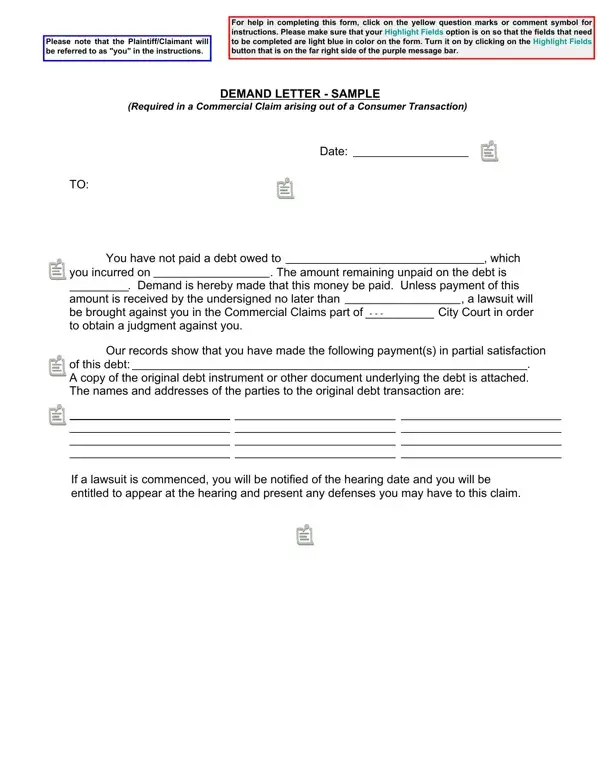
Demand Letter Form PDF Details

A demand letter is a formal written notice sent to a person or business that owes you money, has caused damage to your property, or has failed to meet a legal obligation. It is typically the first step before filing a lawsuit and sets a clear deadline for the other party to respond, usually between 14 and 30 days. Many courts require proof that a demand letter was sent before they will accept a small claims case or civil complaint.

An effective demand letter clearly identifies both parties by full name and address, describes the specific debt or breach in detail, lists any payments already received, states the total amount now owed, and confirms that legal action will follow if the deadline is not met. Sending the letter by certified mail with return receipt requested provides documented proof of delivery.

Demand letters are used in a wide range of disputes, including collecting unpaid loans or invoices, recovering a wrongfully withheld security deposit, resolving contractor disputes, and pursuing insurance settlements. A well-written demand letter creates a paper trail that can serve as evidence in court if the matter is not resolved outside of court.

QuestionAnswer
Form NameDemand Letter Form
Form Length1 pages
Fillable?No
Fillable fields0
Avg. time to fill out15 sec
Other namesarising, underlying, unpaid, Of

How to Edit Demand Letter Form Online for Free

A demand letter can be filled out easily. Just use FormsPal PDF editor to perform the job in a timely fashion. To have our editor on the forefront of practicality, we aim to put into action user-driven features and improvements regularly. We're always looking for feedback - join us in revamping PDF editing. In case you are looking to get going, here is what it's going to take:

Step 1: First, access the pdf editor by pressing the "Get Form Button" above on this page.

Step 2: With our handy PDF file editor, you could do more than simply fill out blank fields. Try each of the functions and make your documents appear sublime with custom text incorporated, or tweak the original input to perfection - all accompanied by the capability to add your personal pictures and sign the file off.

To be able to finalize this PDF document, be sure to provide the information you need in every single blank field:

1. It's very important to complete the demand letter properly, hence be mindful when filling out the areas comprising these specific blanks:

Filling out segment 1 in unpaid

2. Just after the previous part is completed, go on to type in the applicable information in all these - .

unpaid conclusion process shown (stage 2)

Be extremely mindful while filling out this field and next field, because this is the part in which many people make a few mistakes.

Step 3: Prior to getting to the next step, make sure that blank fields are filled out the proper way. When you establish that it's correct, click "Done." Get hold of the demand letter once you subscribe to a free trial. Easily use the pdf file from your personal account, together with any edits and adjustments being conveniently synced! We do not sell or share any information you type in whenever filling out forms at our site.

What to Include in Your Demand Letter

A well-drafted demand letter contains specific, verifiable details that make your claim clear and hard to dispute. Include the following in your document:

  • Full names and contact details of both the sender (claimant) and the recipient (debtor or respondent)
  • Date of the letter and a clear subject line identifying the type of claim
  • Description of the debt or damage, including relevant dates, specific amounts, and any contract or agreement that applies
  • Total amount owed, broken down by principal, interest, late fees, or other charges where applicable
  • Payment history, listing any prior payments already received
  • A firm payment deadline - typically 14 to 30 days from the date of the letter
  • Statement of intent - confirm that failure to pay by the deadline will result in legal action or referral to a collections agency
  • Preferred payment method and your contact information for follow-up questions

Once the letter is complete, send it by certified mail with return receipt requested. This creates documented proof that the other party received the notice, which is essential if the case proceeds to court.

Common Types of Demand Letters

Demand letters are used in many types of legal and financial disputes. The most common include:

  • Unpaid debt letters - Used to recover overdue loans, invoices, freelance fees, or personal debts between individuals or businesses
  • Security deposit letters - Sent by tenants when a landlord withholds a deposit without a valid legal reason. Use a deposit demand letter for a targeted template
  • Property damage letters - Used after accidents, contractor disputes, or unauthorized damage to personal property
  • Breach of contract letters - Notifies a party that they have failed to meet the terms of a signed agreement and demands compensation or performance
  • Insurance demand letters - Sent to insurers when a settlement offer is too low or a valid claim is wrongfully denied

If the Deadline Passes Without a Response

When the recipient ignores the letter or refuses to pay by the deadline, you have several options. You may send a follow-up letter referencing the original and repeating the stated consequences. If the amount falls within your state's limit, filing a small claims court petition is typically the most cost-effective next step. For larger or more complex matters, consult a licensed attorney. If the other party is willing to negotiate, you can formalize a repayment plan using a payment agreement or promissory note. If the conduct is ongoing and harmful, a cease and desist letter may be more appropriate than a demand for payment.