
DOA-FM-012 Form PDF Details

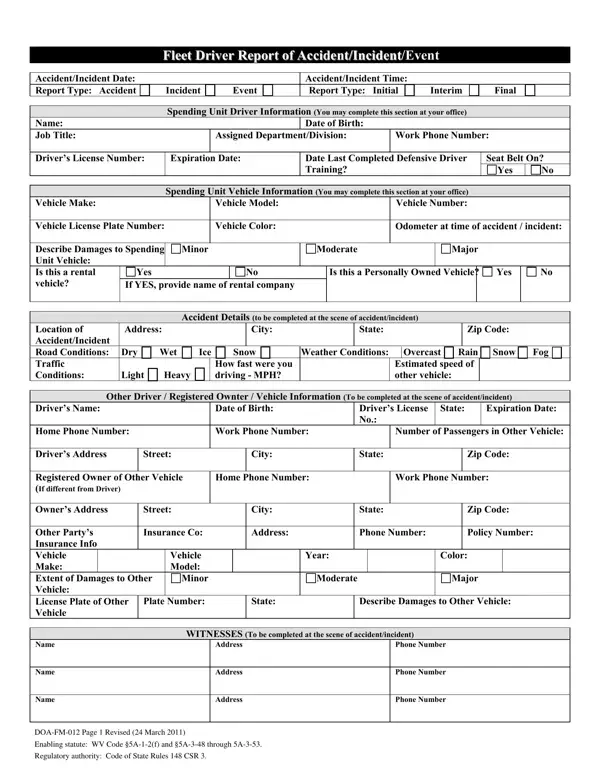
In the realm of fleet management and operational safety, accurate and timely reporting of accidents, incidents, or events involving vehicles is crucial. The DOA-FM-012 form serves as a comprehensive tool for this purpose, providing a structured format for collecting vital information immediately following such occurrences. It covers various aspects from basic driver and vehicle details, specifics about the accident or incident including the location, road, and weather conditions, to information about any other parties involved. Additional sections on the form guide drivers on documenting damages to the involved vehicles, details of any injuries, witness accounts, and the responses from emergency or law enforcement agencies who attended the scene. Beyond capturing the immediate facts, the form also prompts consideration of the preventability of the incident and recommendations for future avoidances, thereby contributing to the broader goal of improving organizational safety and minimizing risks. The form operates under regulatory authority and is a key element in adhering to legal and procedural requirements, emphasizing the importance of responsible vehicle operation and incident management within organizations.

QuestionAnswer
Form Name DOA FM 012 Form
Form Length 2 pages
Fillable? Yes
Fillable fields 87
Avg. time to fill out 15 min
Other names WV, 5A-1-2, DOA-FM-012, 5A-3-53

How to Edit DOA-FM-012 Form Online for Free

By adhering to these steps, you can guarantee that the DOA-FM-012 form is completed thoroughly and correctly, creating a trustworthy document for managing the incident's aftermath.

1. Accident/Incident Details

Write the date and time of the accident or incident at the top of the form. Select whether the report is for an accident, incident, or event and specify if this is the initial, interim, or final report.

2. Spending Unit Driver Information

Complete the section titled "Spending Unit Driver Information." Here, you must input the driver's name, date of birth, job title, assigned department/division, work phone number, driver's license number, and expiration date.

Indicate whether the driver had completed defensive driving training and whether a seat belt was worn during the incident.

3. Spending Unit Vehicle Information

In the "Spending Unit Vehicle Information" section, record the make, model, and number of the vehicle involved, along with its license plate number, color, and odometer reading at the time of the incident.

Describe the extent of the damages (minor, moderate, major), and specify if the vehicle was a rental or personally owned.

4. Accident Details

Document the location of the accident, including the address, city, state, and zip code. Note the road and weather conditions, traffic conditions, your driving speed, and the estimated speed of any other vehicle involved.

5. Other Driver and Vehicle Information

Fill in details about the other driver(s) involved in the incident, including their name, date of birth, driver’s license number, state of issuance, expiration date, phone numbers, and address. Include their information if the vehicle's registered owner differs from the driver.

Also, details of the other vehicle’s make, model, year, color, and the extent of damages are needed.

6. Witness and Passenger Information

If there were witnesses or other passengers, record their names, addresses, and phone numbers. Describe any injuries if applicable.

7. Describe the Accident/Incident

Provide a thorough description of the accident or incident, aiming to capture as many details as possible to aid future investigations or insurance claims.

8. Additional Information and Official Use

Indicate whether there was any non-vehicle property damage, list any responding agencies, and state whether an official report was made. This section may also include a field for the investigating agency's details.

9. Supervisor Section

The spending unit driver’s supervisor should review the form and may add their insights about the preventability of the incident and any recommendations for future prevention.

The spending unit driver and the supervisor must sign and date the form.