
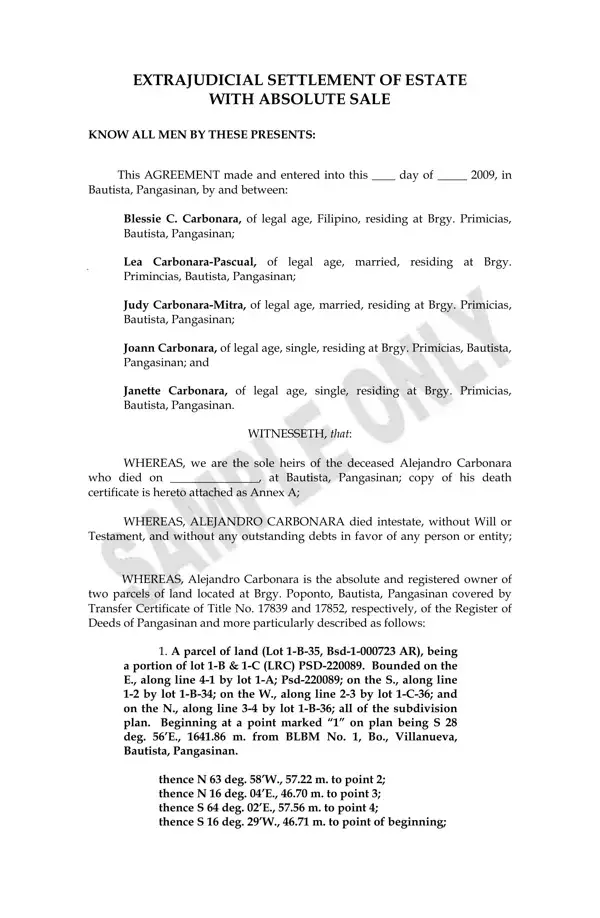
The process of settling an estate after someone's passing can be intricate, often necessitating legal documentation to ensure that the transfer of assets is conducted smoothly and in accordance with the law. One such document, the Extrajudicial Settlement of Estate with Absolute Sale, plays a critical role in these circumstances, particularly when the deceased has left behind real property that the heirs wish to distribute or sell among themselves or to third parties. This agreement, as showcased in an example from 2009 in Bautista, Pangasinan, involves multiple parties - specifically, the heirs of the deceased Alejandro Carbonara and the purchasers Spouses Tonio B. Regala and Elma Buenavista-Regala. The document outlines the mutual understanding that the heirs, as the sole successors, have agreed amongst themselves to equally divide the described parcels of land. Furthermore, it elaborates on the sale aspect, wherein, for a specified sum, the heirs transfer ownership of the property to the buyers, guaranteeing clear title and peaceful possession free from any encumbrances. Such a settlement is performed extrajudicially, meaning it takes place outside of court, offering a quicker and less contentious means of resolving estate matters, provided there are no disputes among the heirs or claims on the deceased’s assets. The comprehensive authentication by a notary public ensures the document’s legal standing, making it a powerful example of how extrajudicial settlements function within the framework of Philippine law regarding the transfer and settlement of estate properties.
| Question | Answer |
|---|---|
| Form Name | Extrajudicial Settlement Form |
| Form Length | 3 pages |
| Fillable? | Yes |
| Fillable fields | 54 |
| Avg. time to fill out | 11 min 33 sec |
| Other names | sample extra judicial settlement with sale, extrajudicial partition with sale sample, extrajudicial settlement with sale, extrajudicial settlement with deed of sale |
Extrajudicial Settlement Form isn’t the one you’re looking for?