
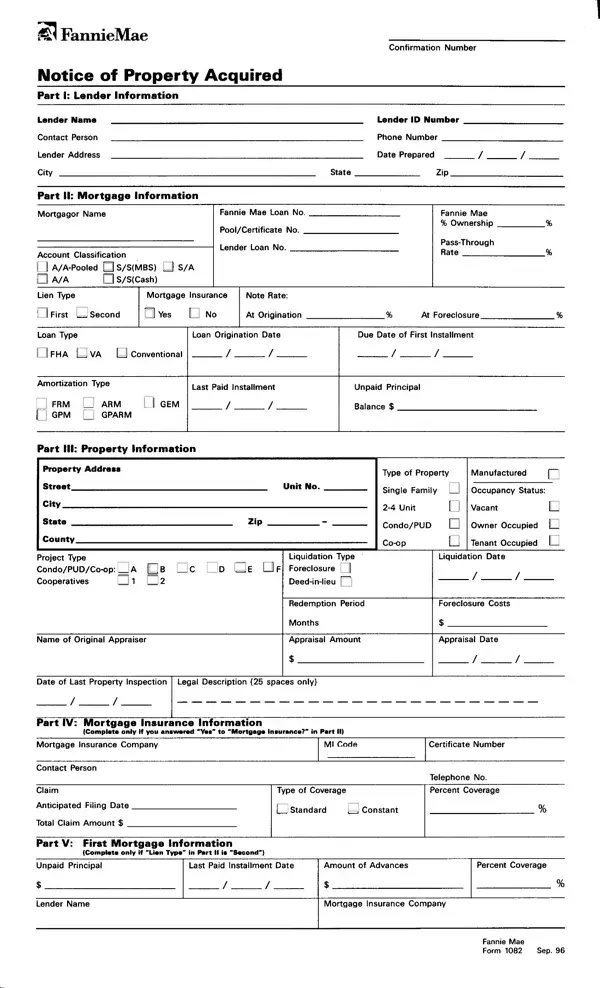
When a property secured by a mortgage enters a new chapter through foreclosure or other means, the dance of documentation follows, spotlighting forms like the Fannie Mae 1082. This specific form is a pivotal piece of paperwork, acting as a bridge between mortgage servicers and Fannie Mae, one of the nation's largest backers of residential mortgages. It's a notification tool, used by servicers to alert Fannie Mae about the acquisition of a property. This might be a property that's backed by a whole mortgage or a participation pool mortgage in Fannie Mae's vast portfolio, an MBS pool mortgage serviced under the special servicing option, or an RHS mortgage receiving the same level of care. The urgency of this form is underscored by its submission timeline – within 24 hours after a property is whisked away at a foreclosure sale or tenderly taken in through a deed-in-lieu. The electronic submission requirement speaks to the modern march towards efficiency, eliminating the days of mailing delays, with a direct link provided for quick filing. Though the copy maintained is original, the form's essence stretches beyond paper; it's a crucial record, housed in the meticulous files of individual mortgages. As complex as its context may seem, the Fannie Mae 1082 form is ultimately about communication, ensuring that the intricate web of American homeownership is accurately documented and transparently managed.
| Question | Answer |
|---|---|
| Form Name | Fannie Mae Form 1082 |
| Form Length | 2 pages |
| Fillable? | No |
| Fillable fields | 0 |
| Avg. time to fill out | 30 sec |
| Other names | what is a 1082 tax form, MBS, fanniemae, section 1082 basis adjustment |
Fannie Mae Form 1082 isn’t the one you’re looking for?