
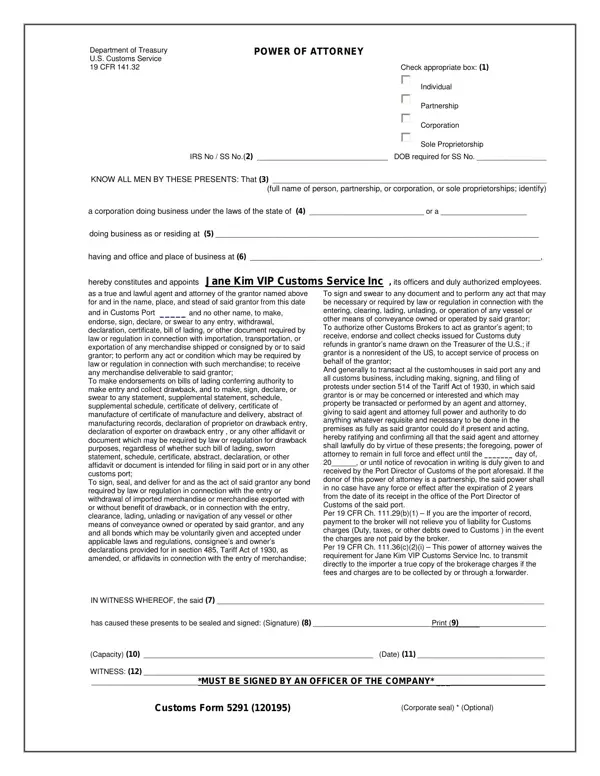
Navigating the complexities of customs operations requires a robust understanding of legal documents, among which the Customs Form 5291 holds particular significance. This form, issued by the Department of Treasury U.S. Customs Service, serves as a Power of Attorney (POA), a critical instrument that grants a named agent or attorney the authority to conduct customs business on behalf of the grantor. It applies to a range of entities including individuals, partnerships, corporations, and sole proprietorships, each required to provide specific information such as IRS or SS number, legal names, and business addresses. The scope of authority granted through this POA is wide, empowering the named agent to act in the grantor’s stead for tasks as varied as signing documents related to the importation, transportation, or exportation of merchandise, drawing up bonds required by customs regulations, and even receiving merchandise on behalf of the grantor. The form also stipulates conditions under which it remains effective and outlines the responsibilities of the parties involved, ensuring all customs business is conducted in accordance with legal requirements. Moreover, it includes provisions for the eventuality of a nonresident grantor and addresses potential liability issues regarding customs charges. Completing the 5291 form correctly is therefore crucial for businesses and individuals engaged in international trade, enabling them to navigate customs processes efficiently and legally.
| Question | Answer |
|---|---|
| Form Name | Form 5291 |
| Form Length | 2 pages |
| Fillable? | No |
| Fillable fields | 0 |
| Avg. time to fill out | 30 sec |
| Other names | customs form 5291 120195, customs form 5291 power, customs form 5291 of, vip signatory conferring |
Form 5291 isn’t the one you’re looking for?