
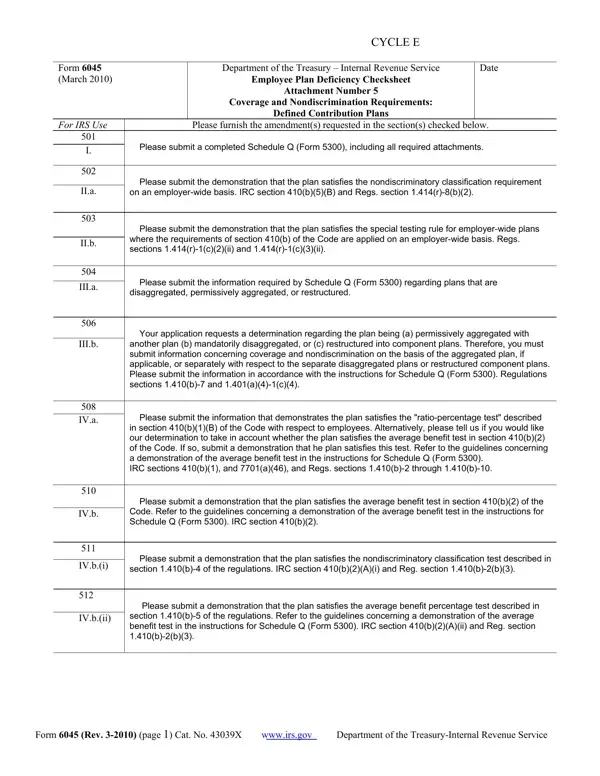
Navigating the complexities of employee benefit plans can often feel like trying to decipher an intricate maze, with each turn introducing a new set of rules and requirements. Among the key components in understanding and adhering to these rules are various forms issued by the Internal Revenue Service (IRS), one of which is the notable Form 6045. Designed as an Employee Plan Deficiency Checksheet, this form serves a critical function in the auditing process for defined contribution plans by pinpointing areas where compliance with coverage and nondiscrimination requirements has fallen short. Issued in March 2010 by the Department of the Treasury, Form 6045 requires plan administrators to furnish amendments or provide demonstrations ensuring their plans meet specific sections of the Internal Revenue Code (IRC) and regulations concerning nondiscriminatory classification, testing rules, and the average benefit test, among others. It guides administrators through a detailed review process, asking for information on plans that are disaggregated, permissively aggregated, or restructured, and scrutinizes the manner in which benefits, rights, or features are currently available to all employees to ensure there is no bias towards highly compensated individuals. Form 6045 also demands proofs related to the nondiscriminatory allocation of contributions or benefits and adjustments in the plan's definition of compensation to conform to nondiscriminatory requirements. This meticulous examination underscores the IRS's commitment to maintaining fairness in employee benefits administration, making Form 6045 a pivotal tool in safeguarding the equitable treatment of all plan participants.
| Question | Answer |
|---|---|
| Form Name | Form 6045 |
| Form Length | 2 pages |
| Fillable? | No |
| Fillable fields | 0 |
| Avg. time to fill out | 30 sec |
| Other names | IRC, III, Nondiscrimination, mandatorily |
Form 6045 isn’t the one you’re looking for?