
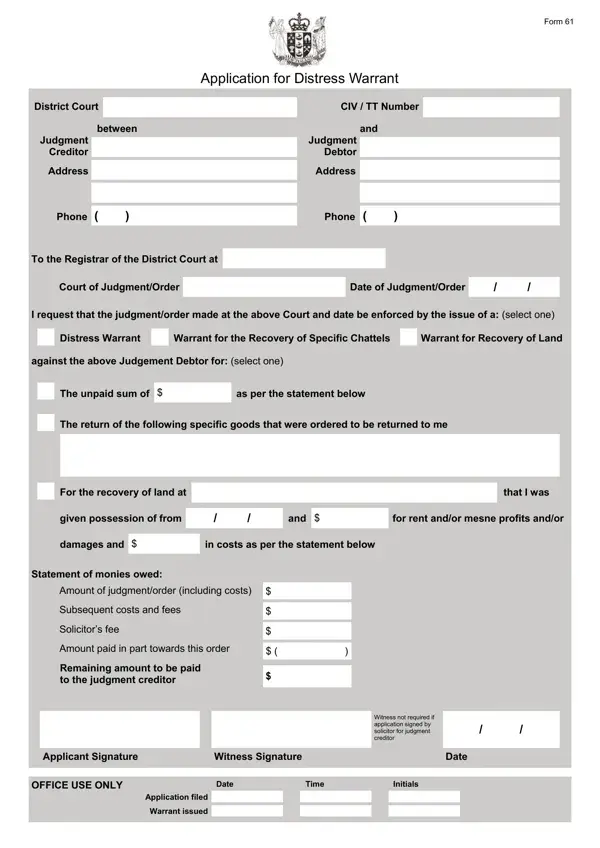
In the realm of legal enforcement, the Distress Warrant form plays an integral role for creditors seeking to reclaim owed assets or property. Known formally as Form 61, it functions within the district court system as a vehicle for implementing the judgments made in civil disputes, primarily concerning financial or property recovery. When a judgment creditor finds themselves unable to reclaim debts, specific goods, or land from a debtor despite a court's decision, this form becomes essential. It allows creditors to formally request the enforcement of a court's judgment by selecting one of three types of warrants: Distress Warrant, Warrant for the Recovery of Specific Chattels, or Warrant for Recovery of Land. Each type serves a specific purpose, whether it be for the recoupment of unpaid sums, the return of specific goods, or the recovery of land possession. This form not only delineates the particulars of the judgment, including the total amount owed, subsequent costs, fees, and any partial payments made, but also outlines the necessity for such enforcement measures. By submitting Form 61 to the Registrar of the District Court, judgment creditors initiate a formal legal process to enforce court orders, ensuring the compliance of debtors through legally sanctioned channels.
| Question | Answer |
|---|---|
| Form Name | Form Distress Warrant |
| Form Length | 1 pages |
| Fillable? | No |
| Fillable fields | 0 |
| Avg. time to fill out | 15 sec |
| Other names | format of distress warrant, distress warrant, warrant application format, application distress warrant |