
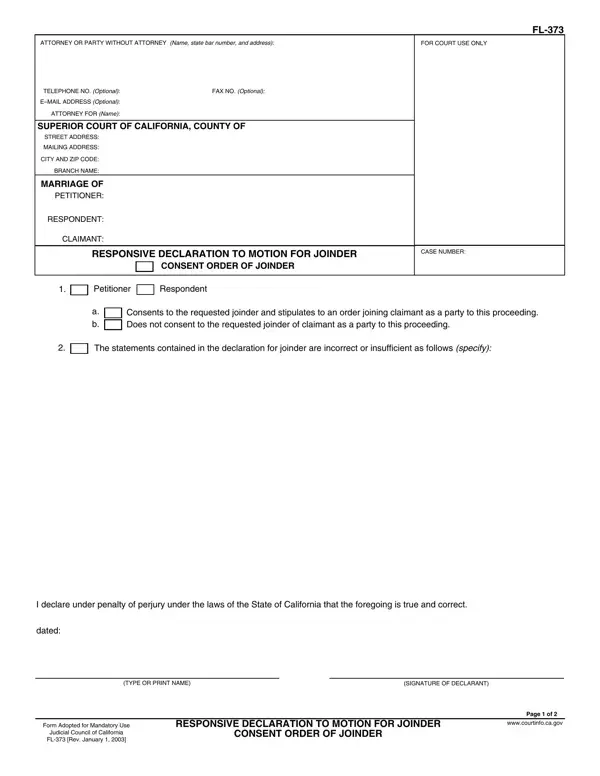
Navigating family law proceedings in California can sometimes feel like trying to understand a foreign language, but once the jargon is unpacked, essential documents like the FL-373 form begin to make sense. Primarily used within the context of divorce, separation, or other family law matters, the FL-373 form serves as a crucial tool for addressing the involvement of an additional party to a case, often referred to as 'joinder'. Whether you're an attorney or someone representing yourself, filling out the FL-373 correctly can significantly impact the outcome of your case. It provides a structured way for respondents or petitioners to either consent to or dispute the joinder of a claimant—a party whose rights might be affected by the divorce or separation. Moreover, it outlines the process for admitting someone into the case, from filing the proper pleadings to serving summons. Also, it not only ensures that all involved parties are adequately notified but also sets forth the legal foundation for a claimant’s participation in the proceedings. By diving into the specifics, such as who needs to fill out which section and what each part means, parties can navigate their case with a clearer understanding of the implications and requirements of adding a third party to their legal matter.
| Question | Answer |
|---|---|
| Form Name | Form Fl 373 |
| Form Length | 2 pages |
| Fillable? | No |
| Fillable fields | 0 |
| Avg. time to fill out | 30 sec |
| Other names | CALIFORNIA, foregoing, JOINDER, how to file a fl 373 |