
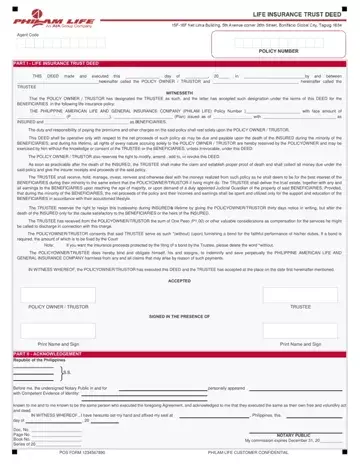
The Life Insurance Trust form serves as a pivotal document designed to outline the specific conditions and responsibilities associated with establishing a trust for life insurance proceeds. Executed between the policy owner, also known as the trustor, and the appointed trustee, this deed ensures the designated beneficiaries are the focal point, particularly if they are still minors at the time of the insured’s passing. Crucially, the trust deed stipulates responsibilities including the payment of premiums by the policy owner and delineates the rights reserved by the policy owner during their lifetime, such as modifying or revoking the deed. Upon the death of the insured, the trustee is tasked with making claims, collecting proceeds, and managing the funds in a manner that aligns with the best interests of the beneficiaries until they reach the age of majority. This document not only specifies how and when the proceeds from the life insurance policy are to be disbursed but also highlights the care with which these decisions should be made to support the beneficiaries’ welfare, including their education and accustomed lifestyle, conservatively applying the proceeds for their intended purpose. Additionally, the trust deed covers the process for the trustee’s resignation, compensation, and the necessary legal acknowledgments to ensure the arrangement’s validity, thereby offering a comprehensive framework for managing life insurance proceeds through a trust.
| Question | Answer |
|---|---|
| Form Name | Form For Life Insurance Trust |
| Form Length | 1 pages |
| Fillable? | No |
| Fillable fields | 0 |
| Avg. time to fill out | 15 sec |
| Other names | Michigan, grantor, sample ilit, ascertainable |