
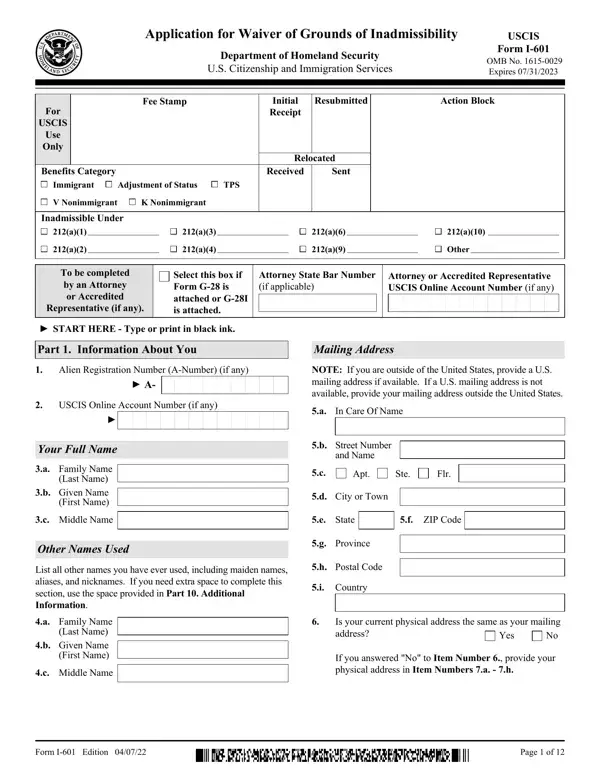
Navigating the complexities of U.S. immigration law, the I-601, Application for Waiver of Grounds of Inadmissibility, plays a critical role for individuals who find themselves barred from entry due to various inadmissible grounds. Administered by the U.S. Citizenship and Immigration Services (USCIS), part of the Department of Homeland Security, this form serves as a lifeline for those seeking relief from inadmissibility on grounds ranging from health-related issues, certain criminal violations, to immigration fraud and misrepresentation. Essentially, the I-601 waiver application allows individuals to request a review of their inadmissibility under specific grounds outlined in Section 212(a) of the Immigration and Nationality Act (INA), granting them a chance for a second evaluation. This comprehensive document requires detailed information about the applicant, including personal data, immigration history, and the basis of inadmissibility. Moreover, it holds space for information about a qualifying relative, if the waiver claim is based on the extreme hardship that denial of entry would cause to that U.S. citizen or lawful permanent resident. Clear as it might seem, navigating the I-601 form demands a thorough understanding of its nuances, evidence requirements, and the statutory provisions under which a waiver may be granted, asserting its significance in the path to legal entry or residency in the United States.
| Question | Answer |
|---|---|
| Form Name | Form I 601 |
| Form Length | 12 pages |
| Fillable? | No |
| Fillable fields | 0 |
| Avg. time to fill out | 3 min |
| Other names | Resubmitted, HIV, form 601, CDC |
Form I 601 isn’t the one you’re looking for?