

Job Safety Analysis (JSA) at a glance
What it is: Job Safety Analysis (JSA) with Organisation Details and Risk controls.
Who signs: All employees undertaking the works read, understand and sign the job safety analysis, writing Print Names, Signatures and Dates.
A filled-in Job Safety Analysis (JSA) example: step 1 of a fence painting job
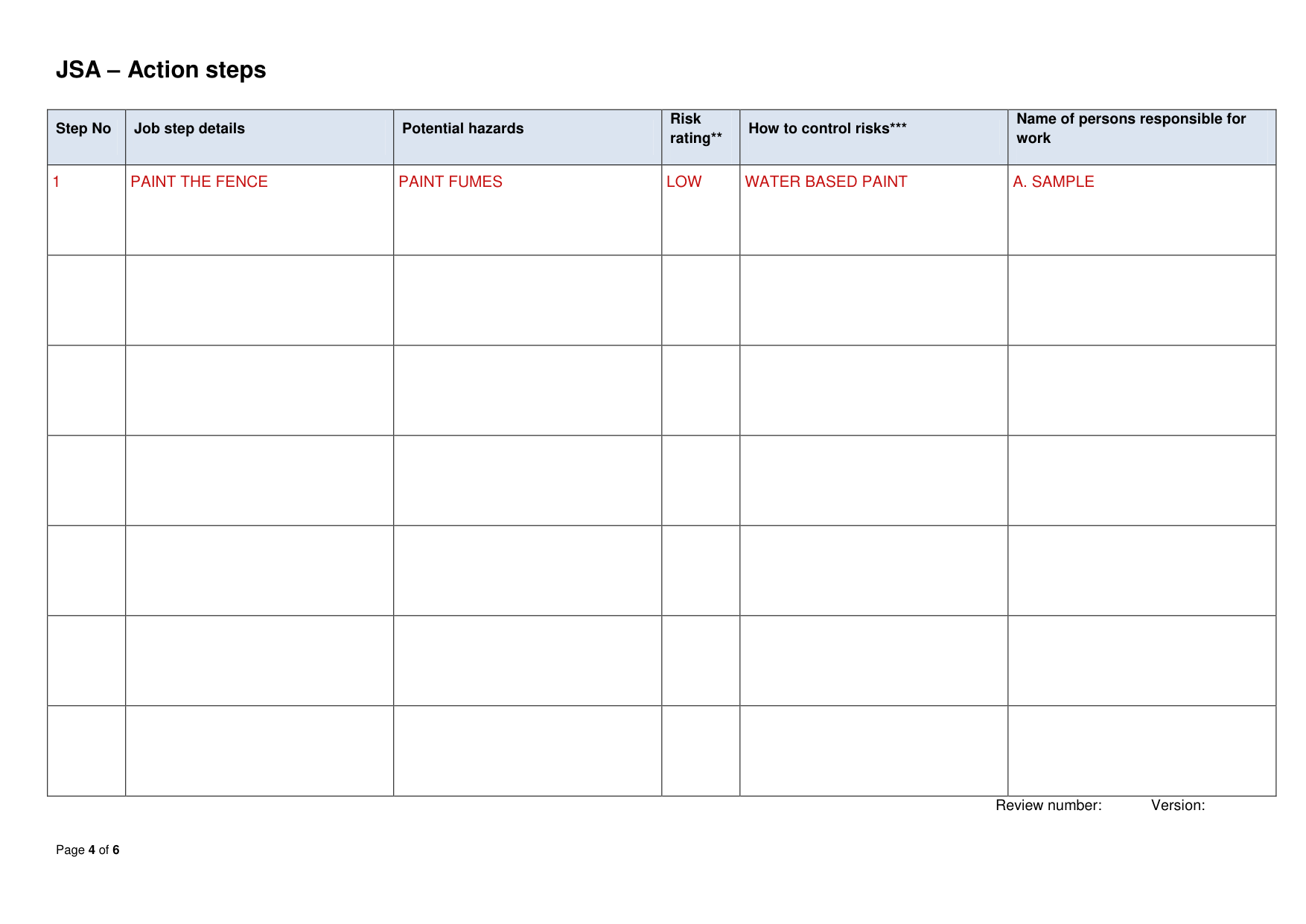
How to fill out Job Safety Analysis (JSA), box by box
Business details
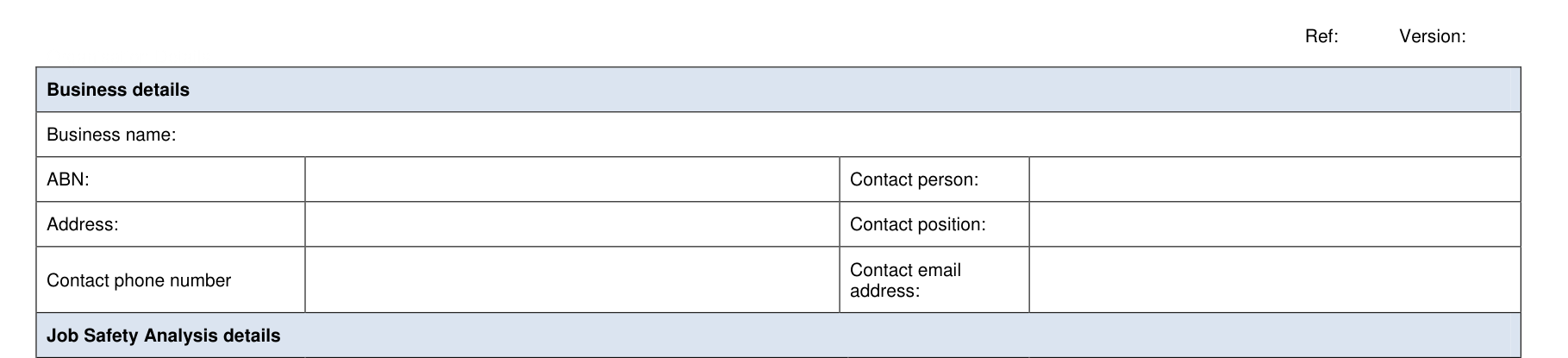
Under Business details, fill in the Business name, ABN, Address, Contact person, Contact position, Contact phone number and Contact email address.
Job Safety Analysis details
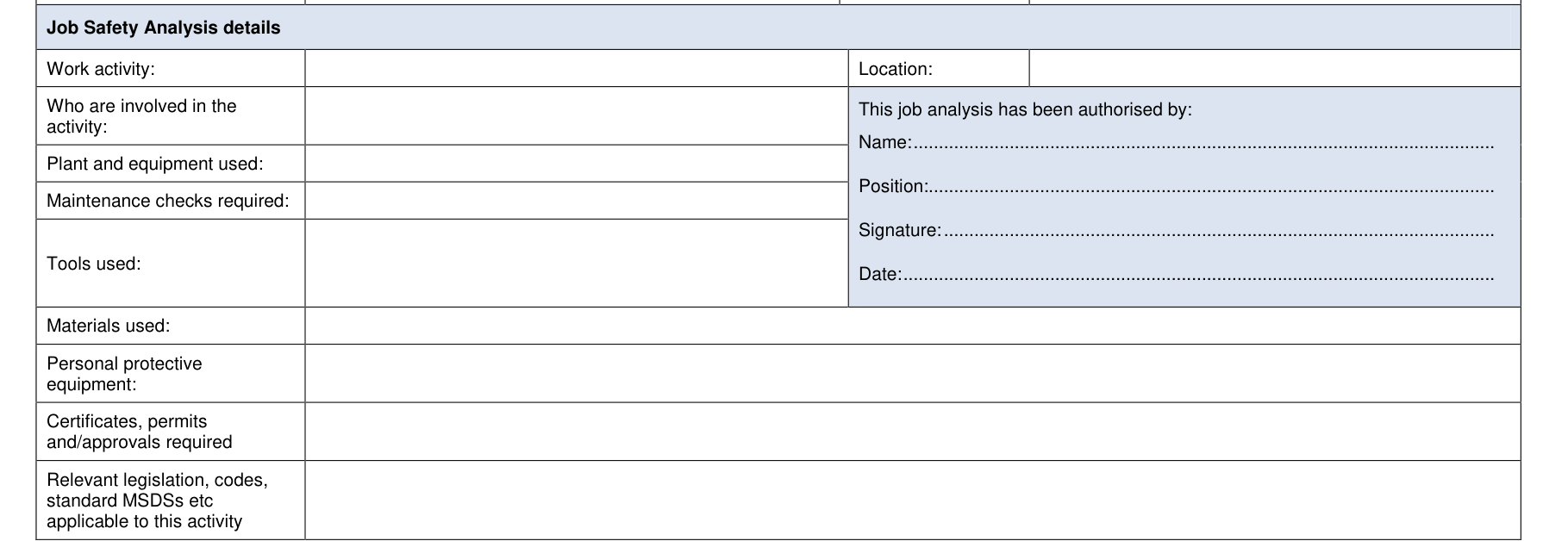
Under Job Safety Analysis details, fill in the Work activity, the Location and Who are involved in the activity.
Fill in Plant and equipment used, Maintenance checks required, Tools used, Materials used and Personal protective equipment.
Fill in Certificates, permits and/approvals required, and Relevant legislation, codes, standard MSDSs etc applicable to this activity.
Under This job analysis has been authorised by, fill in Name, Position and Date, and sign for Signature.
Risk assessment
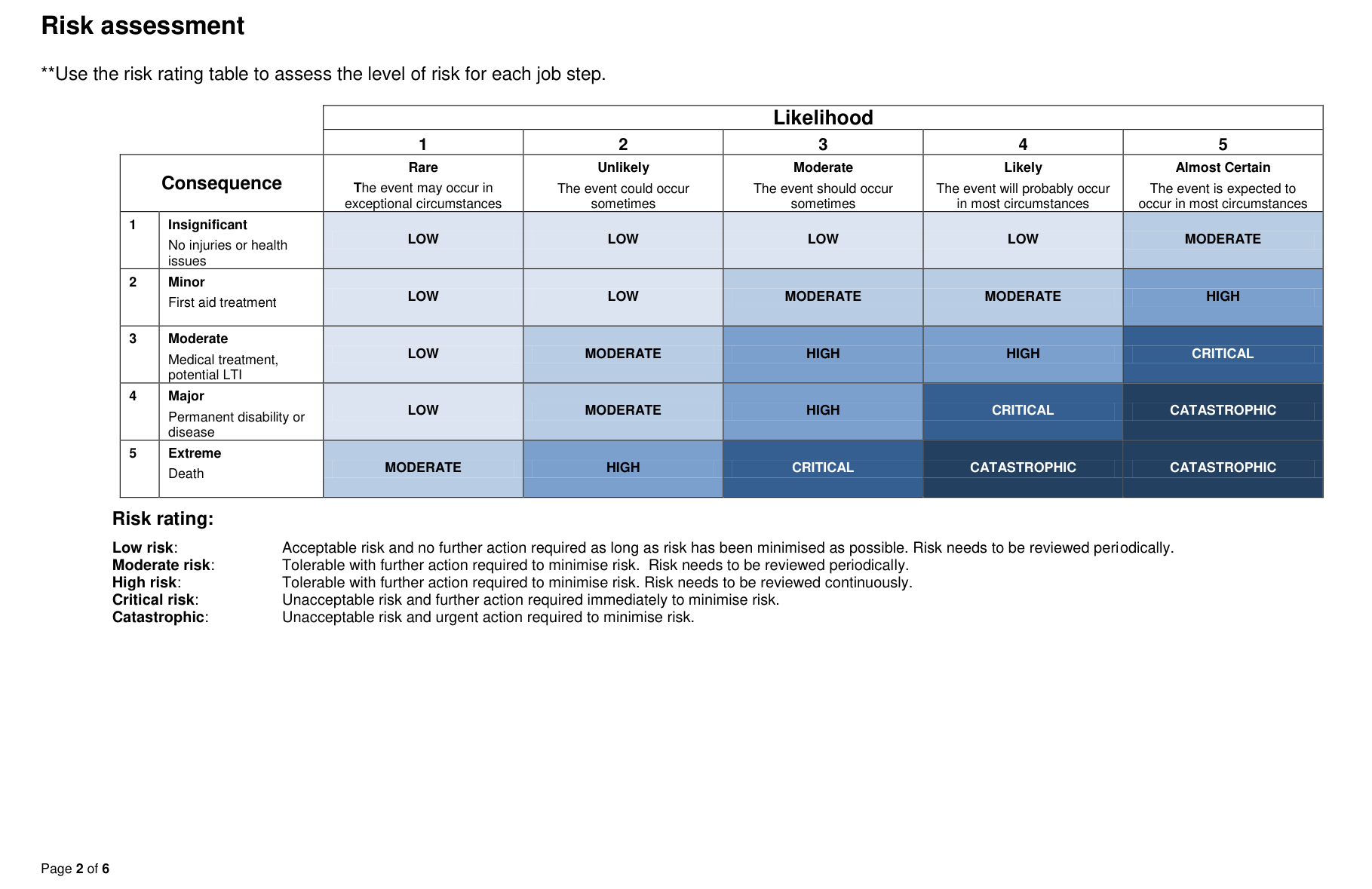
Likelihood is 1 Rare, 2 Unlikely, 3 Moderate, 4 Likely or 5 Almost Certain.
Consequence is 1 Insignificant, 2 Minor, 3 Moderate, 4 Major or 5 Extreme.
Risk rating

Low risk: Acceptable risk and no further action required as long as risk has been minimised as possible, and the risk needs to be reviewed periodically.
Moderate risk: Tolerable with further action required to minimise risk, and the risk needs to be reviewed periodically.
High risk: Tolerable with further action required to minimise risk, and the risk needs to be reviewed continuously.
Critical risk: Unacceptable risk and further action required immediately to minimise risk.
Catastrophic: Unacceptable risk and urgent action required to minimise risk.
Risk controls

Use the type of control suggested as measures to deal with the hazard.
Aim to use control measures from as high on the hierarchy of control list as possible. If that is not possible the next option down the list or a combination of the measures should be implemented.
Eliminate - if it is possible, the hazard should be removed completely. For example, get rid of dangerous machines.
Substitute - replace something that produces the hazard with something that does not produce a hazard. For example, replacing solvent based paint with water based paint. Risk assessment on the substitution must be conducted to ensure that it will not pose another hazard.
Engineering control - isolate a person from the hazard by creating physical barrier or making changes to process, equipment or plant to reduce the hazard. For example, install ventilation systems.
Administrative control - change the way a person works by establishing policies and procedures to minimise the risks. For example, job scheduling to limit exposure and posting hazard signs.
Use personal protective equipment (PPE) - protect a person from the hazard by wearing PPE. For example, wearing gloves, safety glasses, hard hats and high-visibility clothing. PPE must be correctly fitted, used and maintained to provide protection.
JSA - Action steps

Under JSA - Action steps, fill in the Step No, Job step details, Potential hazards, Risk rating**, How to control risks*** and Name of persons responsible for work. ** Use the risk rating table to assess the level of risk for each job step.
Fill in the Review number and the Version.
Print Names, Signatures and Dates
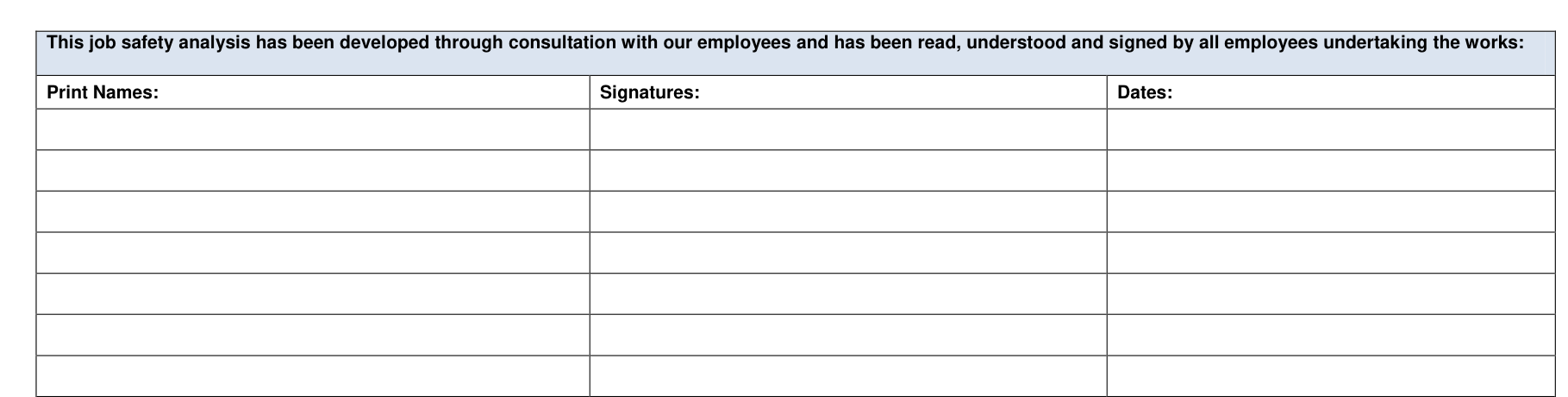
All employees undertaking the works read, understand and sign the job safety analysis, writing Print Names, Signatures and Dates.
Review No
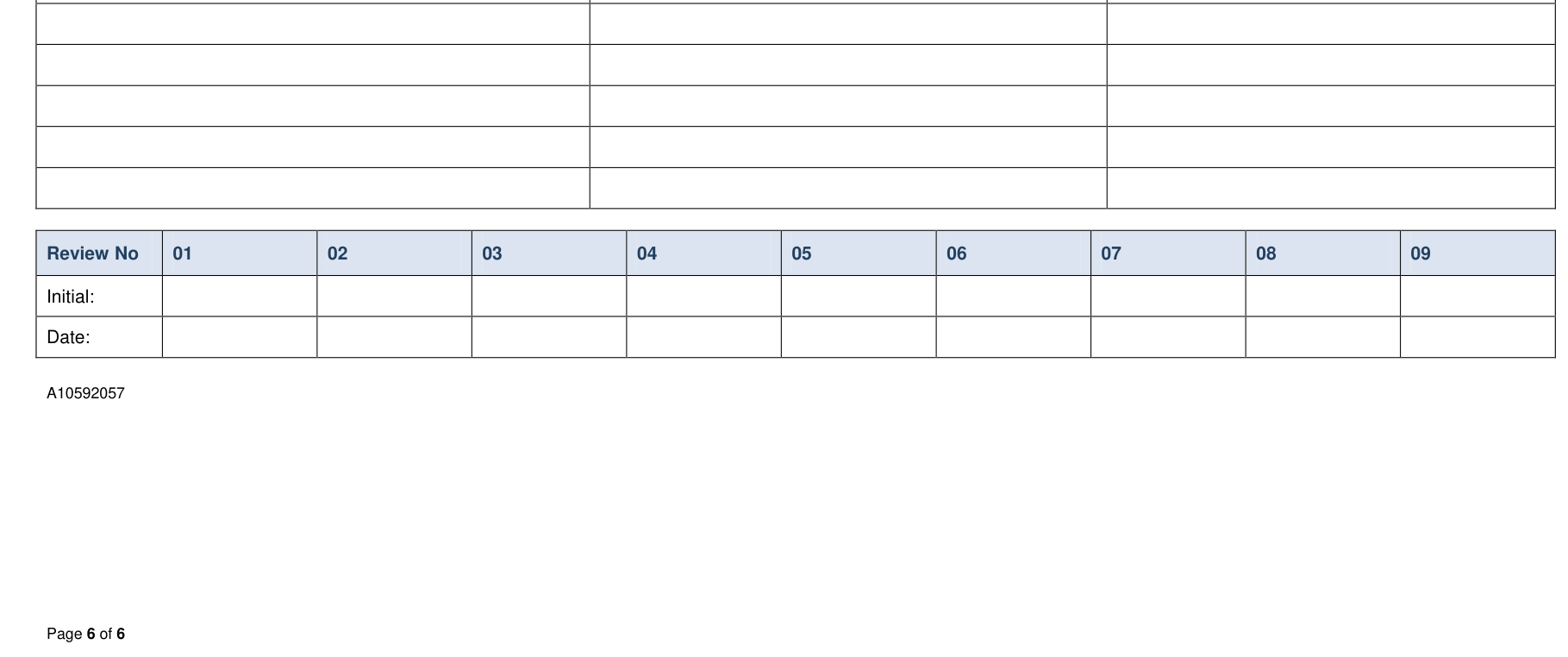
For Review No 01 to 09, fill in Initial and Date.
More rules for Job Safety Analysis (JSA)
The least effective control measure is the use of personal protective equipment (PPE) and it should be used as a last resort or a support to other control measures.
Information and training should be integrated with all levels of control to explain how controls work.
Sources
[1] Job Safety Analysis (JSA) (no printed edition) (the Official source link on this page).
