
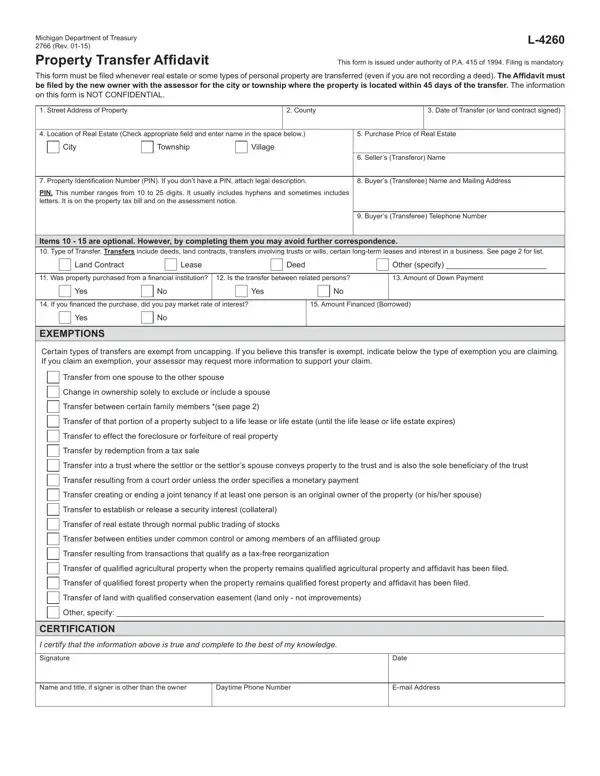
When individuals or entities transfer ownership of real estate or certain types of personal property in Michigan, the L-4260, also known as the Property Transfer Affidavit, becomes a vital document. This form, mandated under the authority of Public Act 415 of 1994, must be filed by the new owner with the local assessor's office within 45 days of the property transfer. Its purpose extends beyond the mere recording of a deed, serving as a comprehensive declaration that covers everything from the property's location and purchase price to the details of the transferor and transferee. The affidavit is also a vehicle for identifying exemptions that might prevent the "uncapping" of property values for tax purposes, highlighting its crucial role in the transition process. Due to its broad scope—encompassing deeds, land contracts, and transfers involving trusts, wills, and certain leases among other situations—it captures a wide array of transferring activities. The information provided on this form, crucial for both parties and the local government, is not confidential and is subject to verification and penalties for non-compliance. Filing this form accurately and timely is essential to avoid potential penalties, making it an important step in the property transaction process.
| Question | Answer |
|---|---|
| Form Name | Form L 4260 |
| Form Length | 2 pages |
| Fillable? | No |
| Fillable fields | 0 |
| Avg. time to fill out | 30 sec |
| Other names | how to property transfer, how to michigan property transfer affidavit, transfer affidavit michigan form, how to michigan transfer affidavit |