
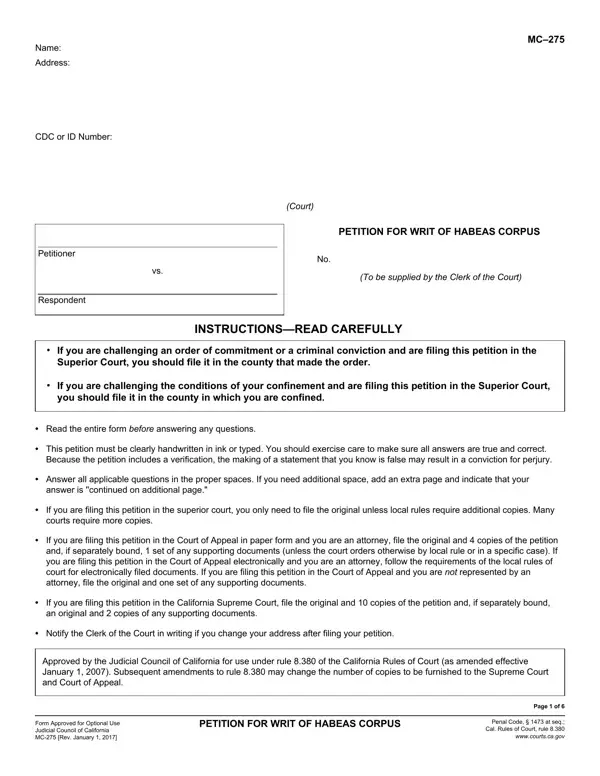
The MC-275 form serves as a beacon of hope for individuals seeking to challenge various aspects of their incarceration or conviction through the legal avenue known as the writ of habeas corpus. This powerful document allows petitioners, whether they are challenging an order of commitment, a criminal conviction, the conditions of their confinement, or other related issues, to present their case to a higher court. The form underscores the importance of filing in the correct jurisdiction, be it the Superior Court for most commitments and convictions or directly to the appellate-level courts for broader issues beyond direct sentencing or conviction. The meticulous instructions laid out in the MC-275 highlight the judicial system's emphasis on accuracy, thoroughness, and adherence to procedural norms—from presenting facts clearly and concisely, to substantiating claims with supporting documents, and navigating through the appeal process, if applicable. Additionally, the MC-275 mandates petitioners to disclose whether they exhausted available administrative remedies, a step that underscores the procedural gates through which one must pass before engaging the higher echelons of the judicial review process. Designed to streamline the process of petitioning for a writ of habeas corpus, the MC-275 form’s detailed sections ensure petitioners address the pertinent questions that will aid the court in its deliberation, potentially changing the petitioner's legal and penological status significantly.
| Question | Answer |
|---|---|
| Form Name | Form Mc 275 |
| Form Length | 6 pages |
| Fillable? | No |
| Fillable fields | 0 |
| Avg. time to fill out | 1 min 30 sec |
| Other names | form writ habeas corpus, habeas corpus writ of, california petition writ form, form petition habeas corpus |
Form Mc 275 isn’t the one you’re looking for?