
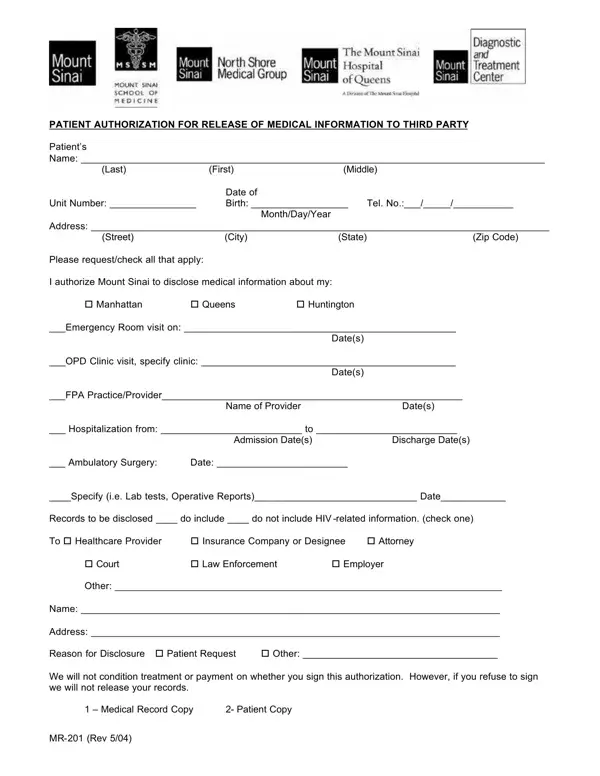
Understanding the intricacies of the MR-201 form is crucial for patients who wish to authorize the release of their medical information to a third party. This form plays a pivotal role in ensuring that healthcare providers, insurance companies, attorneys, or any other designated entities can access specific health records for various reasons, be it for ensuring continuity of care, legal matters, or insurance claims. It encompasses a range of information, from basic patient identification details, such as name and address, to more specific directives regarding the type of records to be released, including emergency room visits, hospitalizations, and even sensitive information like HIV-related data. With provisions for specifying exclusions, the form recognizes the patient's autonomy over their medical history. Furthermore, it highlights the non-contingent nature of medical treatment or payment upon the patient's consent to release records, emphasizing patient rights and medical ethics. The form also delineates the process for revocation of consent, underscoring the patient's ongoing control over their personal health information. Importantly, it acknowledges the potential for redisclosure by the recipient, which might not be protected under federal health information privacy regulations—shedding light on the nuances of privacy and the flow of confidential information in the healthcare ecosystem.
| Question | Answer |
|---|---|
| Form Name | Form Mr 201 |
| Form Length | 3 pages |
| Fillable? | No |
| Fillable fields | 0 |
| Avg. time to fill out | 30 sec |
| Other names | Huntington, mr 201 form, HIV, Sinai |
Form Mr 201 isn’t the one you’re looking for?