
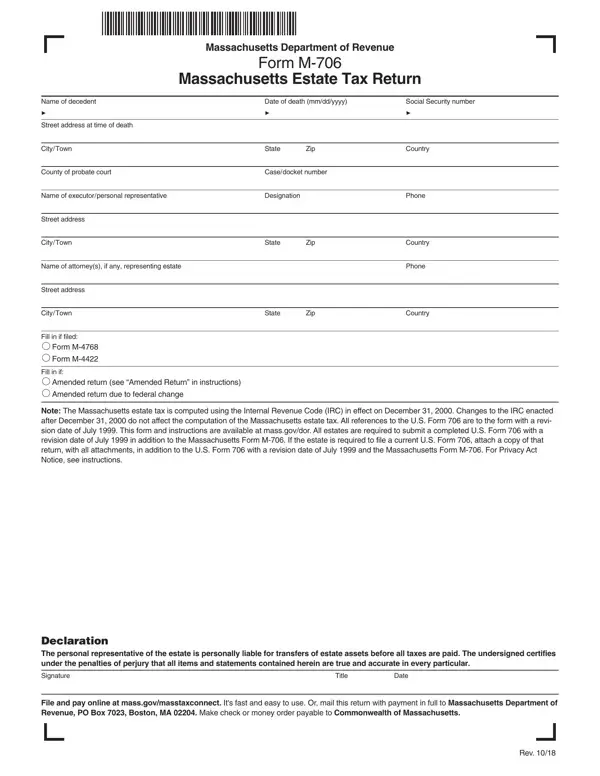
Navigating the complexities of estate planning and taxation can be a daunting task, especially when dealing with the intricate details required by specific forms such as the Massachusetts Form M-706. This form plays a crucial role in the process, primarily designed for reporting and calculating the estate tax due to the state of Massachusetts. It demands detailed information about the deceased, including their name, date of death, Social Security number, and a comprehensive breakdown of their estate. The form meticulously guides executors through various sections, from identifying insurance not included in the gross estate to adjustments for property owned in other states or countries. Additionally, it intertwines with federal tax obligations, requiring a complete U.S. Form 706 from July 1999 for comparative purposes, regardless of whether a current federal estate tax return is mandated. Beyond the basic inventory of the decedent's assets, Form M-706 delves into deductions allowable under the tax code, touching on funeral expenses, debts, and losses incurred, as well as specific bequests to spouses and charities. With options for amendments due to federal changes and a structure that accommodates non-resident decedents, it serves a dual purpose of tax calculation and compliance, ensuring that estates are properly accounted for and taxed in accordance with Massachusetts law. Understanding this form is essential for executors and personal representatives, providing a structured pathway to fulfill legal obligations while navigating the emotional and administrative challenges of managing a loved one's final affairs.
| Question | Answer |
|---|---|
| Form Name | M 706 Form |
| Form Length | 6 pages |
| Fillable? | Yes |
| Fillable fields | 167 |
| Avg. time to fill out | 2 min 15 sec |
| Other names | m 706 estate tax return, massachusetts estate tax forms, massachusetts estate tax return form m 706, form 706 mass |
M 706 Form isn’t the one you’re looking for?