
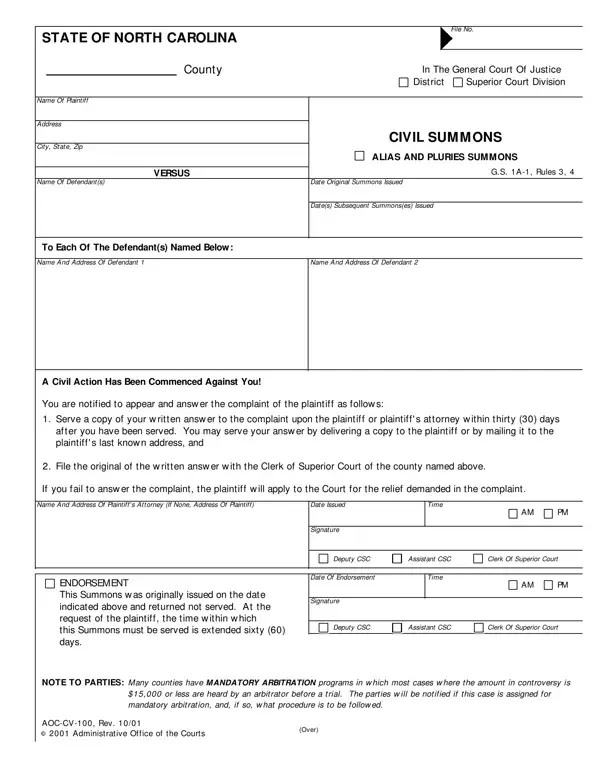
Serve a copy of your written answer to the complaint upon the plaintiff or plaintiff's attorney within thirty (30) days after you have been served.
How to serve: you may serve your answer by delivering a copy to the plaintiff or by mailing it to the plaintiff's last known address.
File: file the original of the written answer with the Clerk of Superior Court of the county named above.
If you fail to answer: the plaintiff will apply to the Court for the relief demanded in the complaint.
Lawyer: you may want to talk with a lawyer about your case as soon as possible.
| Question | Answer |
|---|---|
| Form Name | Form AOC-CV-100 |
| Form Length | 2 pages |
| Fillable? | Yes |
| Fillable fields | 93 |
| Avg. time to fill out | 16 min |
| Edition | Rev 12/23 |
| Issuing agency | Administrative Office of the Courts |
| Other names | AOC-CV-100, AOC CV 100, CV-100, NC civil summons, Civil Summons Alias and Pluries Summons |
| Official source | Form AOC-CV-100 (Rev 12/23), Administrative Office of the Courts |
Nc Civil Summons Form isn’t the one you’re looking for?