
NIRF-01 Form PDF Details

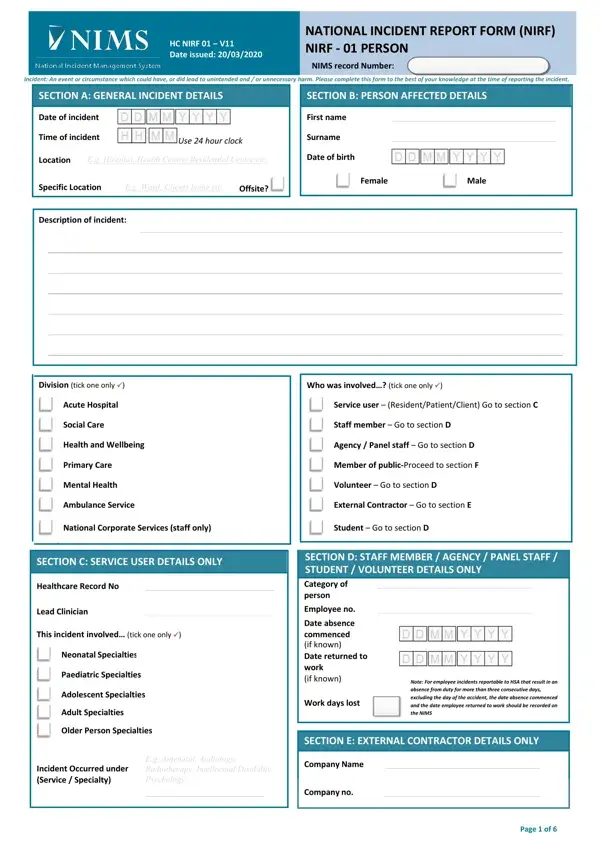
In today's fast-paced healthcare environment, the ability to respond effectively to incidents is critical for maintaining safety and quality standards. The National Incident Report Form (NIRF), specifically the HC NIRF 01 – V11, serves as a fundamental tool in this process. Issued on 20/03/2020, the form is designed to capture detailed information about incidents that could have or did lead to unintended and/or unnecessary harm. It encompasses a wide range of categories, including the general details of the incident, the people affected, the outcome at the time of the incident, and the type of injury, among others. This comprehensive approach ensures all aspects of the incident are documented, from service user details to external contractor information, outcomes, and types of injuries or diseases diagnosed as a result. This structured framework not only aids in the immediate response and management of incidents but also in the long-term analysis and strategy development to prevent future occurrences. By capturing specifics such as the location, involved parties, and the nature of the harm or potential harm, healthcare organizations can better understand incident patterns, improve safety protocols, and enhance overall care quality.

QuestionAnswer
Form Name NIRF-01 Form
Form Length 6 pages
Fillable? Yes
Fillable fields 112
Avg. time to fill out 18 min
Other names SCE 14 baseline fillable, IE incident form, NIRF-01 person, how to fill out a NIMS NIRF01 form

How to Edit NIRF-01 Form Online for Free

This step-by-step process guarantees a thorough approach to reporting incidents, crucial for improving healthcare safety.

1. Fill in General Incident Details

Begin by providing the date and time of the incident using a 24-hour clock format. Specify the general location, such as the hospital or health center, and the specific location, like the ward or patient's home, where the incident occurred.

2. Person Affected Details

Identify the person affected by the incident. Enter their first name, surname, and date of birth. Specify the gender and division they belong to — such as Acute Hospital, Social Care, etc. Indicate the category of the person involved, whether a service user, staff member, volunteer, or external contractor, directing to the appropriate subsequent section based on their role.

3. Describe the Incident

Provide a detailed description of the incident. This should include what happened, the sequence of events, and any immediate factors contributing to the incident.

4. The Outcome at the Time of the Incident

Record the immediate outcomes of the incident. This includes whether it was a near miss, resulted in no injury, required first aid, or led to more severe consequences such as long-term disability or death. Specify the body part affected if there was an injury.

5. Specify the Type of Injury

If applicable, detail the type of injury sustained. Options include specific injuries related to birth, blood-specific injuries, diagnosed diseases, and general injuries.

6. Identify the Type of Hazard

Indicate what type of hazard led to the incident, whether clinical care, medication issues, equipment failure, or environmental conditions.

7. Report Immediate Actions Taken

Note any immediate actions that were taken in response to the incident. This could include medical treatment provided, safety measures implemented, or other emergency responses.

8. Reporter and Witness Details

The person who identifies the incident should fill out their details and those of any witnesses. This includes names, contact information, and the role of the person reporting the incident.

9. Management Review

The line or department manager reviews the completed form, verifies open disclosure, and indicates whether the incident needs to be reported to external regulators or agencies.

10. Quality and Patient Safety Office Review

Finally, the Quality and Patient Safety Office must determine if the incident qualifies as a Serious Reportable Event (SRE) and complete its form section.