
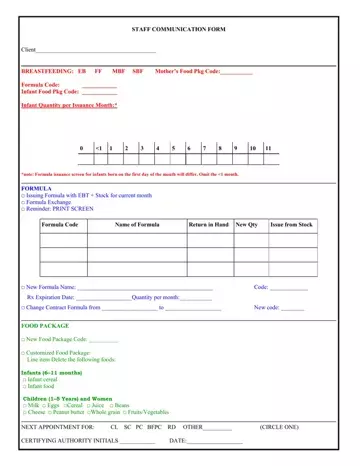
In today's fast-paced healthcare and social service environments, clear and effective communication is crucial, especially when it concerns the nutritional needs and well-being of clients. The Staff Communication Form plays a pivotal role in bridging the gap between various caregivers and the dietary requirements of those they serve, focusing predominantly on infants and women. This document meticulously records essential details ranging from breastfeeding preferences and formula needs to specific food package modifications catering to infants, children aged 1-5 years, and women. It meticulously tracks breastfeeding status, including exclusive breastfeeding (EB), formula feeding (FF), mixed breastfeeding (MBF), and supplemental breastfeeding (SBF), along with the mother’s and infant's food package codes. Furthermore, the form provides a structured method for issuing formula, executing formula exchanges, adjusting food packages, and scheduling follow-up appointments, ensuring no detail is overlooked. Key elements also include formula code tracking, name and quantity of formula issued or exchanged, and customization options for food packages to delete or add specific items like infant cereal, milk, eggs, and more, tailored to the individual's dietary needs. By fostering precise communication among staff, the form not only streamlines administrative processes but also significantly enhances the quality of care provided to clients.
| Question | Answer |
|---|---|
| Form Name | Staff Communication Form |
| Form Length | 1 pages |
| Fillable? | No |
| Fillable fields | 0 |
| Avg. time to fill out | 15 sec |
| Other names | effects of the different forms of communication used by staff, communicating with staff form, staff communication forms for nursing home, nursing home communication form for staff with nurses |