

VA Form 21-2680 at a glance
What it is: VA Form 21-2680, the Examination for Housebound Status or Permanent Need for Regular Aid and Attendance, is a form to determine eligibility for aid and attendance or housebound benefits.
Who signs: The veteran or claimant signs in Box 15A (required) and enters the date signed in Box 15B (MM/DD/YYYY). The examiner signs in Box 40 (required) and enters the date signed in Box 41 (MM/DD/YYYY).
The examiner must be a Medical Doctor (MD) or Doctor of Osteopathic (DO) medicine, physician assistant or advanced practice registered nurse.
A filled-in VA Form 21-2680 example: a veteran asks for Special Monthly Pension
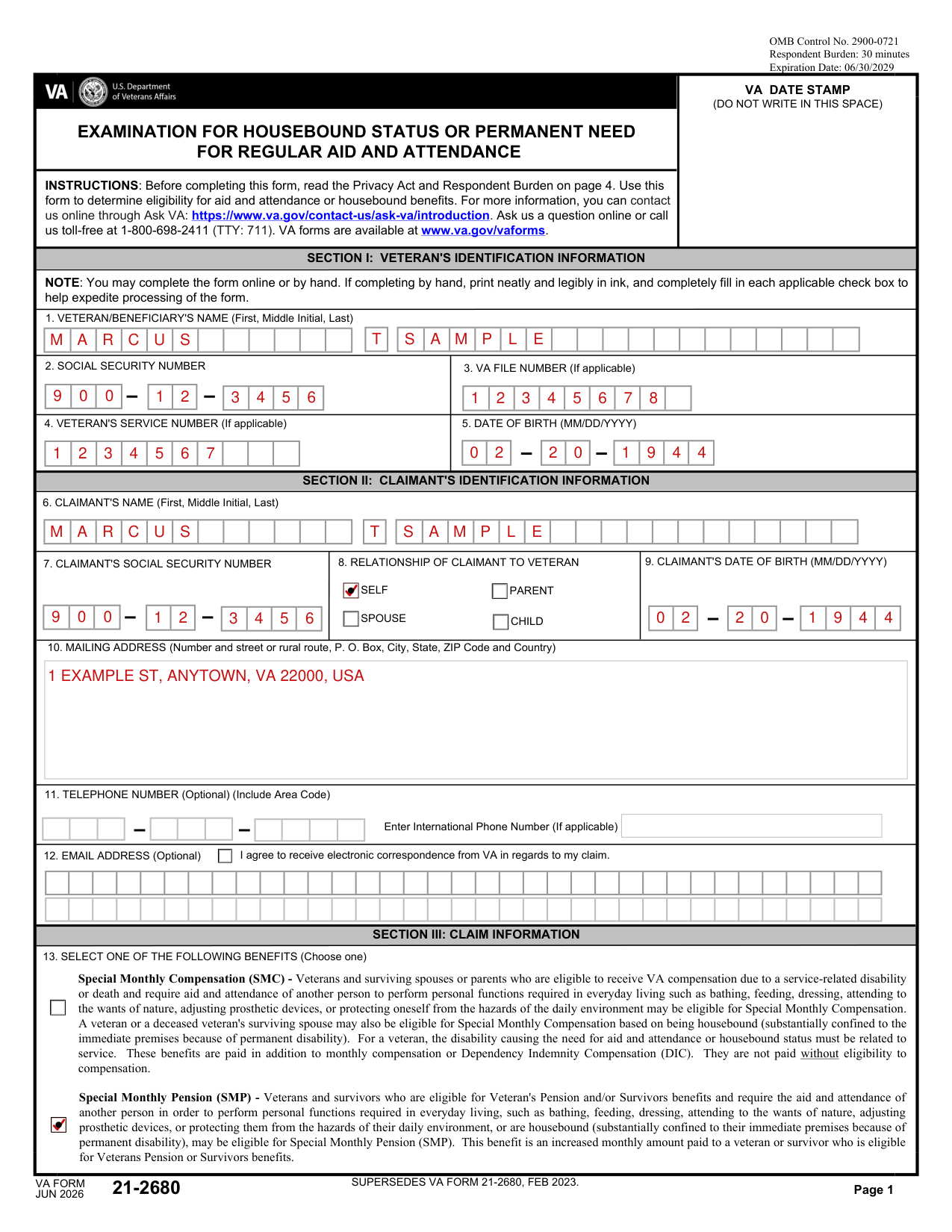
How to fill out VA Form 21-2680, box by box
Section I: Veteran's identification information
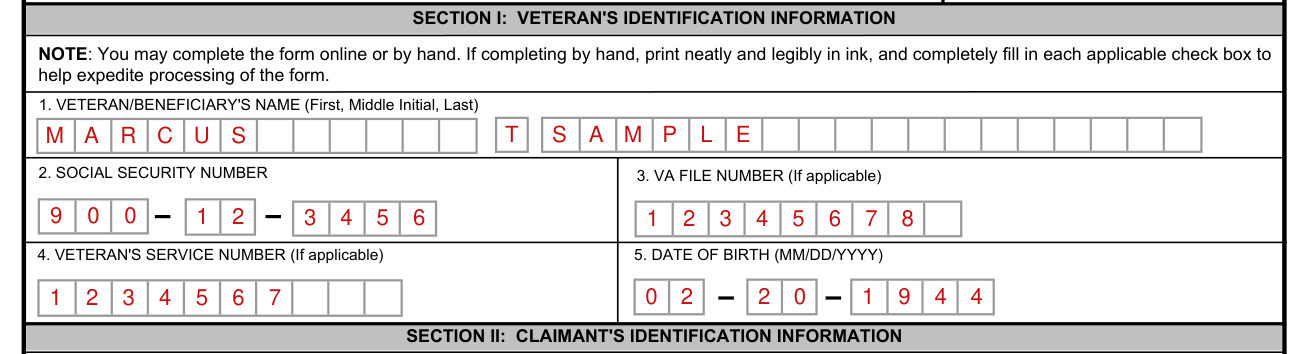
In Section I, enter the veteran/beneficiary's name (first, middle initial, last) in Box 1, the Social Security number in Box 2, the VA file number (if applicable) in Box 3, the veteran's service number (if applicable) in Box 4 and the date of birth (MM/DD/YYYY) in Box 5.
Enter the veteran's Social Security number on each of pages 2, 3 and 4.
Section II: Claimant's identification information
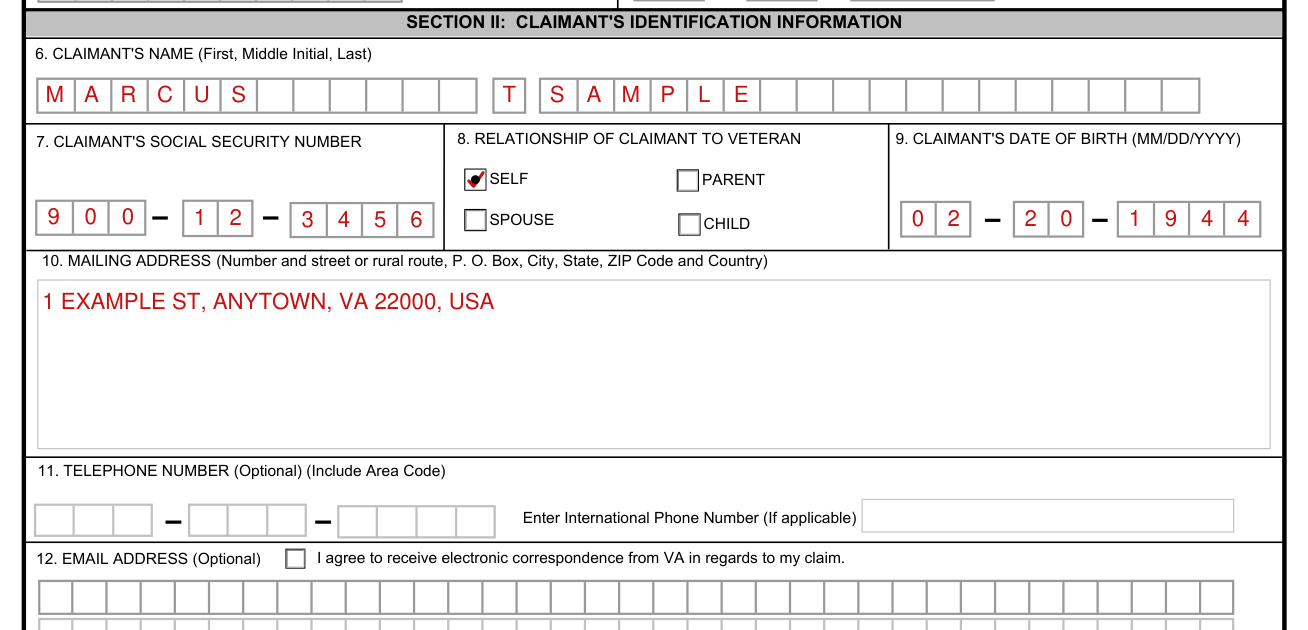
In Section II, enter the claimant's name (first, middle initial, last) in Box 6, the claimant's Social Security number in Box 7 and the claimant's date of birth (MM/DD/YYYY) in Box 9.
In Box 8, mark the relationship of the claimant to the veteran: self, parent, spouse or child.
Enter the claimant's mailing address in Box 10: number and street or rural route, P. O. Box, city, state, ZIP code and country.
Enter the telephone number in Box 11 (optional), including the area code, or the international phone number if applicable.
Enter the email address in Box 12 (optional). The check box is for agreeing to receive electronic correspondence from VA in regards to the claim.
Box 13: Select one of the following benefits
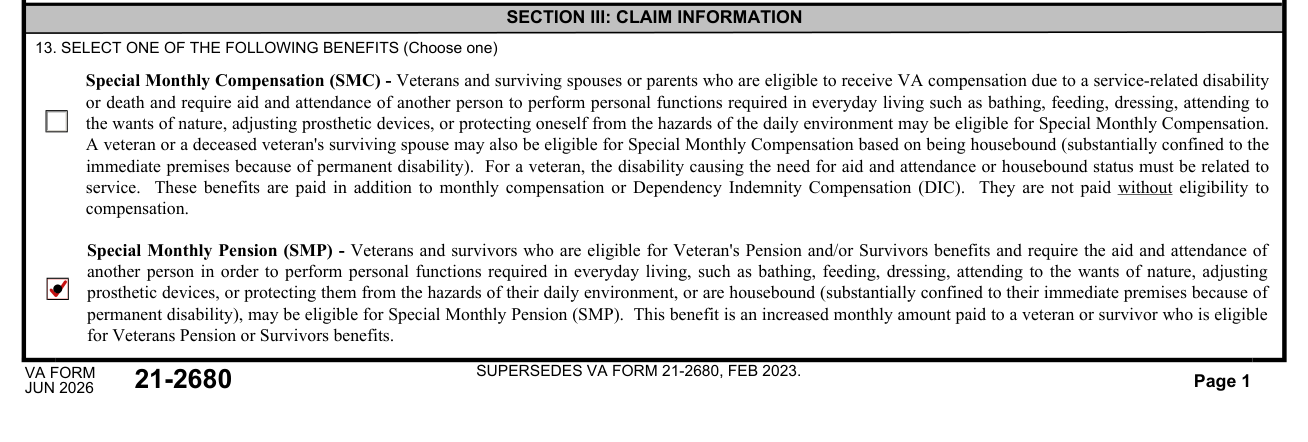
In Box 13, choose one benefit: Special Monthly Compensation (SMC) or Special Monthly Pension (SMP).
For Special Monthly Compensation (SMC), a veteran's disability causing the need for aid and attendance or housebound status must be related to service.
Special Monthly Compensation is paid in addition to monthly compensation or Dependency Indemnity Compensation (DIC), and is not paid without eligibility to compensation.
Section IV: Is veteran/claimant hospitalized?
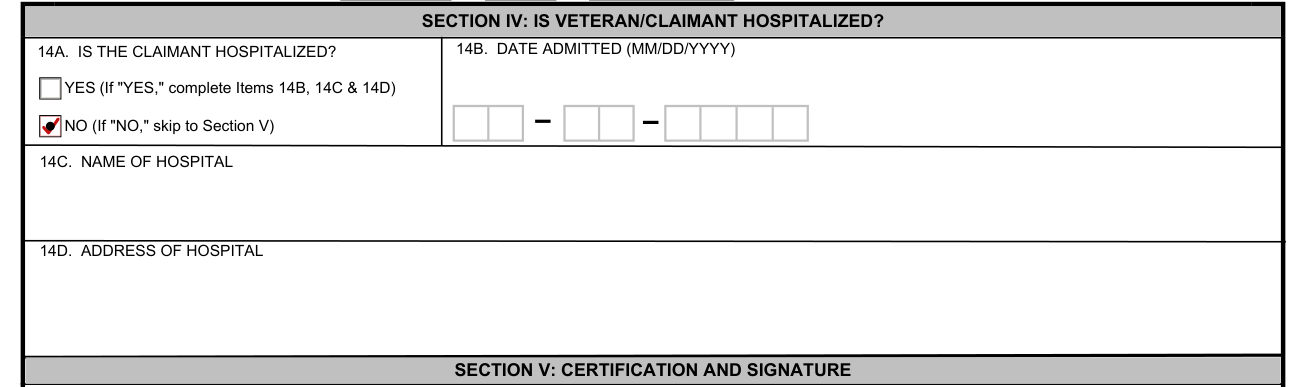
In Box 14A, is the claimant hospitalized? Mark YES or NO. If YES, complete Items 14B, 14C and 14D. If NO, skip to Section V.
Enter the date admitted (MM/DD/YYYY) in Box 14B, the name of the hospital in Box 14C and the address of the hospital in Box 14D.
Section V: Certification and signature

In Section V, the veteran or claimant certifies that the statements on this form are true and correct to the best of their knowledge and belief.
The veteran or claimant signs in Box 15A (required) and enters the date signed in Box 15B (MM/DD/YYYY).
Section VI: Examination information

Section VI is the examination information, and the remainder of the form must be filled out by the examiner.
Enter the date of examination (MM/DD/YYYY) in Box 16.
The purpose of the examination is to record manifestations and findings pertinent to the question of whether the veteran or claimant is housebound (confined to the home or immediate premises) or in need of the regular aid and attendance of another person.
Findings should be recorded to show whether the claimant is blind or bedridden.
Boxes 17 and 18: Diagnosis and permanent disabilities
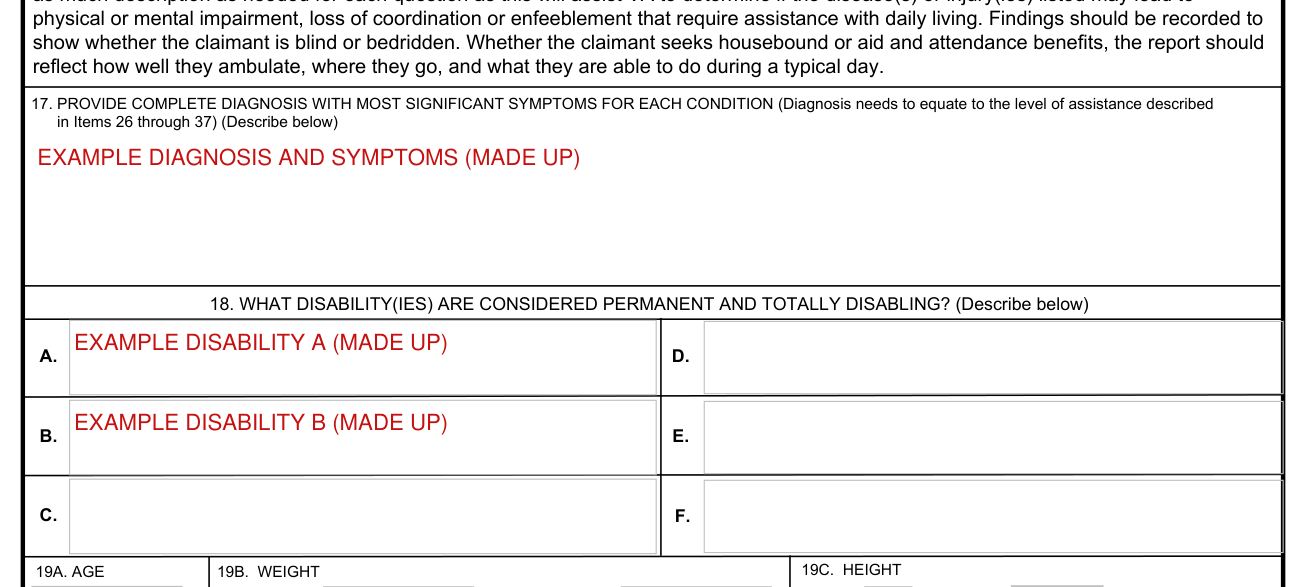
In Box 17, provide a complete diagnosis with the most significant symptoms for each condition. The diagnosis needs to equate to the level of assistance described in Items 26 through 37.
In Box 18, describe the disability(ies) considered permanent and totally disabling (A to F).
Boxes 19 to 25: Age, weight, height and gait
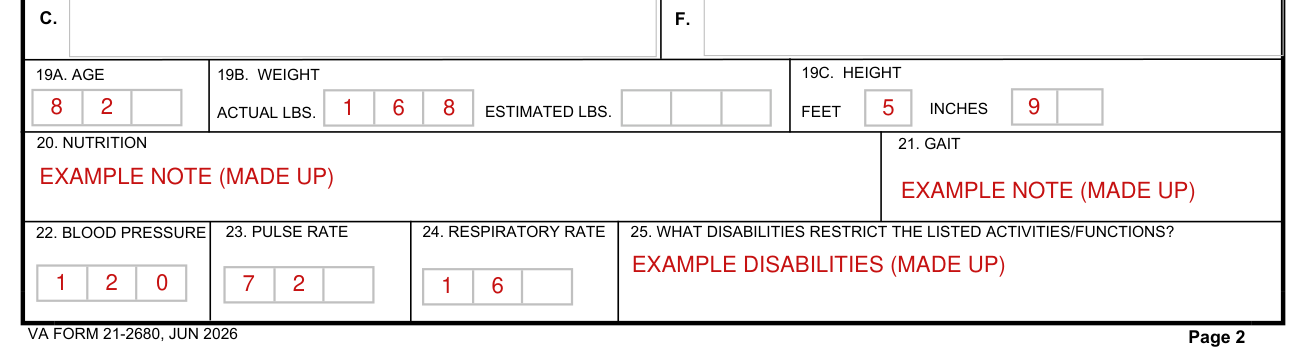
Enter the age in Box 19A, the weight in Box 19B (actual lbs. or estimated lbs.), the height in Box 19C (feet and inches), the nutrition in Box 20 and the gait in Box 21.
Enter the blood pressure in Box 22, the pulse rate in Box 23 and the respiratory rate in Box 24. In Box 25, write what disabilities restrict the listed activities/functions.
Boxes 26 and 27: Hours in bed and activities
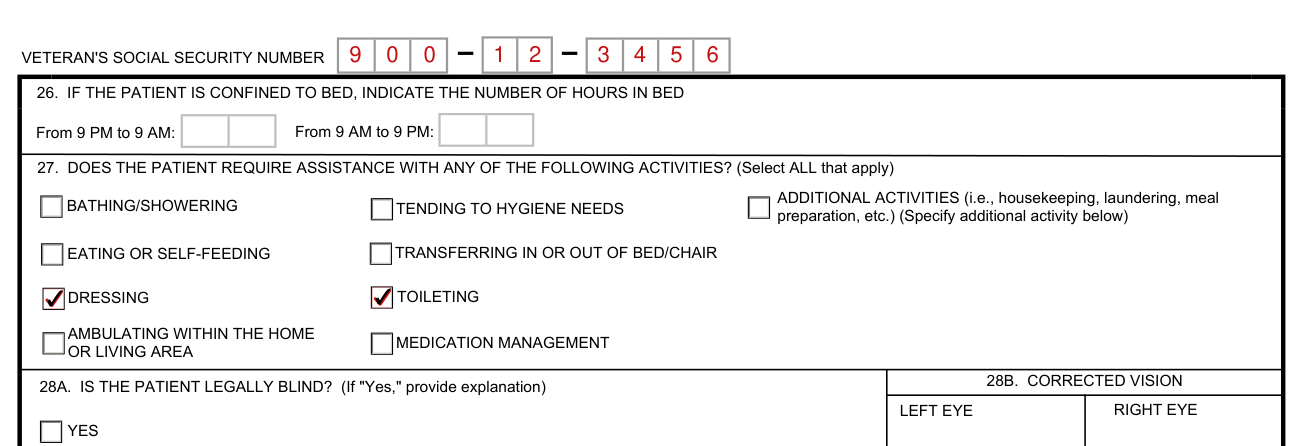
If the patient is confined to bed, indicate the number of hours in bed in Box 26: from 9 PM until 9 AM and from 9 AM until 9 PM.
In Box 27, select all that apply of the activities for which the patient requires assistance: bathing/showering, tending to hygiene needs, eating or self-feeding, transferring in or out of bed/chair, dressing, toileting, ambulating within the home or living area and medication management.
For additional activities (i.e., housekeeping, laundering, meal preparation, etc.), specify the additional activity.
Boxes 28A to 30: Legally blind, nursing home care and mental capacity
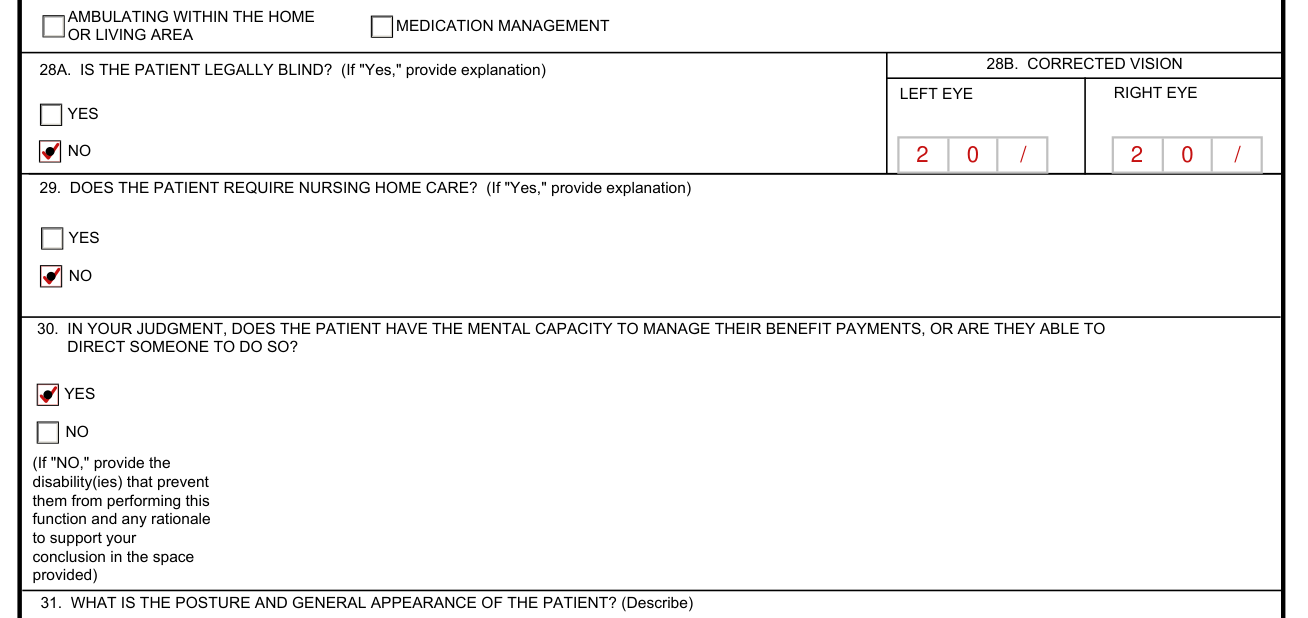
In Box 28A, is the patient legally blind? If YES, provide an explanation. In Box 28B, enter the corrected vision for the left eye and the right eye.
In Box 29, does the patient require nursing home care? Mark YES or NO. If YES, provide an explanation.
In Box 30, mark YES or NO: in your judgment, does the patient have the mental capacity to manage their benefit payments, or are they able to direct someone to do so? If NO, provide the disability(ies) that prevent them from performing this function and any rationale to support your conclusion.
Boxes 31 to 34: Posture, extremities, spine, trunk and neck
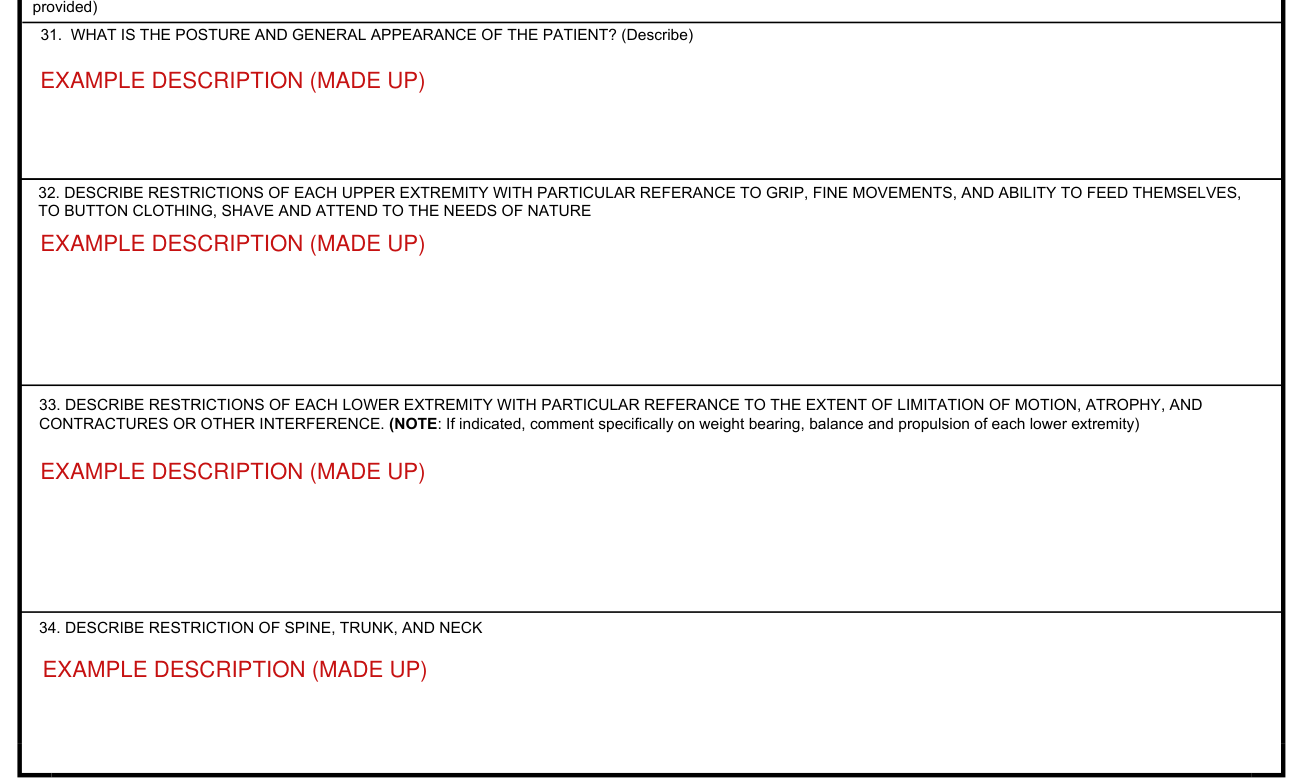
In Box 31, describe the posture and general appearance. In Box 32, describe restrictions of each upper extremity: grip, fine movements, and ability to feed themselves, to button clothing, shave and attend to the needs of nature.
In Box 33, describe restrictions of each lower extremity: the extent of limitation of motion, atrophy, and contractures or other interference. If indicated, comment specifically on weight bearing, balance and propulsion of each lower extremity. In Box 34, describe restriction of the spine, trunk, and neck.
Boxes 35 to 37: Other pathology and locomotion
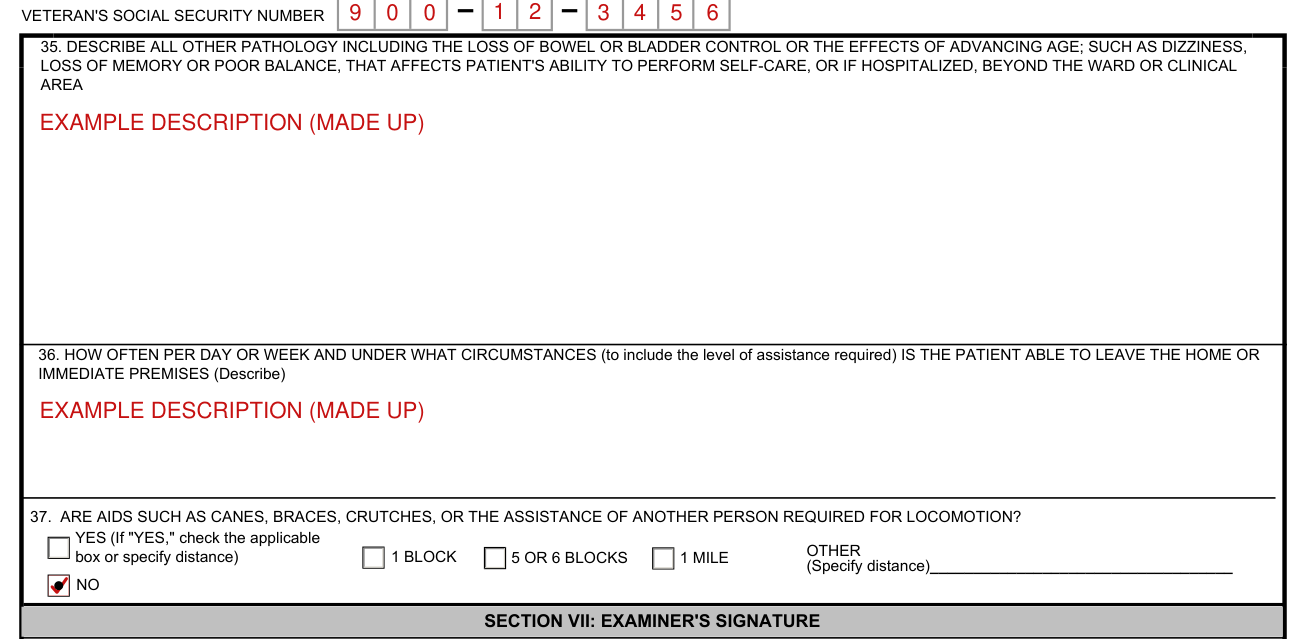
In Box 35, describe all other pathology including the loss of bowel or bladder control or the effects of advancing age, such as dizziness, loss of memory or poor balance, that affects the patient's ability to perform self-care, or if hospitalized, beyond the ward or clinical area.
In Box 36, describe how often per day or week and under what circumstances (to include the level of assistance required) the patient is able to leave the home or immediate premises.
In Box 37, are aids such as canes, braces, crutches, or the assistance of another person required for locomotion? Mark YES or NO. If YES, check the applicable box (1 block, 5 or 6 blocks or 1 mile) or specify distance in Other.
Section VII: Examiner's signature
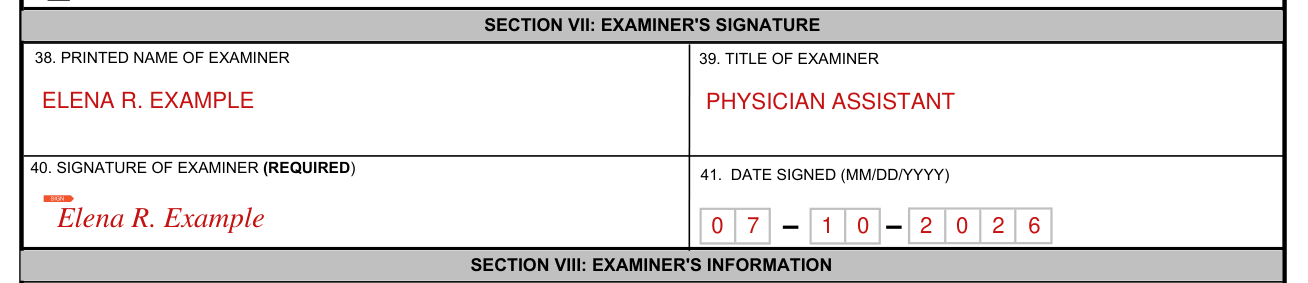
In Section VII, the examiner enters the printed name in Box 38 and the title in Box 39.
The examiner signs in Box 40 (required) and enters the date signed in Box 41 (MM/DD/YYYY).
Section VIII: Examiner's information
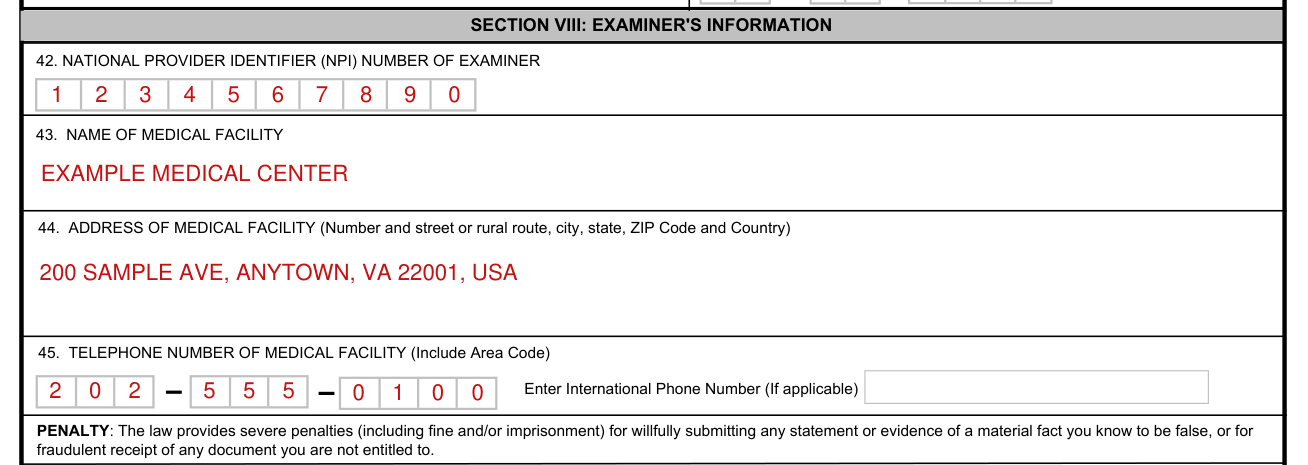
In Section VIII, enter the National Provider Identifier (NPI) number of the examiner in Box 42, the name of the medical facility in Box 43, the address of the medical facility in Box 44 and the telephone number of the medical facility (include area code) in Box 45, or the international phone number if applicable.
More rules for VA Form 21-2680
Do not write in the VA date stamp space.
Before you go
You may complete the form online or by hand. If completing by hand, print neatly and legibly in ink, and completely fill in each applicable check box to help expedite processing of the form.
Common questions about VA Form 21-2680
What is veterans administration aid and attendance?
Veterans and surviving spouses or parents who are eligible to receive VA compensation due to a service-related disability or death and require aid and attendance of another person to perform personal functions required in everyday living, such as bathing, feeding, dressing, attending to the wants of nature, adjusting prosthetic devices, or protecting oneself from the hazards of the daily environment, may be eligible for Special Monthly Compensation (SMC). Veterans and survivors who are eligible for Veteran's Pension and/or Survivors benefits and require the aid and attendance of another person, or are housebound (substantially confined to their immediate premises because of permanent disability), may be eligible for Special Monthly Pension (SMP). This benefit is an increased monthly amount paid to a veteran or survivor who is eligible for Veterans Pension or Survivors benefits.
Is there a penalty?
The law provides severe penalties (including fine and/or imprisonment) for willfully submitting any statement or evidence of a material fact you know to be false, or for fraudulent receipt of any document you are not entitled to.
Where to get help with VA Form 21-2680
Ask VA a question online or call toll-free at 1-800-698-2411 (TTY: 711).
Sources
[1] VA Form 21-2680 (JUN 2026), Examination for Housebound Status or Permanent Need for Regular Aid and Attendance, U.S. Department of Veterans Affairs (the Official source link on this page).
