Free Release of Promissory Note Template

A Release of Promissory Note is a document of record that shows a debt has been paid back in full under the terms of the promissory note. It sets the parties in the loan document free from their legal obligations and protects them from future legal action. The release is also called a Release of Debt Form, a Loan Satisfaction Letter, or a Promissory Note Payoff Letter. Create yours with FormsPal’s free release of promissory note template, or use our builder to make a customized promissory note template.

Last Updated: October 2026. This guide is reviewed and updated regularly to reflect current law. If you notice an error or outdated information, please contact us.
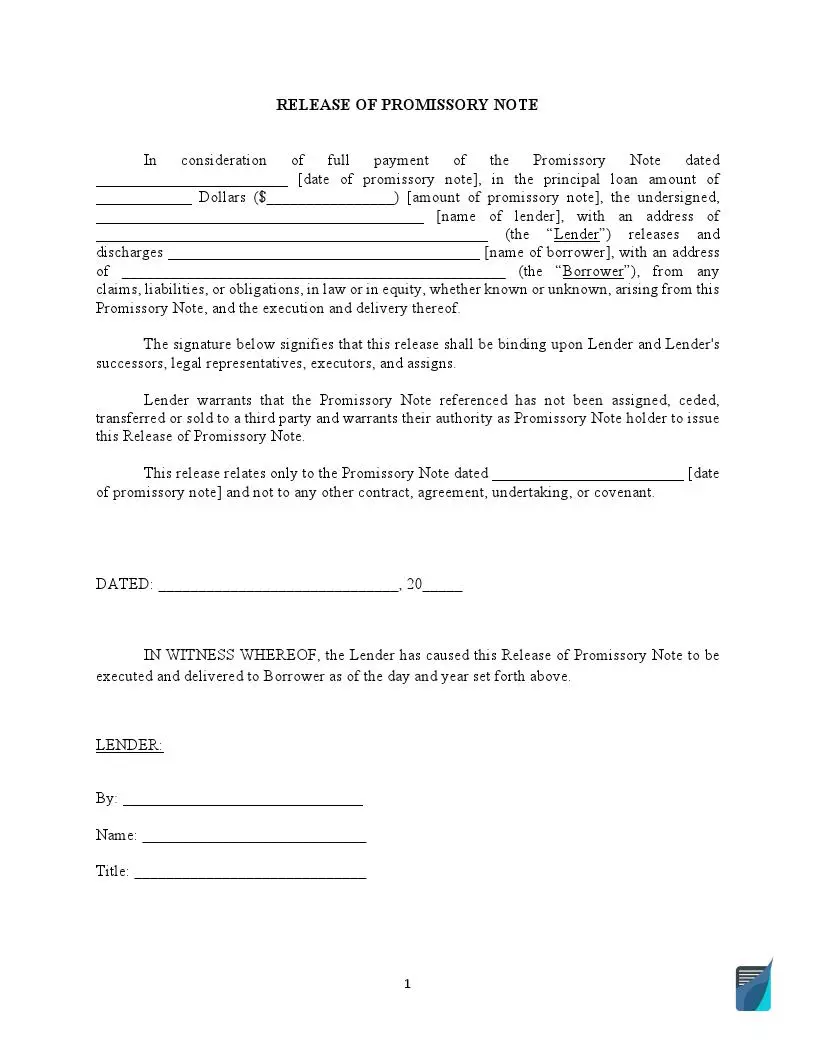
Release of promissory note form preview

Create a Personalized Release of Promissory Note Form online in under 5 minutes!

Build Your Document

Answer a few simple questions to make your document in minutes

Save and Print

Save progress and finish on any device, download and print anytime

Sign and Use

Your valid, lawyer-approved document is ready

... or download your Release of Promissory Note Template as a  PDF file

When to Use a Release of Promissory Note

A promissory note release form is used when everything owed under the note has been paid back. That includes the original sum, the interest, and any late fees or penalties, with the final payment made on the day written in the note.

Common situations include:

  • A personal promissory note paid off by a friend or relative
  • A business promissory note repaid in full, early or on schedule
  • A note closed through a settlement for a smaller sum
  • A debt the noteholder has chosen to forgive
  • A secured note where the collateral is going back to its owner

The release form is signed by the lender and provided to the borrower, relinquishing the borrower from all obligations under the law.

Sometimes, the parties enter into a settlement where the noteholder may accept lesser than the original money due or even forgive a debt. Even in those situations, a promissory note release must be used to record that the transaction is complete.

It should be noted that the death of a noteholder does not release the borrower under the law, except where the original note mentions that the death of the noteholder will cancel the debt.

What to Include in a Release of Promissory Note

A complete release gives both sides a clear record of what was paid and when it was settled in full. The release of promissory note form must include the following information:

  • Name of the borrower and lender
  • A reference to the original note identifying the note by mentioning the date, time, and the place
  • The total amount paid back (mention different amounts by identifying them as principal, interest, late fees)
  • Date of the release form
  • Signature of both the borrower and lender

After putting the signature of both the parties, the signed document must be given to both the borrower and the lender. The release form should be preserved as a record by both parties.

Template Preview
Create a Personalized Release of Promissory Note Form online in under 5 minutes!

How to Fill Out a Release of Promissory Note

These steps follow the FormsPal template this page hands out, from the opening paragraph at the top to the LENDER block at the bottom. While filling out a promissory note release form, the following steps must be followed:

The screenshots under each step show the FormsPal Release of Promissory Note template filled with sample entries in blue, so you can see where each answer goes. The names, addresses, dates and amounts are examples only.
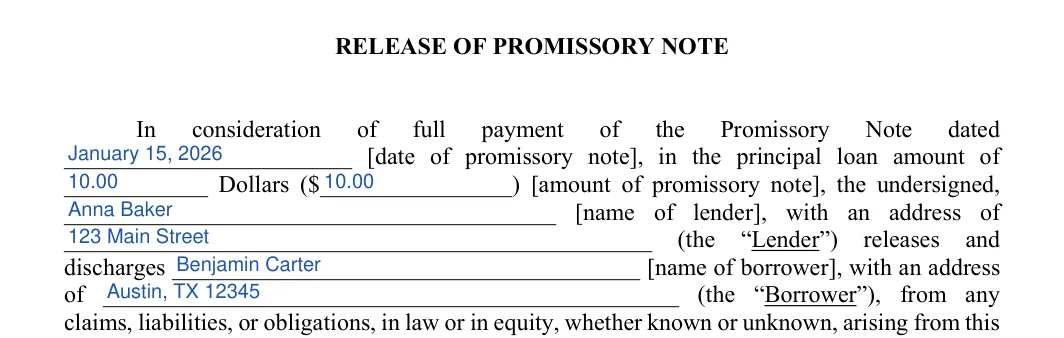

  1. Release of Promissory Note: Note, Amount, Lender and Borrower
    In the opening paragraph, enter the date of the promissory note and the principal in words and in figures. Then add the Lender’s name and address and the Borrower’s name and address.
    Release of Promissory Note: RELEASE OF PROMISSORY NOTE, filled with sample entries
    Step 1: sample entries, not a real document.
  2. Promissory Note Date: Repeat the Note Date
    In the paragraph that begins “This release relates only to the Promissory Note dated”, enter the same note date you used in step 1.
    Release of Promissory Note: Promissory note date, filled with sample entries
    Step 2: sample entries, not a real document.
  3. Date and Year: Fill In the DATED Line
    On the DATED line, write the day and month, then the last digits of the year after “20”.
    Release of Promissory Note: Date, Year, filled with sample entries
    Step 3: sample entries, not a real document.
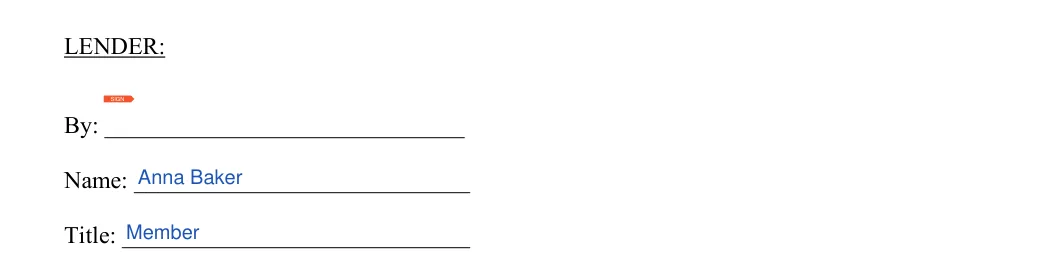
  4. LENDER: Sign, Then Add Name and Title
    Under LENDER, sign on the By line, then print the signer’s name and title on the Name and Title lines.
    Release of Promissory Note: LENDER, filled with sample entries
    Step 4: sample entries, not a real document.

How to Sign and Use the Release of Promissory Note

It is important to note that a promissory note release, once signed, is an agreement set in stone and no changes can be made later. The following information should be kept in mind while signing it:

  1. Make sure the transaction is complete. Before putting your signature, make sure that all pending payments from the borrower are completed. All legal terms related to debt money, interest, late fees, penalties, and date must be checked. Once the promissory note release is signed, the original note becomes null and void under the law.
  2. Address the lien. If the note was a secured note, then all documentation to address, cancel, or terminate the lien must be completed. Usually, a release of lien or discharge of security agreement is also signed along with the release form where the note was secured with personal property. If the note was secured with a mortgage on real property, then a release of mortgage should be signed. If there is a deed of trust, then a deed transferring the property to the borrower should be made as well by the trustee.
  3. Check and recheck the original promissory note documents. Go through the promissory note to check and recheck that all the terms, steps, and procedures prescribed in the document are complete.
  4. Sign the release. After all the details are filled in, both parties should sign it.
  5. Provide a copy. When the release is complete, give each side a copy of the signed paperwork to keep with the promissory note records.
Check that the names, dates and amounts on the release match the original promissory note and any related forms before you print it.

Keep Your Promissory Note Records Together

Once the release is signed, the paperwork for the promissory note is complete, and it pays to keep everything in one place. A tidy file saves time if a question about the payment history comes up later, whether it is a bank asking for proof of a payoff or a relative asking what was settled. Typically, the release is stored together with the following items, including any forms signed for the same promissory note:

  • The original promissory note, marked as paid if the parties agree to do so
  • Proof of each payment, such as bank statements, receipts or cancelled checks
  • Any payment schedule, side letter or settlement agreement connected to the note
  • Related forms for any collateral, such as a lien release for a vehicle or equipment
  • The signed release, with a copy for each side

A digital copy is a handy backup. Scan the signed pages, save the file under a clear name such as the day of the note and the names of the parties, and store it in a secure folder or cloud drive.

Frequently Asked Questions

What is the difference between a promissory note and a release of promissory note?

A promissory note records that a debt exists between the parties. A release of promissory note shows that the transaction has been completed between the parties. It records that the original sum plus the interest has been paid back under their agreement.

Do I have to notarize the release of a promissory note?

Even though not mandatory under the law, it is advisable to get the release form notarized to avoid any future issues that may arise related to the validity of the release itself. If you decide not to get your release form notarized, make sure there is no mention of a notary in the release form.

Can I fill in the template on my computer?

Yes. Download the PDF and type your entries into its fields with the FormsPal PDF editor, or print the template and write them by hand. Like most PDF forms, the template has 13 fillable fields.

What is the difference between a payoff letter and a release of promissory note?

The two are related but do different jobs. A payoff letter typically states the sum needed to pay off a debt, while a release of promissory note records that the payment was made and the note is settled. Some people use the names interchangeably, so check what the paperwork actually says. Both are forms people use to close out a promissory note.

Can I use the template for money lent between family or friends?

The template can be used for a personal promissory note between family or friends as well as a business one, as long as the debt is recorded in a promissory note. Fill in the names, the sum and the dates, and keep a signed copy for each side.

What details do I need before I start filling out the template?

Have these ready before you open the form:

  • The day the promissory note was signed
  • The principal and any interest that was paid back
  • The full names and addresses of both sides
  • The day the final payment was made

With these in hand, the four steps above take only a few minutes.

What should I do with the release after it is signed?

Gather these items in one place and give a copy of the release to each side:

  • The original promissory note
  • The proof of payment
  • The signed release and any other forms signed with it

A scanned copy stored in a safe folder is a handy backup.

General information, not legal or tax advice.

Jennifer M. Settles
Jennifer M. Settles
Author & Attorney
With over 25 years of experience as a business and transactional attorney, Jennifer has mastered the craft of closing highly successful deals for her clients. Through her wide-ranging expertise in commercial contracts, real estate transactions, M&A and corporate law, Jennifer secures results that are second-to-none.
Published: May 10, 2022