
Updated:
Our earnest money contract is a receipt confirming a buyer's home deposit. It names the deposit amount, the buyer, the seller, the property and the escrow agent holding the money. Buyers and escrow agents use it once a real estate purchase contract is signed.
Use the earnest money contract form below to create this receipt online, or download it as a PDF or Word file. Find it with our other forms used with a real estate purchase contract.
The earnest money contract on this page is a deposit receipt signed by the escrow agent, which shows how much the buyer deposits as a sign of good faith, who holds that money and which dates of the deal it is tied to. The form's signature block is for the escrow agent alone, so the receipt binds neither the buyer nor the seller, and the deposit terms they agree to belong in the signed purchase agreement. A paper from someone else with the same name may be the purchase contract itself, so read its title and signature lines before signing.
The money goes to an escrow agent, the person or company holding the deposit, and it sits in an escrow or trust account while the deal moves toward closing. Sellers read the deposit as a sign that the buyer is serious and has funds behind the offer.
An earnest money receipt is the escrow agent's signed acknowledgment that the buyer's deposit has arrived, which gives the buyer proof of the earnest money deposit to show the seller. The same paper also goes by the names escrow deposit receipt, EMD receipt and earnest money deposit form.
The FormsPal template does both jobs in the same document: it sets out the deposit and the deal details, then closes with the escrow agent's name, title and date.
The purchase agreement sets out the terms of the sale. The earnest money receipt is a short record that the escrow agent has received the deposit. The 2 documents work together, so keep them side by side.
Use an earnest money agreement when a buyer puts down a deposit on real estate and a third party will hold that money until closing. In a sale by owner, write the deposit terms into the purchase agreement, because this receipt only confirms that the escrow agent has the money.
A deal in progress also changes how the home is marketed. Once a seller accepts an offer, the multiple listing service (MLS) used by real estate brokers can show the home as "under contract", so other buyers and their agents move on to homes still available. The seller wants something solid in return for that lost attention, and the deposit provides it.
The buyer gets a signed paper trail for the deposit, and the offer can name the deposit amount for the seller to weigh.
The seller gets some assurance that the buyer will not back out without a reason the purchase agreement allows, such as an unsatisfactory home inspection that gives the buyer the right to the money back. A buyer who walks away with no such reason puts the deposit at risk, depending on the agreement's terms.
The earnest money contract covers the deposit only, so the price, the closing terms and the rest of the sale belong in the main purchase agreement. When a deal falls apart and the parties need to split the money, use the release form described further down this page.
An earnest money contract should identify the deposit, the parties, the property, the key dates and the escrow agent, so anyone reading it can match the money to a specific deal. The FormsPal template asks for these details:
Keep the purchase agreement nearby, because the receipt asks for the seller, the buyer, the property address and several dates from it. Ask the escrow agent for their full name and title too.
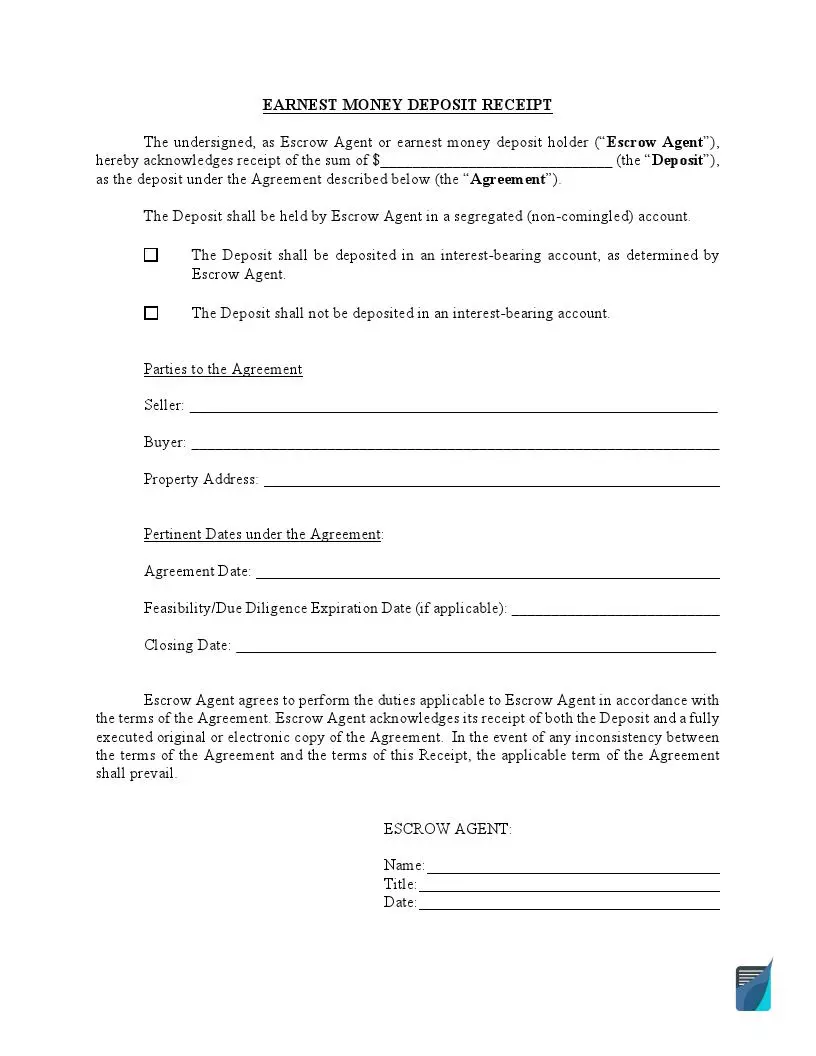
Fill out the earnest money deposit form from top to bottom, copying each detail from the signed purchase agreement so the amount, the names and the dates match the deal. Each step matches one part of the form, in the same order as the form itself.
The template is written from the escrow agent's point of view, since the agent acknowledges receipt of the deposit. You can enter the amount and the purchase agreement details first, then pass the receipt to the escrow agent to add their name, title and date.
The screenshots under each step show the FormsPal Earnest Money Contract template filled with sample entries in blue, so you can see where each answer goes. The names, addresses, dates and amounts are examples only.

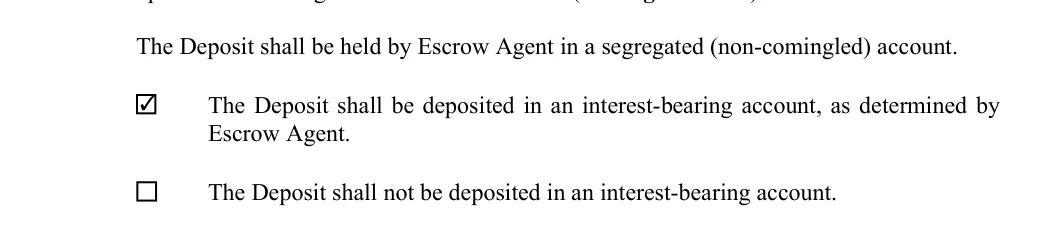
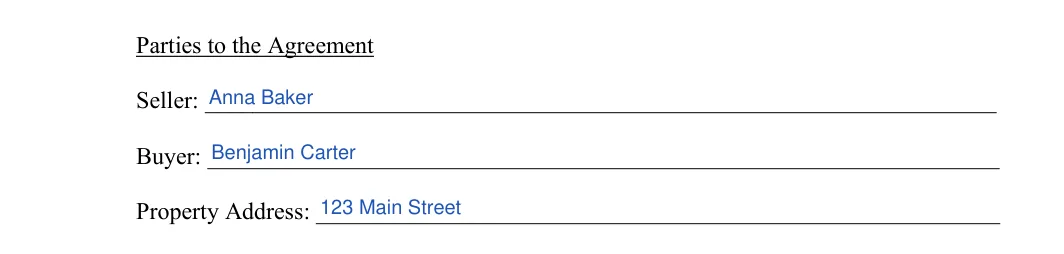
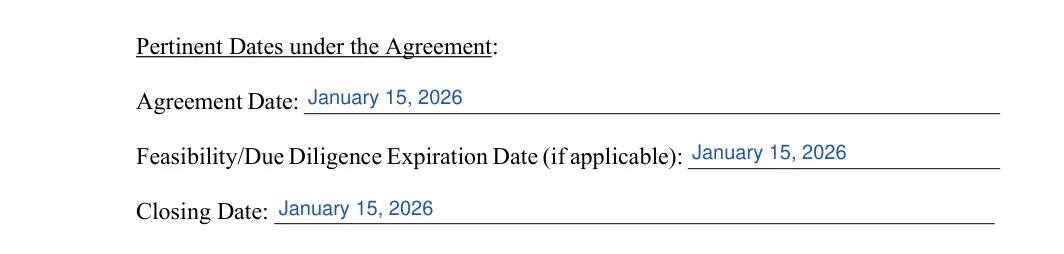



Send earnest money the way the purchase agreement or the escrow agent's instructions say, then get the signed receipt back as proof of the payment. Confirm the account details with the escrow agent by phone before any wire transfer, because emailed payment instructions can be faked.
Whether a buyer gets earnest money back depends first on the purchase agreement and its contingencies, the clauses that let a buyer leave the deal for a stated reason. In the places below, a statute also returns the deposit when the buyer ends the deal over the seller's property disclosure, on the conditions shown.
| Where | When the buyer can end the deal | What happens to the deposit | Source |
|---|---|---|---|
| Louisiana | If the property disclosure document for residential real property is delivered after the buyer makes an offer, the buyer may end the contract or withdraw the offer no later than seventy-two hours after receiving it, excluding weekends and federal and state holidays. In a sale, the right is waived if not used before transfer of title or occupancy, whichever is earlier. | Notwithstanding any other agreement, the termination is without penalty and any deposit or earnest money is promptly returned. | La. Rev. Stat. § 9:3198 |
| Mississippi | For residential property of 1 to 4 units, if the seller does not deliver the Property Condition Disclosure Statement before the buyer signs an offer or a binding contract, the buyer may end the contract by written notice within three days after in-person delivery of the statement or an amendment, or within five days after delivery by mail. The seller's duty does not apply where a specific statutory exclusion covers the seller, such as a transfer by any foreclosure sale or by a fiduciary in the administration of an estate. | The buyer gets a full return of earnest money. | Mississippi Real Estate Commission, Property Condition Disclosure Statement (PCDS) form (rev. 04-19-2023), implementing Miss. Code Ann. §§ 89-1-501 to 89-1-527 |
| Oregon | If the seller issues a property disclosure statement and the buyer has not waived the right in writing, the buyer may revoke the offer within five business days after delivery of the statement, by delivering to the seller a separate signed written statement of revocation disapproving the seller's disclosure. | The buyer is entitled to immediate return of all deposits delivered to any party or escrow agent, and the offer is void. | Or. Rev. Stat. § 105.475 |
This table shows examples, not a full list. Outside it, read the seller disclosure rules where the home sits alongside the purchase agreement, because the time to act can be short.
A release of earnest money settles who receives the deposit after a deal ends, so the escrow agent has the parties' signed answer in hand before paying anything out.
Release of Earnest Money: use this form to release all or one party under the purchase agreement from liability and determine how the earnest money deposit should be distributed.
Earnest money is not the down payment itself, though at closing it can count toward the down payment or the closing costs. The deposit is a promise of good faith made to the seller, while the down payment is the buyer's share of the price, with a lender often covering the rest.
Buyers usually pay earnest money after the seller accepts the offer and both sides sign the purchase agreement, within the time that agreement sets. The offer itself can name the deposit amount, so the seller can weigh it against other offers.
Buyers typically get earnest money back or credited when the deal closes, or when they leave the deal under a contingency the purchase agreement gives them. The table above lists places where a seller's property disclosure can also let the buyer leave with the deposit returned.
A seller can object to a refund, and the purchase agreement and the escrow instructions then shape what happens next. An objection does not override every rule, as the Louisiana row of the table above shows.
The buyer and the seller set the amount of earnest money in the purchase agreement, and our legal sources hold no set amount for it. Write the agreed amount in the Deposit blank of the form, exactly as the purchase agreement shows it.
After the deposit, the earnest money stays in an escrow or trust account until closing or until the deal ends. If the deal closes, the money can go toward the closing costs or the down payment. If the deal fails, the purchase agreement usually decides which party receives it, unless a statute returns the deposit after a buyer ends the deal over the seller's disclosure, as the Louisiana row of the table above shows.
Yes, you can fill out the earnest money contract form online by selecting Create My Document at the top of this page and answering a few questions. Your progress saves, so you can finish on any device. You can also download the PDF or Word file and fill in the PDF with the FormsPal PDF editor.
You can download the earnest money contract form in 2 formats, as a PDF or as a Word file. The PDF keeps the layout of the form, and the Word file is handy when you want to edit the text before you print.
General information, not legal or tax advice.
