
An unconditional mechanics lien release form is a one-page waiver a contractor signs after getting paid. The Unconditional Mechanic’s Lien Release is considered proof that the contractor has received progress payment for work, materials, or labor supplied in full. This mechanic’s lien form makes a proprietor (or financial institution) no longer liable for the debt compensation. The creation of the release of liability form is regulated by each state differently. Thus it is recommended to look into the details before the form completion.
Last Updated: October 2026. This guide is reviewed and updated regularly to reflect current law. If you notice an error or outdated information, please contact us.
Build Your Document
Answer a few simple questions to make your document in minutes
Save and Print
Save progress and finish on any device, download and print anytime
Sign and Use
Your valid, lawyer-approved document is ready
A Mechanic’s Lien will be attached to the homeowner’s real property title, making it technically impossible to sell the premises. Keep in mind that the UMLR is always created before the actual lien is filed. Once the laborer has signed the form, they affirm to have gotten the money and release or waive the right to lien the property immediately. Before appending the signature, ensure that:
Suppose the homeowner has successfully paid the last part of the progress payment. In that case, a completed unconditional mechanic’s lien release will serve as evidence that all money-related issues between the parties have been resolved and there is no legal disagreement. Usually, the lienholder is supposed to deliver the release within 90 days.
After getting the paper, the property owner should record the release at the county recorder’s office. It will serve as an official indication of their full right to sell the place.
| Document Name | Unconditional Mechanic’s Lien Release Form |
| Other Names | Unconditional Lien Waiver, Unconditional Waiver and Release |
| Avg. Time to Fill Out | 7 minutes |
| # of Fillable Fields | 15 |
| Available Formats | Adobe PDF |
The claimant is supposed to have received a complete sum of money. The contractor is supposed to look into the paper’s details again and confirm to have received a designated amount of monetary funds in full. As the document waives and releases the right to lien the real estate, it is enforceable against the contractor who signs it before being paid.
Once they have appended the signature, the lien, stop payment notice, and payment bond rights (the laborer has for service provided) are waived and released. It is worth mentioning that the document does not affect retentions, extras not paid off yet, and specific contract rights.
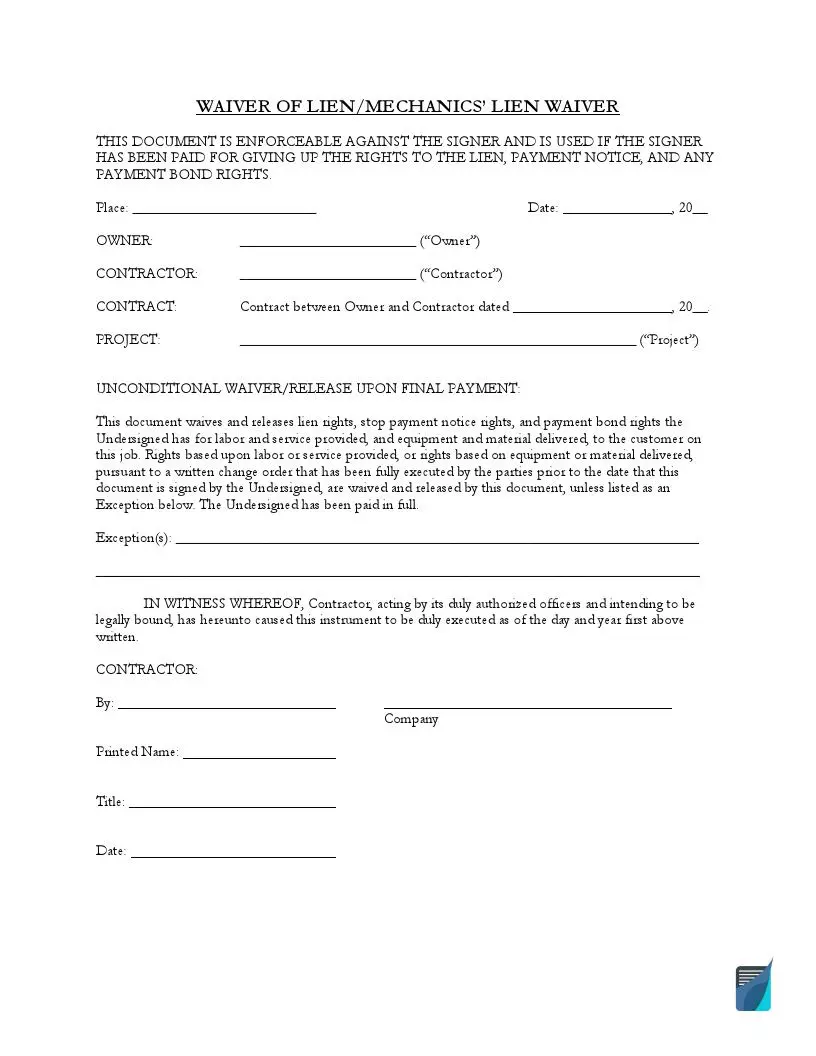
The steps below follow the FormsPal Unconditional Mechanic’s Lien Release template, a one-page form titled Waiver of Lien/Mechanics’ Lien Waiver. Build it online with our form-building software, or download the PDF and complete it with the FormsPal PDF editor. Keep the contract nearby so the names and dates match.
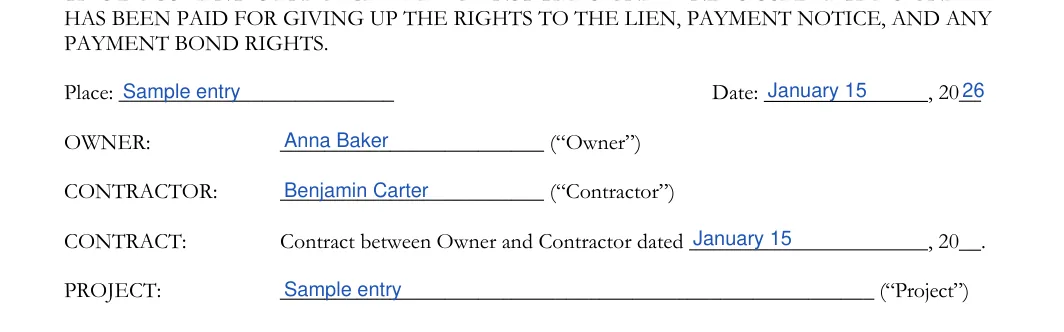
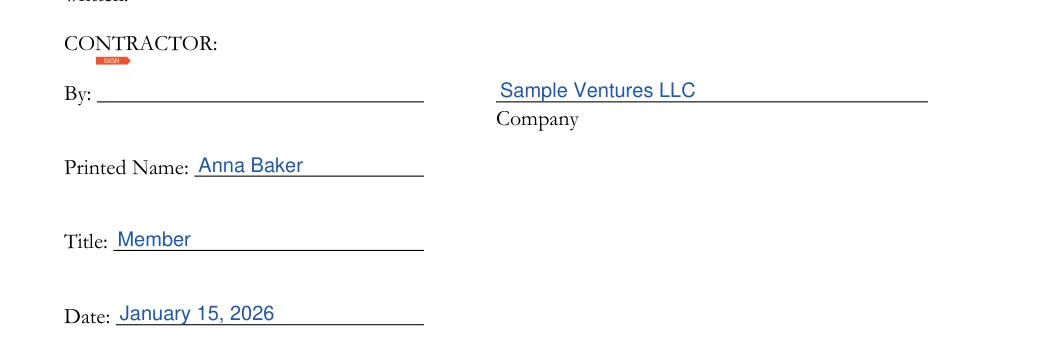
The screenshots under each step show the FormsPal Unconditional Mechanic’s Lien Release template filled with sample entries in blue, so you can see where each answer goes. The names, addresses, dates and amounts are examples only.
Heading, parties, contract and project
Read the heading text at the top of the form. Then enter the place and date, the Owner and Contractor names, the date of the contract between them and a short description of the Project.

Exception(s)
Use the two Exception lines to list anything you want to leave out of the waiver, such as a fully executed change order. If nothing is left out, leave the lines blank. Do not change the printed release text above them.


Contractor signature block
Enter the Company name, sign on the By line, then add the Printed Name, Title and Date. The template has one signature block for the contractor.

Most problems with lien waiver forms come from small details rather than the printed wording. Review the common slips below before you save or print the finished waiver form and send it to the owner.
A few minutes of checking before you sign can save a lot of trouble later. Go through the points below with the contract, the payment record and your bank statement in front of you.
Once the waiver is signed, make a few copies so everyone involved has the same version. Save a scan of the signed page with your construction project records and send a copy to the owner or the general contractor.
The FormsPal builder lets you save your progress and finish on any device, then download and print the form whenever you need it. The finished file is a PDF, which is easy to email or upload to a payment portal.
In most cases, the form does not require notarization. Keep a signed copy of the finished release with your project records. Check the details for your state before you sign.
The difference between Unconditional and Conditional Waivers is that the latter is signed before the lienor is paid the debt. The one intending to create a Conditional Release has to ensure that they have received proof that the progress payment will actually be delivered.
Have these details ready before you start:
If something should stay outside the waiver, write it on the Exception lines.
It is a signed statement that a contractor, subcontractor or supplier has been paid for work, materials or labor on a construction project. The signed waiver form goes to the owner or the general contractor.
Write them on the two Exception lines in the middle of the form, above the signature block. Leave the lines blank if nothing is left out of the waiver.
The table above lists about 7 minutes. Having the contract and the payment record at hand makes it quicker.
The form is available as an Adobe PDF. You can build it online, then download and print it.
General information, not legal or tax advice.
