
An Alabama small estate affidavit is a sworn written statement about a deceased person's estate that names the heirs or devisees and lists the assets and the debts. Alabama's small estate law calls the process summary distribution. It starts with a verified petition filed with the judge of probate.[2] Download the free FormsPal form below and follow the twelve steps to complete it.
Last Updated: October 2026. This guide is reviewed and updated regularly to reflect current Alabama law. If you notice an error or outdated information, please contact us.
Build Your Document
Answer a few simple questions to make your document in minutes
Save and Print
Save progress and finish on any device, download and print anytime
Sign and Use
Your valid, lawyer-approved document is ready
A small estate is one whose value does not exceed the small estate amount. That amount is a sum of three allowances: the homestead allowance under Section 43-8-110, exempt property under Section 43-8-111, and the family allowance under Sections 43-8-112 and 43-8-113.[1]
The sum is adjusted from time to time under the Consumer Price Index formula in Section 43-8-116, so confirm the current amount with the probate court before you file.[1]
Alabama settles a small estate through summary distribution. A person entitled to an interest in the estate, or someone acting for that person, starts it with a verified petition filed in the office of the judge of probate of the county where the decedent was domiciled at death.[2]
These rules come from the Revised Alabama Small Estates Act, Sections 43-2-690 to 43-2-696 of the Code of Alabama, and Section 43-2-697 sets out the notice to the Alabama Medicaid Agency.[3]
Section 43-2-692 sets these requirements.[2]
The petition must also state that the decedent died domiciled in Alabama and was domiciled in the county where the petition is filed (Section 43-2-692(b)(1)).[2]
The estate must be personal property only: the decedent must have owned no real property at death, other than real property whose title passes by operation of law (Section 43-2-691(2)).[1]
| Estate value limit | The small estate amount, adjusted from time to time under a Consumer Price Index formula[1] |
| Waiting periods | At least 30 days after notice of the filing is published, and at least 30 days after the Alabama Medicaid Agency receives notice[2] |
| Where to file | The office of the judge of probate of the county where the decedent was domiciled at death[2] |
| State Laws | Ala. Code 43-2-691(7)[1], Ala. Code 43-2-692[2] |
File a verified petition in the office of the judge of probate of the county where the decedent was domiciled at death. No bond has to be filed with the petition. If the decedent died with a self-proved will, file that will with the petition as well.[2] After the filing, notice has to be given and two waiting periods apply.
Alabama asks the petitioner to give notice in these ways.[2]
Both waiting periods start with a notice, not with the date of death. At least 30 days must pass after the notice of the filing is published, and at least 30 days after the Alabama Medicaid Agency receives notice of the filing.[2] You can count the days with our deadline calculator.
Once the Small Estates Act's requirements are met, the judge of probate enters an order directing summary distribution of the estate (Section 43-2-693).[4]

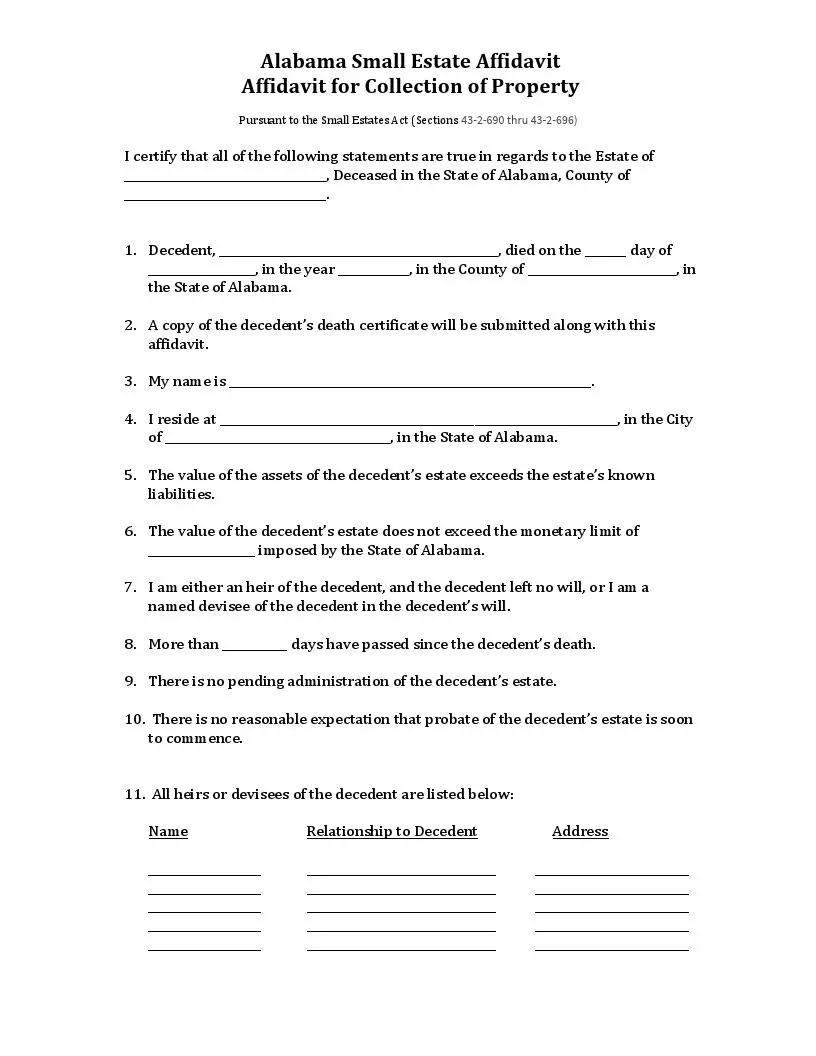
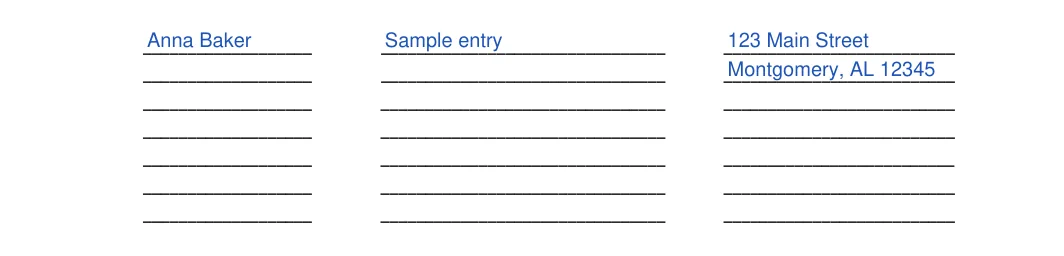
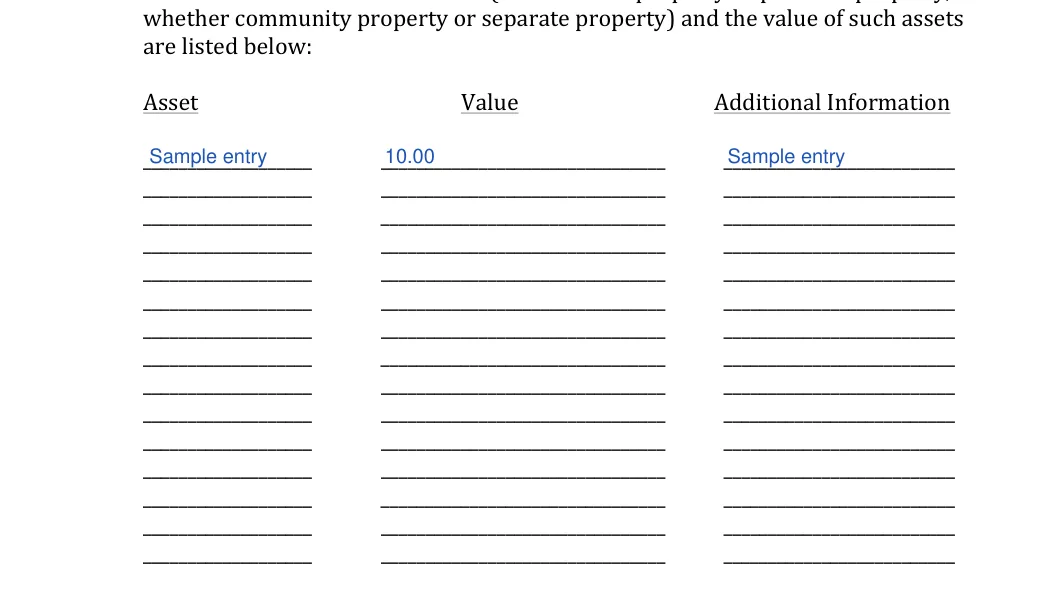
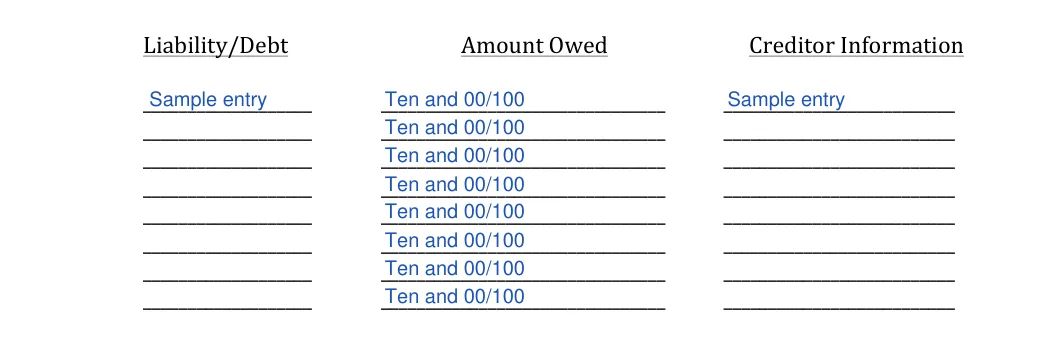
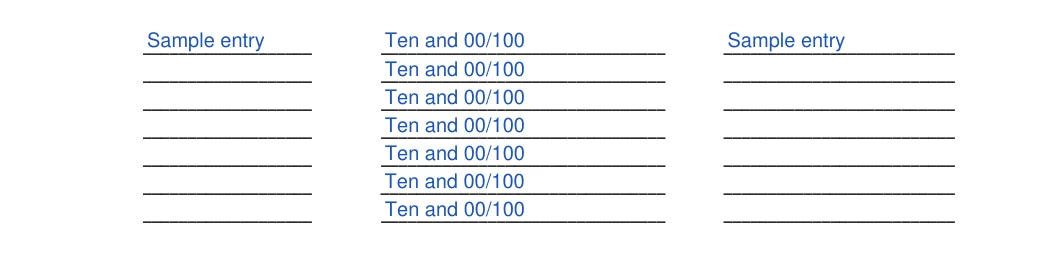
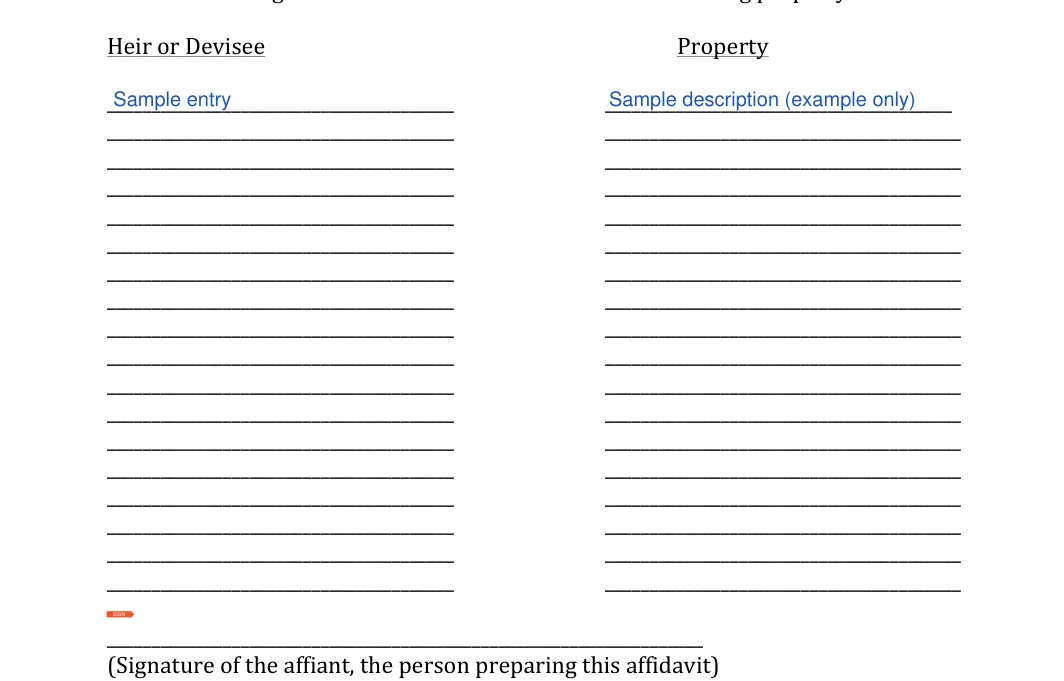
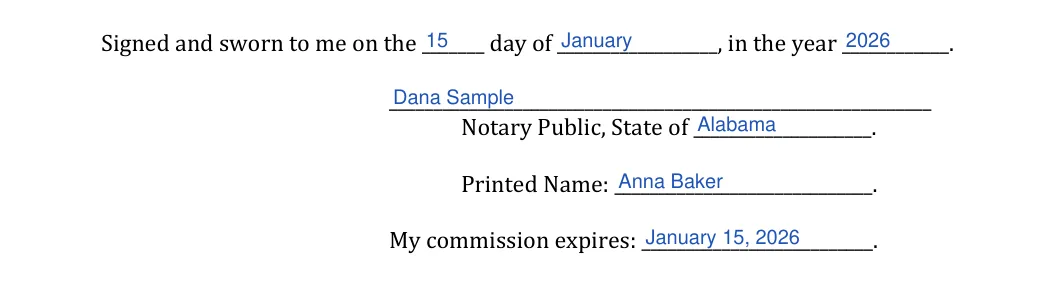
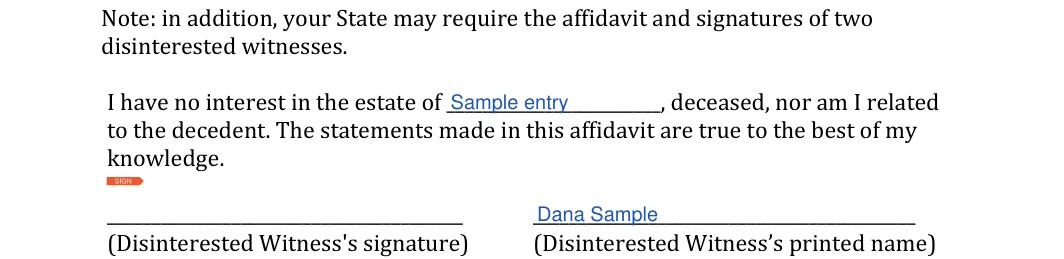
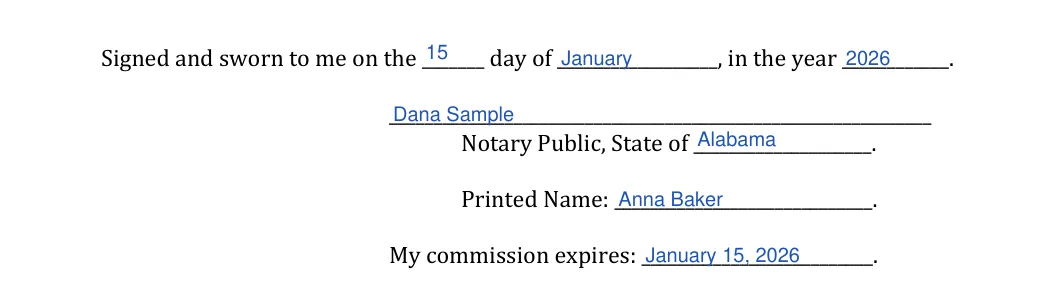
The form runs four pages, and the twelve steps below follow its order. Fill in the downloaded PDF with our online PDF editor, or print it and write the answers by hand. Each step names the part of the form it covers.
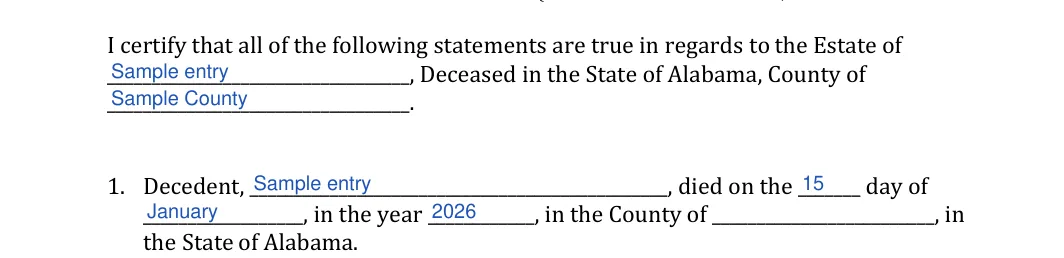
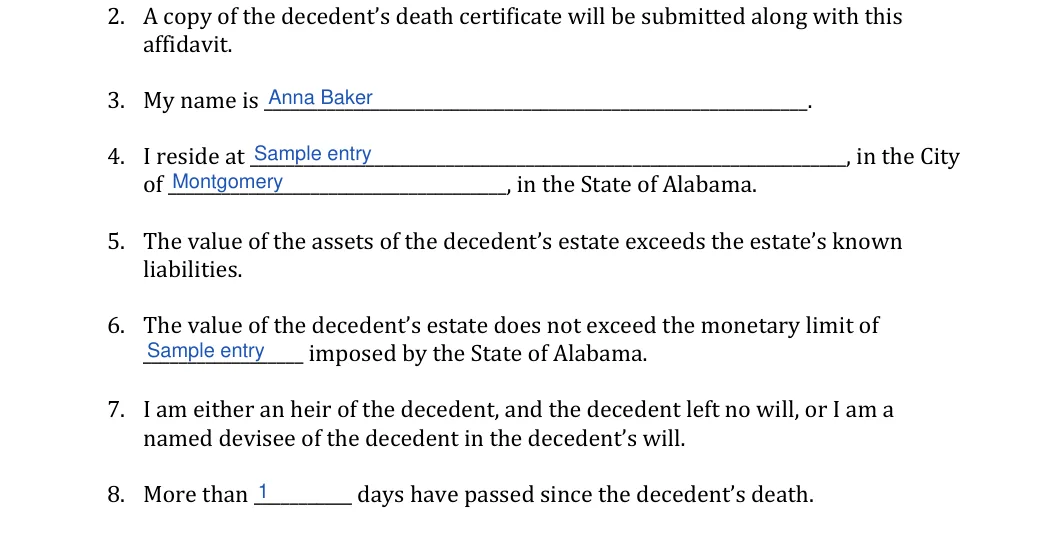
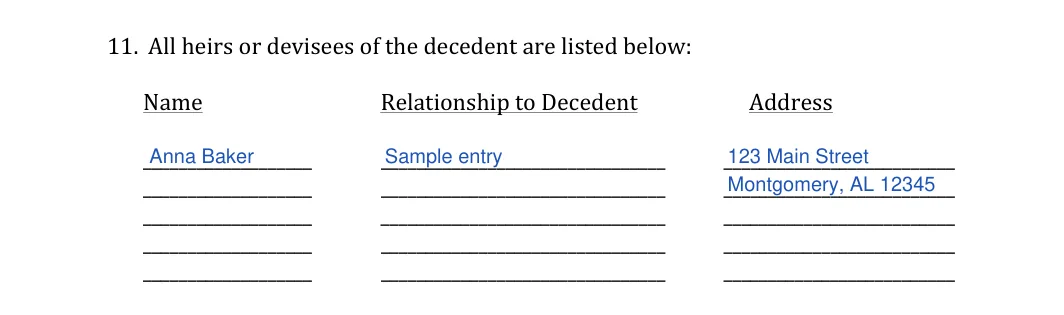
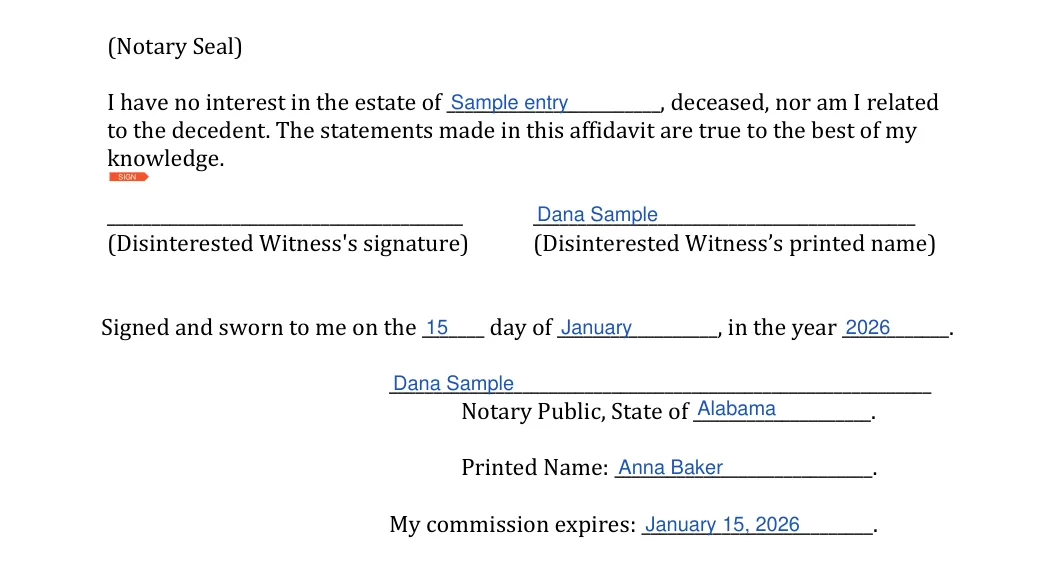
The screenshots under each step show the FormsPal Alabama small estate affidavit template filled with sample entries in blue, so you can see where each answer goes. The names, addresses, dates and amounts are examples only.
These answers cover the basics of Alabama's small estate process, taken from the statute sections cited on this page. Confirm the details with the probate court office in the county where the decedent lived before you file.
Someone entitled to an interest in the estate, or someone acting for that person, files a verified petition in the office of the judge of probate of the county where the decedent was domiciled at death.[2] The form on this page lists the heirs or devisees, the assets and the debts.
Yes. Alabama asks for notice in these ways.[2]
General information, not legal or tax advice.
