
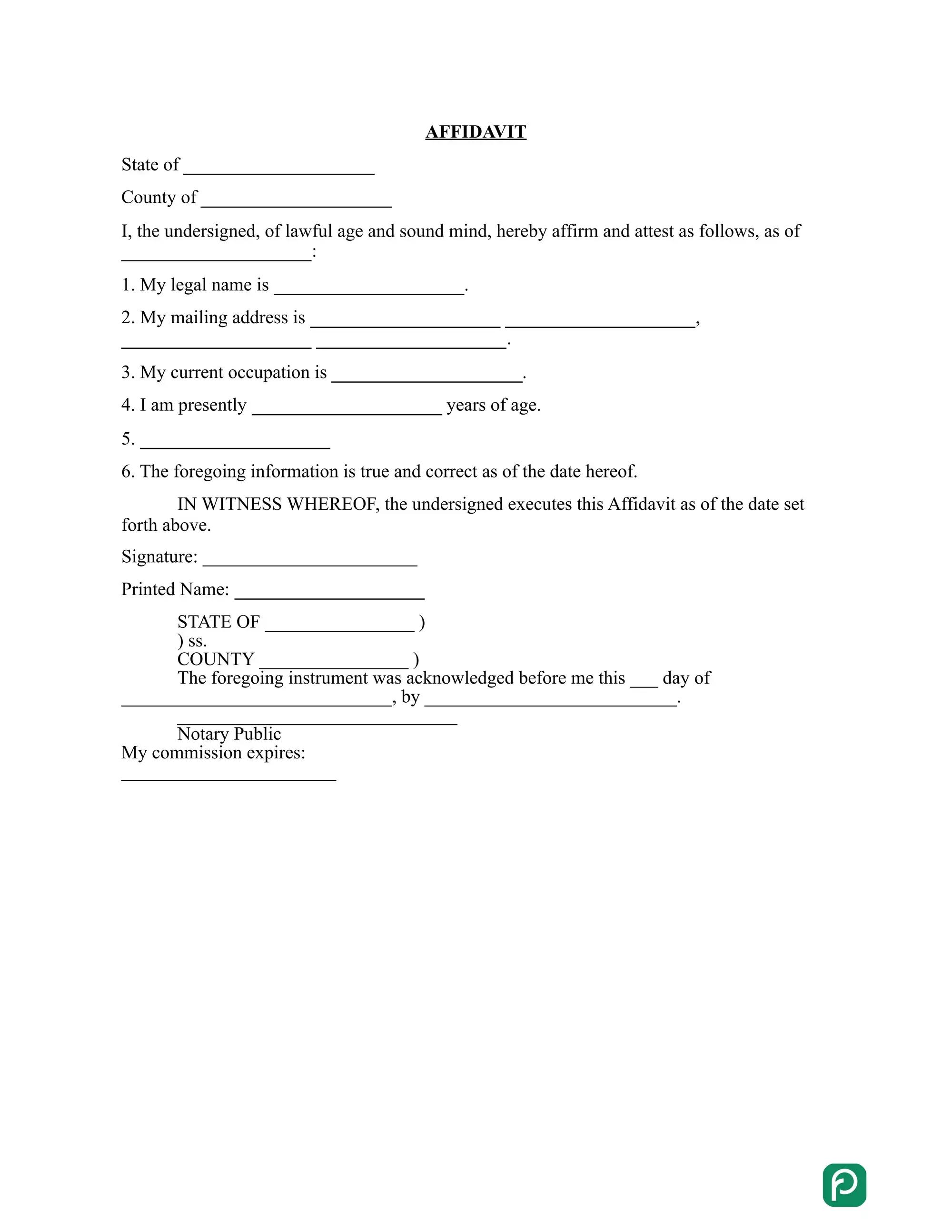
Texas affidavit forms serve as a declaration of the truth that is given under oath and may be admitted into evidence in several judicial processes. An affidavit is a written statement used for purposes such as notifying the Department of Motor Vehicles (DMV) about a vehicle repossession or checking a real estate deed.
Build Your Document
Answer a few simple questions to make your document in minutes
Save and Print
Save progress and finish on any device, download and print anytime
Sign and Use
Your valid, lawyer-approved document is ready
Three Texas forms are the most widely used for vehicle and real estate matters. Each one has its own page on FormsPal, so you can open the form that fits your situation and fill it in online. The forms are Form DL-90B, Form VTR-264 and Form T-47.

Texas Driver Education Affidavit (DL-90B) verifies that a student has completed the required education before obtaining a Texas driver’s license. This form is typically used by students who completed the classroom portion of driver education through a commercial driving school or parent-taught driver education program. Form DL-90B requires the student’s personal information and information about the education program, such as the course number and the completion date.

Texas Repossession Affidavit (VTR-264) certifies that a repossession has occurred following Texas law. A creditor, such as a bank or a lending institution, typically uses the form after taking possession of a vehicle or other property because the debtor stopped paying. This affidavit requires the lender to provide detailed information about the vehicle, the borrower, and the reasons for the repossession.

Texas Residential Property Affidavit (T-47) is used in real estate transactions to certify that the information provided on a deed or other property transfer documents is accurate. This form is typically used when a property is being sold or refinanced. The affidavit requires the signature of the seller and the buyer and any other required information, such as the names of all parties involved in the transaction. This document is essential for verifying that all parties involved in the transaction have provided accurate and truthful information.
Start with what you need the sworn statement for. Each of the three forms above fits a different situation, so picking the matching one saves you from filling in a form that does not apply. If your situation is different, start with a general affidavit or browse the other affidavit forms on FormsPal.
| Situation | Form |
|---|---|
| Driver education | Form DL-90B |
| Vehicle or property repossession | Form VTR-264 |
| Property sale or refinance | Form T-47 |
You can build your Texas affidavit on FormsPal in a few minutes. Follow the steps below from start to finish, and take a moment to check each detail before you save the final version.
Most problems with sworn statements and affidavits come from small details, and a quick review before you save the final version helps you catch them. Watch for these common slips when you fill in a Texas affidavit form.
An affidavit is a sworn statement of facts in writing. People use affidavits for matters such as driver education, vehicle repossession and property transfers. The details you provide depend on the form and your situation, so read the description of each form before you start.
It depends on your situation. Form DL-90B relates to driver education, Form VTR-264 to a vehicle repossession, and Form T-47 to a residential property transfer. Open the form that matches what you are doing.
Yes. Click Create My Document to start a general affidavit, answer a few questions and save your progress. You can finish on any device, then download and print the document.
Gather the names, addresses and dates that apply to your situation. For a vehicle or property matter, keep the vehicle or property details at hand too. Check that every name matches your IDs and records before you save.
General information, not legal or tax advice.

Last Updated: October 2026. This guide is reviewed and updated regularly to reflect current law. If you notice an error or outdated information, please contact us.