Please rate Form Vtr 264

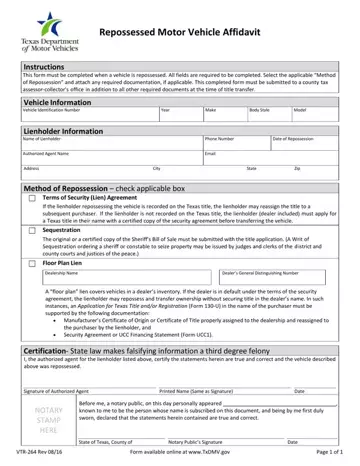
The VTR-264 form, officially known as the Repossessed Motor Vehicle Affidavit, plays a vital role in the legal framework surrounding the repossession of motor vehicles. Its primary function is to formalize the process by which a vehicle is repossessed, ensuring that all necessary fields are meticulously completed. This includes detailing the vehicle's identification number, year, make, model, and body style, alongside the lienholder's information, which encompasses the name, phone number, and date of repossession. It also mandates the inclusion of an authorized agent's name along with their contact details. The form specifies different methods of repossession, such as through terms of a security (lien) agreement, sequestration, or a floor plan lien, each requiring specific documentation to substantiate the repossession claim. Crucially, this form must be submitted to a county tax assessor-collector's office as part of the title transfer process following a vehicle's repossession. It carries significant legal weight, as falsifying information on the affidavit is considered a third-degree felony under state law, underscoring the seriousness with which this documentation must be handled. By requiring a comprehensive array of information and providing a structure for documenting repossession, the VTR-264 form ensures transparency and legal compliance in these often-complex transactions.
| Question | Answer |
|---|---|
| Form Name | Form Vtr 264 |
| Form Length | 1 pages |
| Fillable? | No |
| Fillable fields | 0 |
| Avg. time to fill out | 15 sec |
| Other names | texas repossessed, texas repo affidavit vtr 264, texas vtr 264, motor vehicle repossessed |
Form Vtr 264 isn’t the one you’re looking for?
Please rate Form Vtr 264