

Buying a home is one of life's happiest moments, but it soon becomes overwhelming with all the paperwork, signatures, and confusing terms. One document stands out among all the others: the mortgage note. It explains what you owe, how you will pay it back, and what will happen if you miss payments.
The mortgage note is the written promise behind your loan. Lenders rely on it, and borrowers should understand it. Once you understand what it means and what it includes, the loan terms will seem much less overwhelming.
What Is a Mortgage Note?
A mortgage note is one of the main documents signed during a home purchase. It is the document where the borrower formally agrees to repay the loan under specific conditions. This note sets out the repayment terms and gives the lender a written record of the debt.
In most cases, a mortgage note spells out the main details of the loan, such as:
- The total loan amount
- The interest rate and whether it can change
- The payment schedule and due dates
- The loan term (for example, 15 or 30 years)
- Penalties for late payments
- What happens if the borrower defaults
Federal credit rules also require creditors to disclose certain information about the cost and terms of covered consumer loans. Together, these details explain how the debt must be repaid and what happens if the borrower misses payments. Depending on the loan terms, that could include late fees or, in more serious cases, foreclosure.
A mortgage note is also proof of your loan. If your lender sells or transfers the loan to another company, the mortgage note usually goes with it. That’s because whoever holds the note has the right to collect payments.
You may also see this document called a promissory note or a mortgage promissory note. Lenders often treat these names as equivalent because they all describe the same idea - a written commitment from the borrower to pay back the borrowed amount. And while the mortgage agreement ties the loan to the property itself, the mortgage note focuses on the financial obligation and the repayment terms.
What Are the Different Types of Mortgage Notes?
Not all mortgage notes follow the same structure, since loan terms can vary depending on how the money is borrowed and repaid.
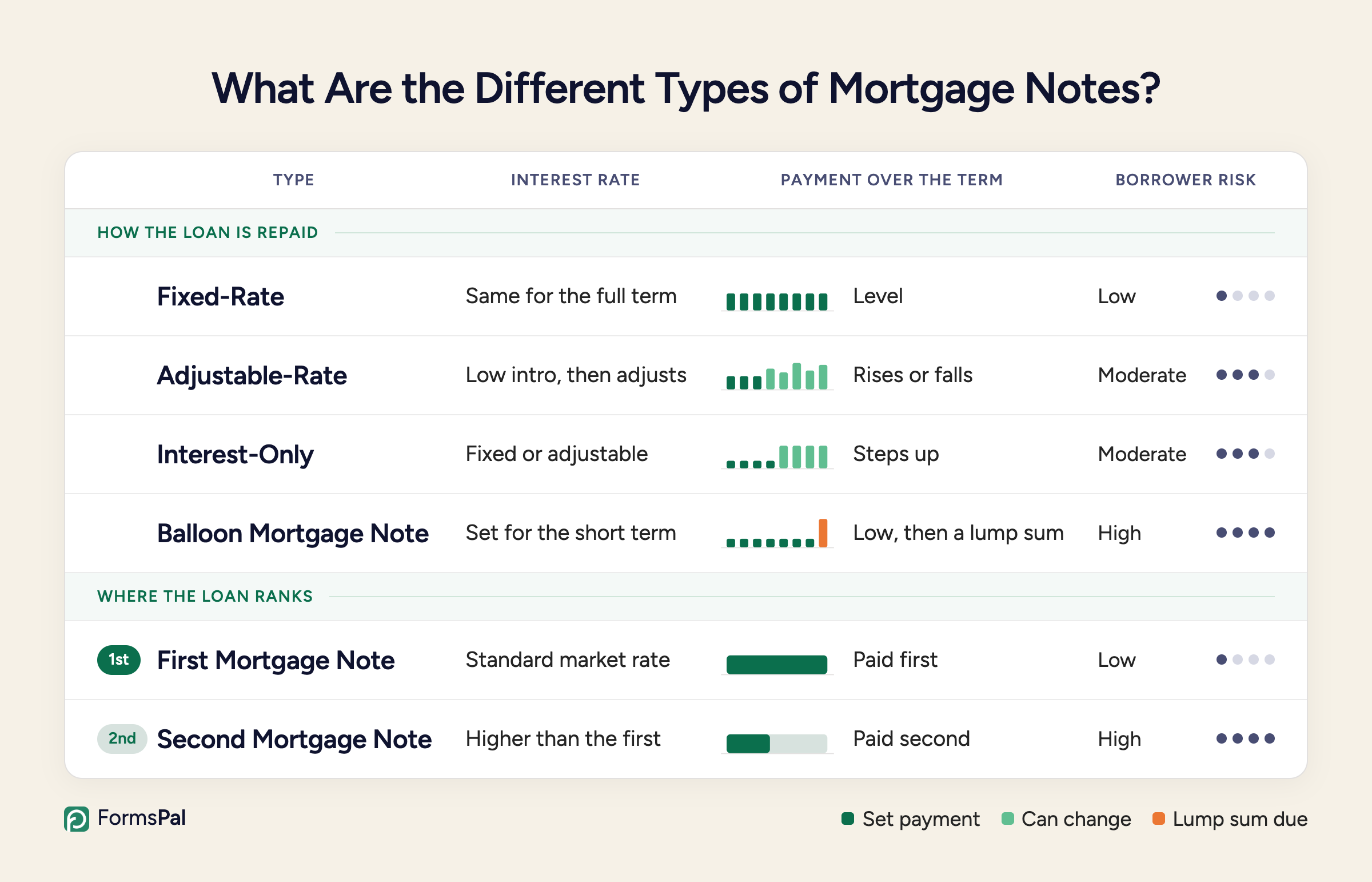
Fixed-Rate
This type uses an interest rate that stays the same for the entire loan term. Monthly payments remain predictable. That makes budgeting easier and protects the borrower from rate increases over time.
Adjustable-Rate
An adjustable-rate mortgage note starts with a lower interest rate that can change later based on market conditions. Payments may increase or decrease depending on how the rate adjusts after the initial fixed period ends.
Interest-Only
With an interest-only mortgage note, the borrower pays only interest for a set period at the beginning of the loan. After that period ends, regular principal payments begin, and monthly costs often go up.
This type appears less often in standard home lending, but some lenders still offer it in certain cases.
Balloon Mortgage Note
A balloon mortgage note keeps payments lower for a certain time and then requires one large final payment. That last payment is often called a balloon payment. Some borrowers plan to refinance or sell the property before that final amount comes due.
First Mortgage Note
A first mortgage note connects to the primary loan on the property. It takes priority over other loans secured by the same home, which means the first lender stands first in line if foreclosure happens.
Second Mortgage Note
A second mortgage note applies to additional borrowing secured by the same property. Because it ranks behind the first loan, it usually comes with higher interest rates to offset the added risk.
Related Forms:
Who Holds the Mortgage Note?
The lender usually holds the mortgage note at the start of the loan. This is typically the bank, credit union, or mortgage company that provided the financing. As long as the loan stays with that institution, it keeps the original document or its electronic version.
Things can change after closing. Mortgage loans are often sold to other financial institutions or investors, and the note may transfer with the loan. The company that handles your payments can change as well. If your loan moves to a new servicer, federal law requires certain notices so you know where and when to send future payments. Your loan terms stay the same unless they’re formally changed.
Can You Get a Copy of the Mortgage Note?
Borrowers can get a copy of their mortgage note without much trouble. The fastest way starts with the loan servicer, the company that sends monthly statements and collects payments. A simple request through an online account, email, or customer support line usually works.
In general, there are several common ways to get a copy of your mortgage note:
- Request it directly from the loan servicer
- Check the closing documents received during the home purchase
- Access the lender’s online portal if documents are stored there
Most lenders provide a digital version, although paper copies may still be available on request. It is also common to receive a copy during closing.
What Does a Mortgage Note Look Like?
A mortgage note looks like a formal legal document filled with structured paragraphs and financial terms. Most versions follow a similar layout. You usually see a title at the top, followed by the date, the names of the borrower and lender, and the basic loan details.
Below is an example of what a mortgage or promissory note typically looks like.
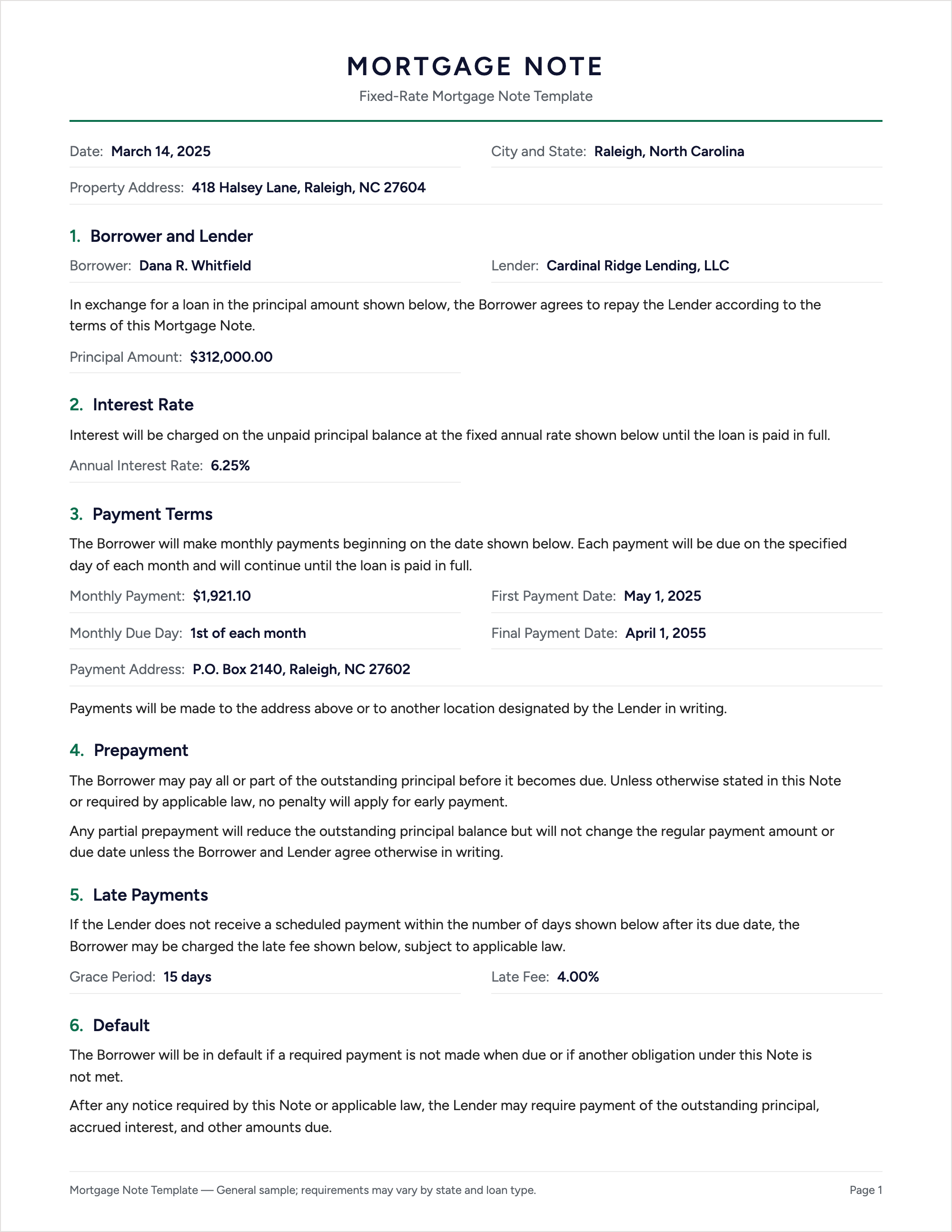
This is the general structure and formatting you can expect, although the exact wording may vary by lender and loan type.
The main body of the document normally explains the financial terms. This includes the loan amount, interest rate, payment schedule, maturity date, and conditions that apply if payments are late or stop completely. Many notes also include sections describing default rules and the lender’s rights if the agreement is not followed.
Mortgage Note Example
A good example is Fannie Mae Form 3200, a standard fixed-rate mortgage note used for residential loans. It shows the type of information a mortgage note usually contains, including the loan amount, interest rate, payment terms, due dates, and what happens if the borrower fails to make payments. While individual notes may differ, the overall structure is similar.
Mortgage Note FAQs
Is a mortgage note the same as a mortgage?
No. A mortgage note definition suggests that it records the borrower’s promise to repay the loan. The mortgage agreement gives the lender a claim against the property if the debt remains unpaid. One describes the debt itself, the other connects that debt to the home.
Who keeps the original mortgage note?
The lender or loan servicer usually keeps the original note. If the loan gets sold, the document normally transfers to the new holder because it proves the right to collect payments. Borrowers typically receive a copy during closing for their records.
Can a mortgage note be sold?
Yes. Lenders often sell mortgage notes to investors on the secondary mortgage market. This does not change the loan terms. The borrower still follows the same payment schedule, although payments may go to a different company.
Can you change a mortgage note?
Changes sometimes happen through a loan modification or refinancing. Both options replace or adjust the original terms, but they require agreement from both sides and updated documentation.
Does a mortgage note prove property ownership?
No. The property title proves ownership. The mortgage note only proves the existence of a loan and the borrower’s duty to repay it.