
Aetc Form 410 PDF Details

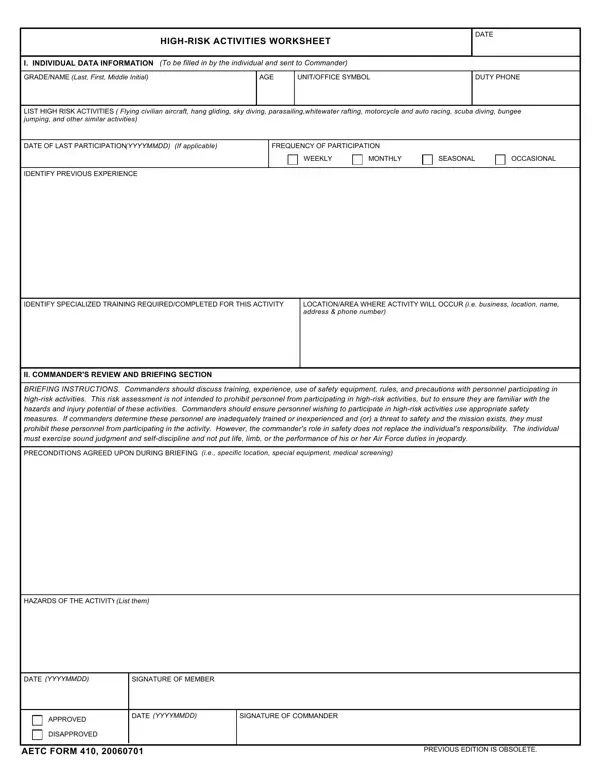
The AETC Form 410 ensures the safety and well-being of Air Force members who engage in high-risk activities. These activities span both professional and recreational areas, ranging from flying civilian aircraft and hang gliding to skydiving, parasailing, bungee jumping, and scuba diving. Members must document the activity type, how often they participate, and any specialized training or certifications they hold. This approach highlights individual responsibility while triggering a required review by the member's commanding officer. In the second section, the commander assesses risk factors and evaluates the member's training, experience, and adherence to safety measures. The review covers safety equipment usage, rule compliance, and hazard mitigation. The form is not intended to restrict personal activities. Instead, it promotes transparency and accountability to ensure high-risk pursuits do not interfere with a member's duties or physical readiness.

QuestionAnswer
Form NameAetc Form 410
Form Length1 pages
Fillable?No
Fillable fields0
Avg. time to fill out15 sec

Form Preview Example

HIGH-RISK ACTIVITIES WORKSHEET

DATE

I.INDIVIDUAL DATA INFORMATION (To be filled in by the individual and sent to Commander)

GRADE/NAME (Last, First, Middle Initial)

AGE

UNIT/OFFICE SYMBOL

DUTY PHONE

LIST HIGH RISK ACTIVITIES ( Flying civilian aircraft, hang gliding, sky diving, parasailing,whitewater rafting, motorcycle and auto racing, scuba diving, bungee jumping, and other similar activities)

DATE OF LAST PARTICIPATION(YYYYMMDD) (If applicable)

FREQUENCY OF PARTICIPATION


WEEKLY


MONTHLY


SEASONAL


OCCASIONAL


IDENTIFY PREVIOUS EXPERIENCE


IDENTIFY SPECIALIZED TRAINING REQUIRED/COMPLETED FOR THIS ACTIVITY

LOCATION/AREA WHERE ACTIVITY WILL OCCUR (i.e. business, location, name,

address & phone number)

II. COMMANDER'S REVIEW AND BRIEFING SECTION

BRIEFING INSTRUCTIONS. Commanders should discuss training, experience, use of safety equipment, rules, and precautions with personnel participating in high-risk activities. This risk assessment is not intended to prohibit personnel from participating in high-risk activities, but to ensure they are familiar with the hazards and injury potential of these activities. Commanders should ensure personnel wishing to participate in high-risk activities use appropriate safety measures. If commanders determine these personnel are inadequately trained or inexperienced and (or) a threat to safety and the mission exists, they must prohibit these personnel from participating in the activity. However, the commander's role in safety does not replace the individual's responsibility. The individual must exercise sound judgment and self-discipline and not put life, limb, or the performance of his or her Air Force duties in jeopardy.

PRECONDITIONS AGREED UPON DURING BRIEFING (i.e., specific location, special equipment, medical screening)

HAZARDS OF THE ACTIVITY (List them)

DATE (YYYYMMDD)

SIGNATURE OF MEMBER


APPROVED

DATE (YYYYMMDD)

SIGNATURE OF COMMANDER


DISAPPROVED


AETC FORM 410, 20060701

PREVIOUS EDITION IS OBSOLETE.


How to Edit Aetc Form 410 Online for Free

Follow the steps below to complete AETC Form 410, the High-Risk Activities Worksheet required by the Air Education and Training Command (AETC).

Steps to Complete AETC Form 410

  1. Enter your member information. In Section 1, record your full name, rank, unit, and the date you are submitting the form.
  2. List each high-risk activity. For every applicable activity, enter the activity type, the date of your most recent participation, how often you participate, and any certifications or training you hold.
  3. Document safety precautions. For each activity, note the safety equipment you use, any safety courses you have completed, and the rules or regulations you follow.
  4. Submit to your commander for review. Your commanding officer completes Section 2, reviewing your entries to assess risk factors and determine whether to approve your continued participation.
  5. Retain a copy for your records. File the completed form and update it whenever your activity status or training certifications change.

Frequently Asked Questions About AETC Form 410

Who must complete AETC Form 410?
Air Force members under AETC jurisdiction who engage in any activity listed on the High-Risk Activities Worksheet are required to complete the form before participating.

What activities are listed on the High-Risk Activities Worksheet?
The worksheet covers activities including civilian aircraft operation, hang gliding, skydiving, parasailing, bungee jumping, scuba diving, and other activities with elevated injury risk.

How often does AETC Form 410 need to be updated?
Members should submit an updated form whenever their participation frequency changes, when they begin a new activity, or when their training certifications are updated.

What happens after the form is submitted?
The commanding officer reviews the completed worksheet, evaluates risk factors, and documents their assessment in Section 2. The member may then continue participation based on that review.

Related Air Force Forms

The following forms may be required alongside AETC Form 410 for Air Force administrative and safety compliance purposes:

  • AETC Form 29B - personnel information worksheet used for administrative records
  • AF Form 77 - letter of evaluation for Air Force personnel records
  • Air Force Form 1168 - statement of suspect or witness for administrative proceedings