

VGP Annual Barge Inspection Report Form at a glance
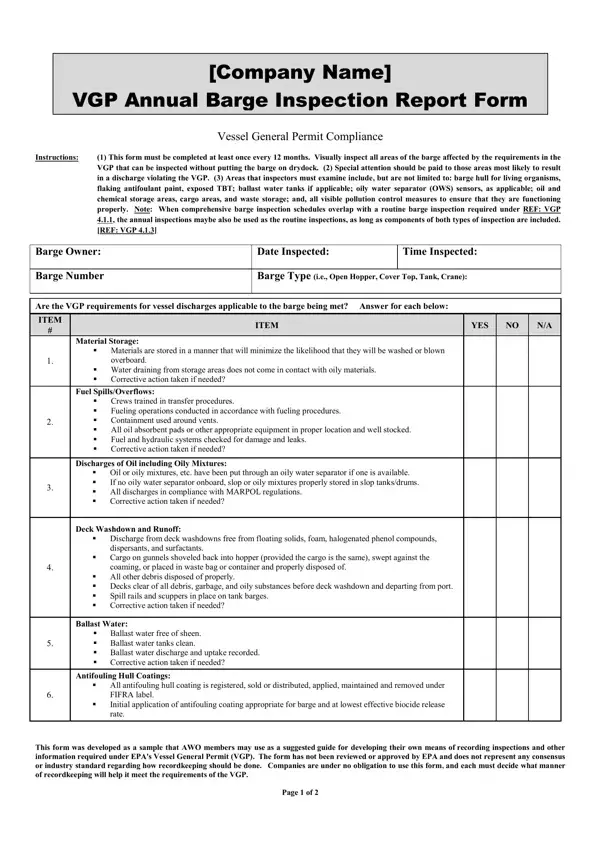
What it is: The VGP Annual Barge Inspection Report Form is for Vessel General Permit Compliance.
Where and when to file: Submit completed form to barge owner and keep a copy on file at custodian's office. This document must be kept for a period of not less than three years after the inspection date.
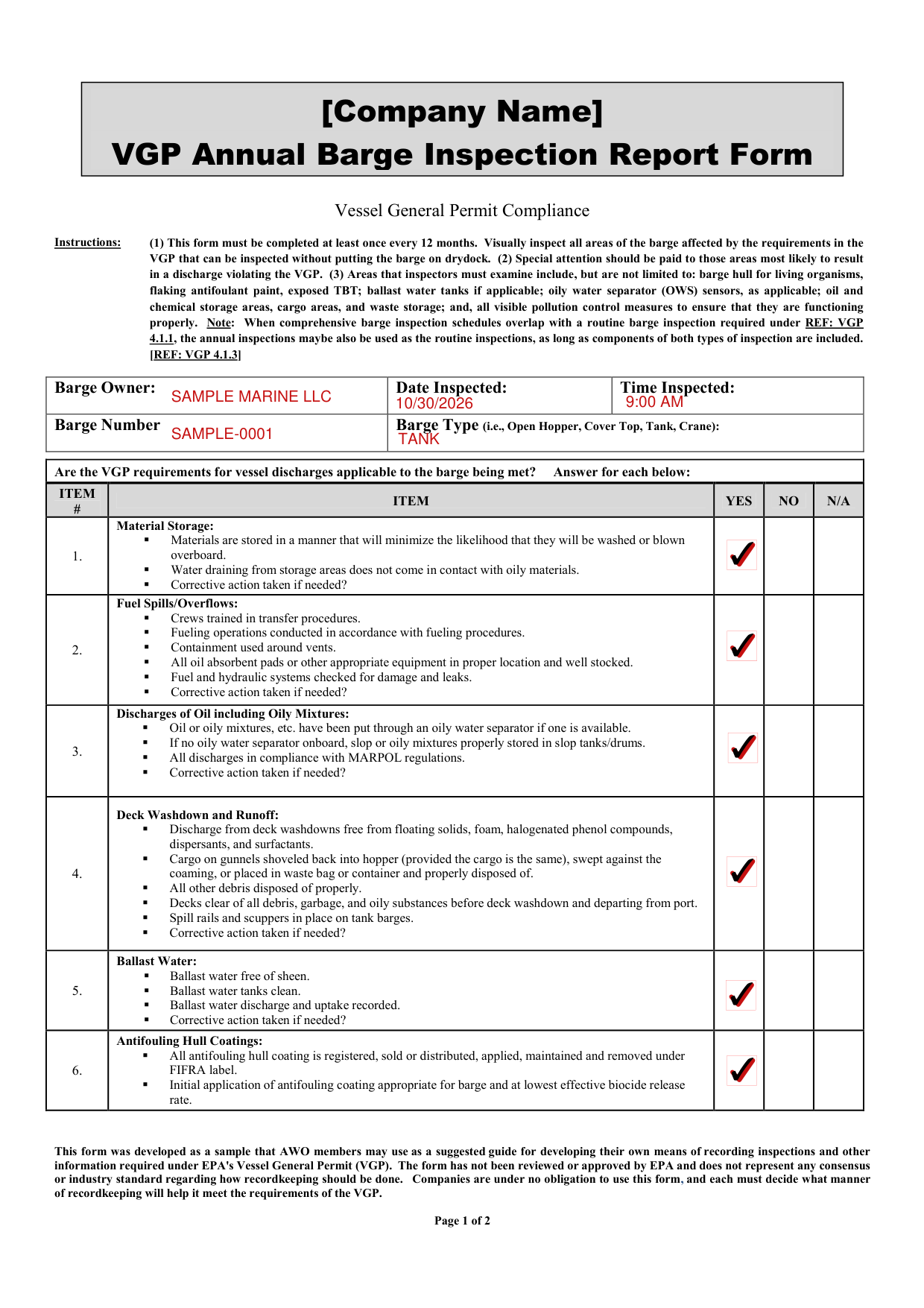
A filled-in VGP Annual Barge Inspection Report Form example: a tank barge inspected once a year
How to fill out VGP Annual Barge Inspection Report Form, box by box
Barge Owner, Date Inspected and Time Inspected

Enter the Barge Owner, the Date Inspected and the Time Inspected.
Barge Number and Barge Type

Enter the Barge Number and the Barge Type (i.e., Open Hopper, Cover Top, Tank, Crane).
Material Storage, Fuel Spills/Overflows and Discharges of Oil
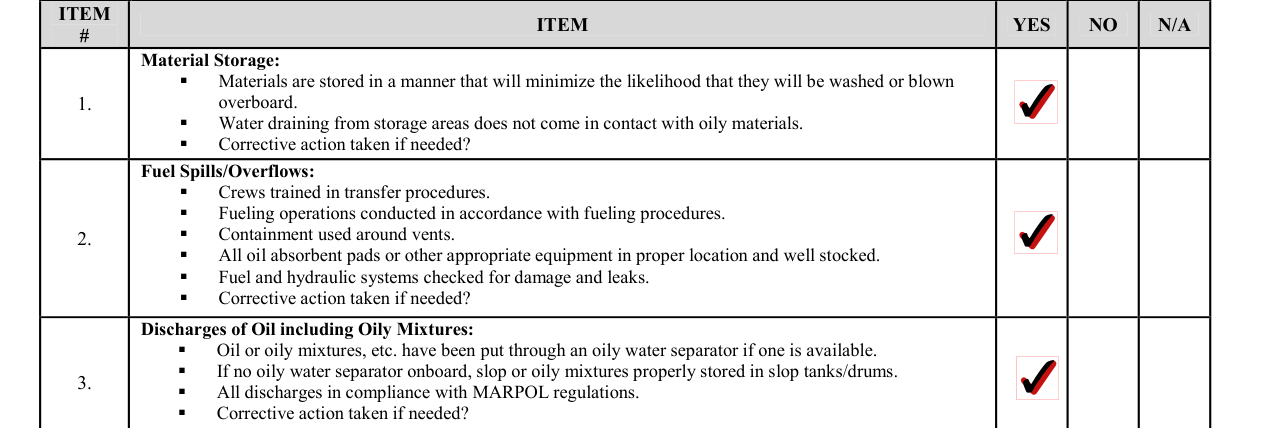
For each item, answer: Are the VGP requirements for vessel discharges applicable to the barge being met? Mark YES, NO or N/A.
1. Material Storage: materials are stored in a manner that will minimize the likelihood that they will be washed or blown overboard. Water draining from storage areas does not come in contact with oily materials. Corrective action taken if needed?
2. Fuel Spills/Overflows: crews trained in transfer procedures. Fueling operations conducted in accordance with fueling procedures. Containment used around vents. All oil absorbent pads or other appropriate equipment in proper location and well stocked. Fuel and hydraulic systems checked for damage and leaks. Corrective action taken if needed?
3. Discharges of Oil including Oily Mixtures: oil or oily mixtures, etc. have been put through an oily water separator if one is available. If no oily water separator onboard, slop or oily mixtures properly stored in slop tanks/drums. All discharges in compliance with MARPOL regulations. Corrective action taken if needed?
Deck Washdown and Runoff, Ballast Water and Antifouling Hull Coatings
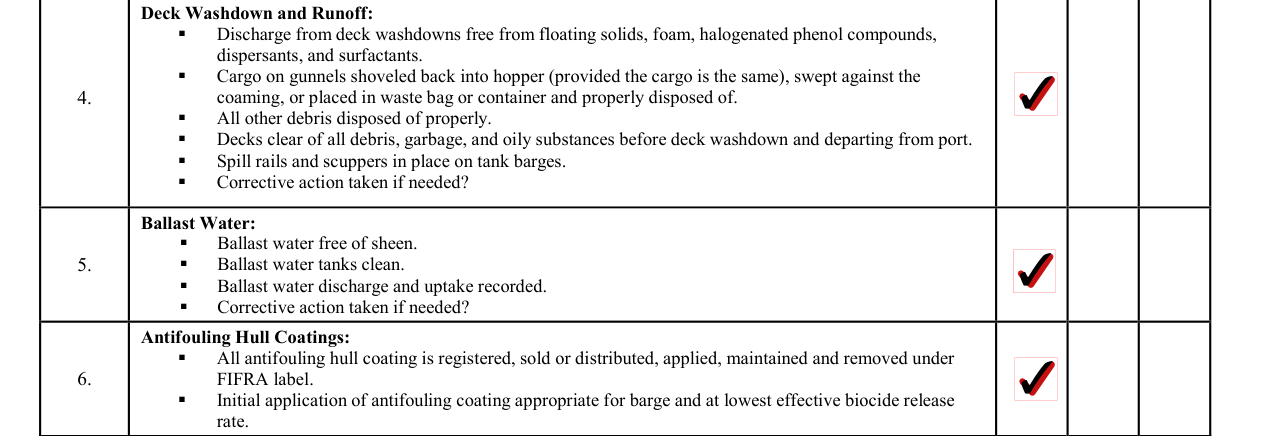
4. Deck Washdown and Runoff: discharge from deck washdowns free from floating solids, foam, halogenated phenol compounds, dispersants, and surfactants. Cargo on gunnels shoveled back into hopper (provided the cargo is the same), swept against the coaming, or placed in waste bag or container and properly disposed of. All other debris disposed of properly. Decks clear of all debris, garbage, and oily substances before deck washdown and departing from port. Spill rails and scuppers in place on tank barges. Corrective action taken if needed?
5. Ballast Water: ballast water free of sheen. Ballast water tanks clean. Ballast water discharge and uptake recorded. Corrective action taken if needed?
6. Antifouling Hull Coatings: all antifouling hull coating is registered, sold or distributed, applied, maintained and removed under FIFRA label. Initial application of antifouling coating appropriate for barge and at lowest effective biocide release rate.
Cathodic Protection

7. Cathodic Protection: if barge is on drydock, was inspection performed? If barge is on drydock, was any maintenance performed? If barge is on drydock, enter the Date of last inspection, the Date of last cleaning and the Date of last maintenance. Corrective action taken?
Non-Oily Machinery Waste Water, Vessel Specific Requirements for Barges and Tow Wire and Intercon Lubrication
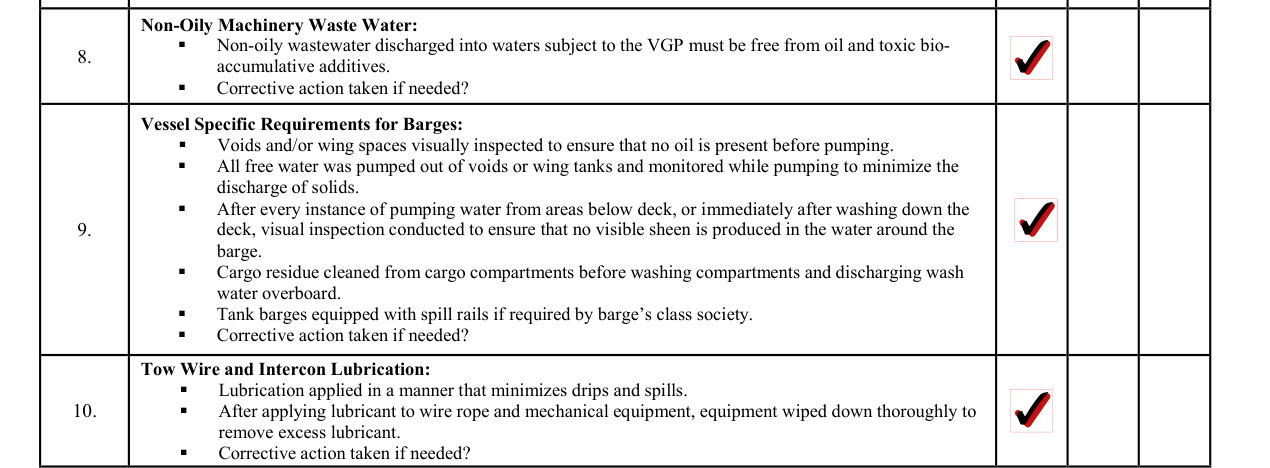
8. Non-Oily Machinery Waste Water: non-oily wastewater discharged into waters subject to the VGP must be free from oil and toxic bio-accumulative additives. Corrective action taken if needed?
9. Vessel Specific Requirements for Barges: voids and/or wing spaces visually inspected to ensure that no oil is present before pumping. All free water was pumped out of voids or wing tanks and monitored while pumping to minimize the discharge of solids. After every instance of pumping water from areas under deck, or immediately after washing down the deck, visual inspection conducted to ensure that no visible sheen is produced in the water around the barge. Cargo residue cleaned from cargo compartments before washing compartments and discharging wash water overboard. Tank barges equipped with spill rails if required by barge's class society. Corrective action taken if needed?
10. Tow Wire and Intercon Lubrication: lubrication applied in a manner that minimizes drips and spills. After applying lubricant to wire rope and mechanical equipment, equipment wiped down thoroughly to remove excess lubricant. Corrective action taken if needed?
Areas not inspected and corrective actions
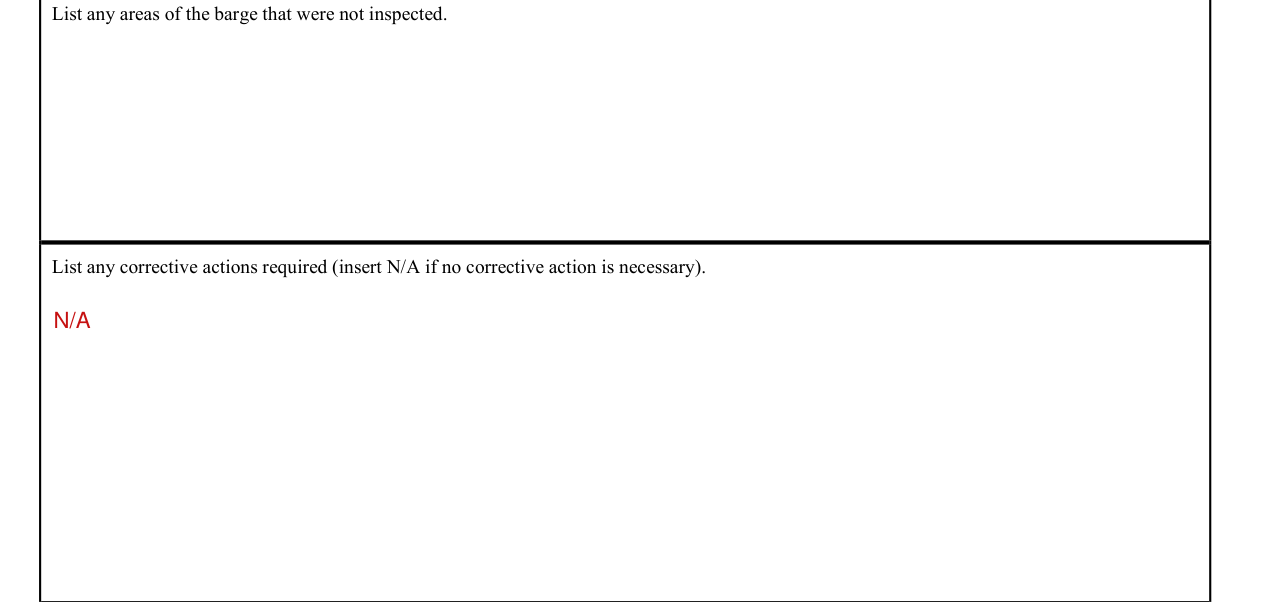
List any areas of the barge that were not inspected.
List any corrective actions required (insert N/A if no corrective action is necessary). Corrective actions should be documented on the Corrective Action Assessment Form.
Inspected by (Print Name) and Signature

Under Inspected by (Print Name) and Signature: signature indicates that this barge has been inspected as indicated on this form and corrective action has been initiated for any problems noted.
If your situation is different
What to inspect and when
Instructions: (1) This form must be completed at least once every 12 months. Visually inspect all areas of the barge affected by the requirements in the VGP that can be inspected without putting the barge on drydock. (2) Special attention should be paid to those areas most likely to result in a discharge violating the VGP. (3) Areas that inspectors must examine include, but are not limited to: barge hull for living organisms, flaking antifoulant paint, exposed TBT; ballast water tanks if applicable; oily water separator (OWS) sensors, as applicable; oil and chemical storage areas, cargo areas, and waste storage; and, all visible pollution control measures to ensure that they are functioning properly. Note: When comprehensive barge inspection schedules overlap with a routine barge inspection required under VGP 4.1.1, the annual inspections may also be used as the routine inspections, as long as components of both types of inspection are included.
About this sample form
This form was developed as a sample that AWO members may use as a suggested guide for developing their own means of recording inspections and other information required under EPA's Vessel General Permit (VGP). The form has not been reviewed or approved by EPA and does not represent any consensus or industry standard regarding how recordkeeping should be done.
Companies are under no obligation to use this form, and each must decide what manner of recordkeeping will help it meet the requirements of the VGP.
Common questions about VGP Annual Barge Inspection Report Form
Where do I file it?
Submit completed form to barge owner and keep a copy on file at custodian's office.
Sources
[1] VGP Annual Barge Inspection Report Form (the served file; no issuer file) (the Official source link on this page).