
What to Check During a Construction Site Inspection
A thorough construction site inspection checklist should capture conditions across four key areas: equipment readiness, hazard identification, safety compliance, and environmental controls. Before each shift, site personnel should record the status of every applicable item to create a complete picture of workplace safety and support site safety management records.
Key items to check and record during a daily construction inspection include:
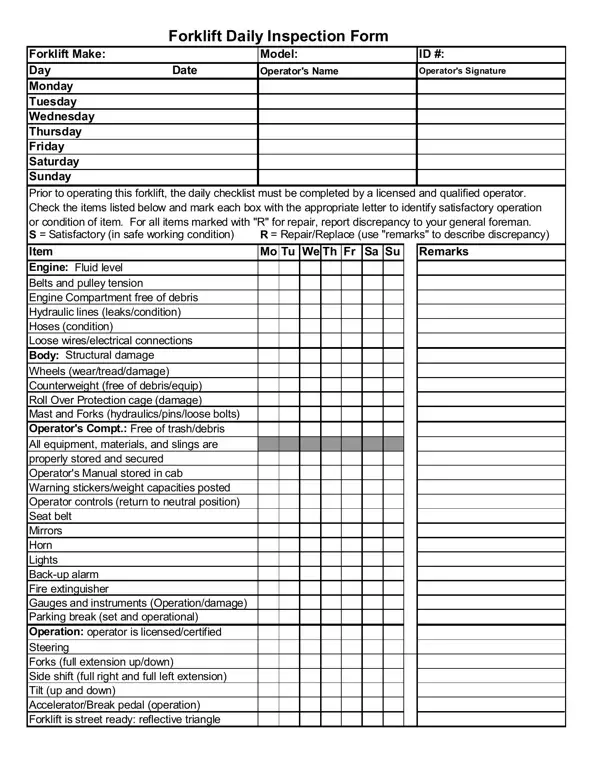
- Forklift and heavy equipment condition (fluid levels, horns, lights, forks, mast, controls)
- Personal protective equipment (PPE) availability and usage by all workers
- Scaffolding and ladders for structural integrity and proper anchor points
- Electrical panels, tools, and temporary wiring for ground fault protection
- Material storage areas for stability, labeling, and clear access paths
- Site access routes and pedestrian pathways for obstructions and hazards
- Fire extinguishers, first-aid kits, and emergency exits for accessibility
- Excavation and trenching operations for shoring compliance and spoil placement
Performing these checks daily and recording results in a standardized template helps safety managers identify trends, perform root cause analysis, and manage corrective actions efficiently. Leading safety programs treat daily inspection completion as a core metric of site safety culture.
How to Fill Out This Form Online
This construction inspection form can be filled out online very easily. Just open the FormsPal PDF tool to finish the job right away. We are committed to giving you the absolute best experience with our editor by continuously presenting new features and enhancements. Our editor is now even more intuitive as the result of the latest updates. So now, filling out PDF forms is a lot easier and faster than ever. Starting is easy. Follow the steps below:
Step 1: Just hit the “Get Form Button” above on this webpage to start up our PDF editing tool. Here you’ll find all that is necessary to fill out your file.
Step 2: This tool will allow you to modify PDF files in a range of ways. Improve it by writing your own text, correct what is originally in the PDF, and put in a signature – all at your fingertips!
It is simple to finish the PDF following our helpful guide. Here is what you must do:
1. It’s vital to complete the inspection form accurately, therefore pay close attention while working with the areas containing all of these blanks:
2. When the previous array of fields is finished, you’re ready to put in the needed details in Item Engine Fluid level Belts so that you can go to the 3rd step.
It’s easy to make a mistake when filling out your Item Engine Fluid level Belts, so make sure you look again before you finalize the form.
3. This part is straightforward – fill in all the form fields in Item Engine Fluid level Belts to conclude the current step.
Step 3: Before finishing your file, make sure all blanks were filled out correctly. Once you confirm it is good, press “Done.” Right after setting up a 7-day free trial account here, you will be able to download the inspection form or send it via email. The PDF will also be accessible in your personal cabinet with each modification. We do not share any details you type in when working with forms at our site.
Frequently Asked Questions
Who should perform a construction site inspection?
Construction site inspections should be performed by a competent person, which OSHA defines as someone able to identify existing and predictable hazards and who has authority to take corrective measures. Depending on scope, this includes site safety officers, project supervisors, or qualified equipment operators performing pre-shift checks on forklifts and other machinery.
How often should construction site inspections be performed?
Daily inspections are the minimum standard for active construction sites. Equipment-specific checks such as forklift pre-shift inspections are required before each use. Broader safety audits using a full site inspection template should occur weekly. Comprehensive safety management reviews are typically performed monthly or when site conditions change significantly.
What happens when a hazard is found during a site inspection?
When an inspection record identifies a hazard, the inspector should describe and locate the finding, assign a corrective action owner, set a target date, and verify the fix before closing the record. High-severity hazards require immediate work stoppage in the affected area until controls are in place. The completed inspection form serves as the official documentation for workplace safety management and OSHA compliance records.
