Baseball Lineup Sheets PDF Details
Lineup sheets give coaches and umpires a single point of reference for the batting order and defensive assignments during a game. A completed sheet is submitted to the plate umpire before play begins and shared with the opposing manager as required by most league rules.
What the Form Includes
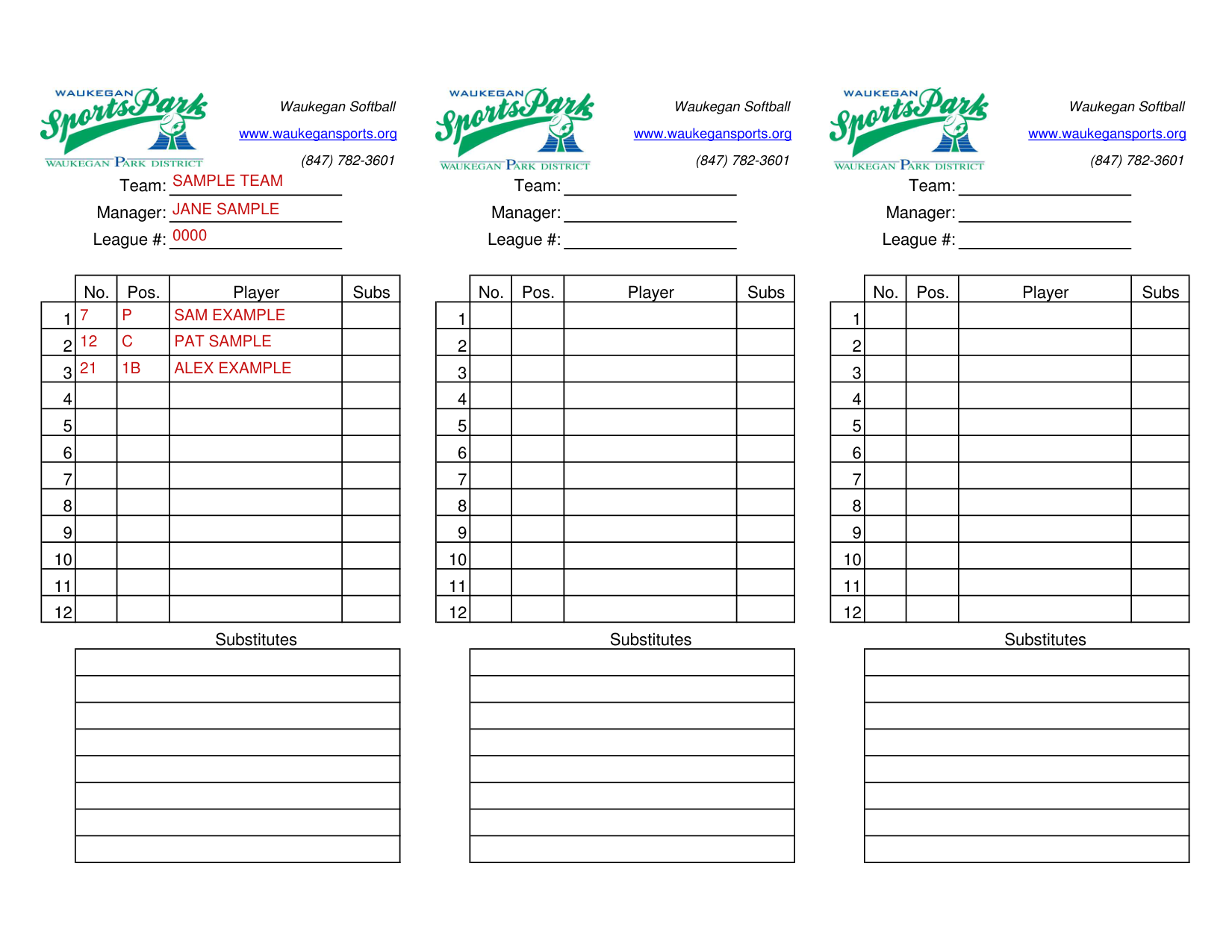
A standard lineup sheet covers the following sections:
- Team and manager details – team name, manager name, and league number
- Player roster – numbered slots for starters and substitutes (typically 10 to 12 positions)
- Batting order – the sequence in which each player comes to the plate
- Defensive positions – field assignments such as pitcher, catcher, first base, and outfield slots
- Substitution tracking – space to record player changes as the game progresses
How Coaches Use Lineup Sheets
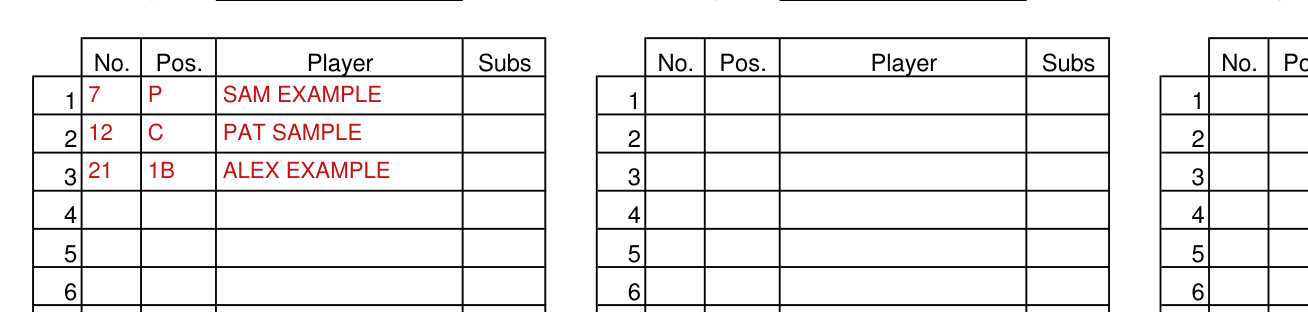
Before a game, the manager fills in each player's name, uniform number, and assigned position. The batting order is set based on player speed, on-base percentage, and power. Substitutions are noted as the game moves into later innings, keeping the official record accurate for both teams and the umpiring crew.
For leagues that rotate players through multiple positions across a season, keeping a copy of each game's sheet makes it easier to review playing time and plan rotations for the next game. Coaches often keep a folder of completed sheets to reference when deciding who has played which position over the previous five or ten games.
Official League Submission Requirements
Most youth and amateur leagues require the lineup sheet to be delivered to the plate umpire at least five to ten minutes before the scheduled first pitch. Both managers typically exchange copies as well, giving each team advance notice of the opposing batting order. In tournament play, the submitted lineup is usually locked once the umpire accepts it, meaning late changes require an official substitution call.
Confirm your league's specific rules before the season starts, since requirements for the number of copies, required signatures, and the format of position codes vary between governing bodies. Recreational leagues often accept a handwritten form, while travel and competitive leagues usually require a printed template.
Baseball vs. Softball Lineup Sheets
The structure of a baseball lineup sheet and a softball lineup sheet is nearly identical. Both list starters by batting position, include a substitute section, and require the manager's signature before submission. The main differences are the number of inning columns (nine for baseball, seven for most softball leagues) and whether the form includes a designated hitter slot.
Tips for Managing Lineup Records
Bring two or three printed copies to every game. Give one to the plate umpire, one to the opposing manager, and keep the third in your dugout as a working reference. Mark substitutions in pencil so corrections are easy to make without crossing out printed names. Date every sheet and file it after the game. Over a full season, the records help you spot patterns such as which players perform best in certain batting slots or which defensive pairings work well together.
Related Printable Forms
If you need a visual layout of player positions on the field, the baseball field lineup template places each player's name directly on a field diagram. For tracking game-by-game batting sequences across a full season, a batting order sheet provides a dedicated record for each game. Coaches managing player registration can also use the AABC roster form to keep player eligibility documents on file.
| Question | Answer |
|---|
| Form Name | Baseball Lineup Sheets |
| Form Length | 1 pages |
| Fillable? | No |
| Fillable fields | 0 |
| Avg. time to fill out | 15 sec |
| Other names | softball lineup template, baseball lineup template excel, softball line up, softball line up sheet printable |