
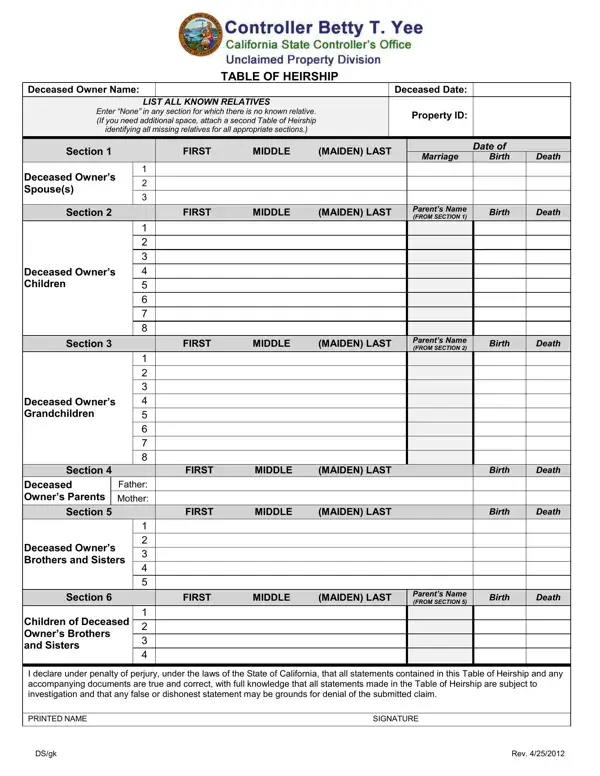
A California heirship form is a legal declaration that identifies all known relatives of a deceased person. Courts, banks, and title companies use this document during the inheritance process to verify who the rightful heirs are before distributing real property, bank accounts, or personal assets. If the deceased owned property in California without a valid will or trust, this filing becomes a critical first step in the estate settlement process.
You typically need this form when a California resident dies intestate and leaves behind real estate, financial accounts, or personal property above the small estate threshold. It is also required when a surviving family member needs to establish a legal right to inherit assets held only in the deceased person's name. Title insurance companies and banks frequently request it before transferring property titles or releasing funds to heirs.
A surviving heir, estate administrator, or authorized representative completes the heirship declaration. The person signing must have personal knowledge of the deceased person's family history and be willing to declare under penalty of perjury that all information is accurate. A notary public typically witnesses the signature. When the family structure is complex or heirs are disputed, an estate attorney can help ensure the declaration is complete and accepted.
The heirship declaration categorizes relatives into standard sections: spouse or domestic partner, children (biological and adopted), grandchildren, parents, siblings, and nieces or nephews. For each relative you enter full legal names, dates and places of birth, marriage dates, and dates of death if applicable. When the family includes additional relatives not covered in the standard sections, you may attach supplemental pages to ensure every potential heir is identified.
California follows intestate succession rules under the Probate Code when distributing assets without a will. Community property passes directly to a surviving spouse or domestic partner. Separate property is distributed first to children, then to parents, then to siblings based on proximity of relation to the deceased. Understanding how California law allocates assets helps heirs confirm whether the heirship declaration alone is sufficient or whether a full probate court proceeding is required.
| Question | Answer |
|---|---|
| Form Name | California Heirship Form |
| Form Length | 2 pages |
| Fillable? | No |
| Fillable fields | 0 |
| Avg. time to fill out | 30 sec |
| Other names | table of heirship california, california table heirship, heirship california table, state of california table of heirship |
California Heirship Form isn’t the one you’re looking for?