
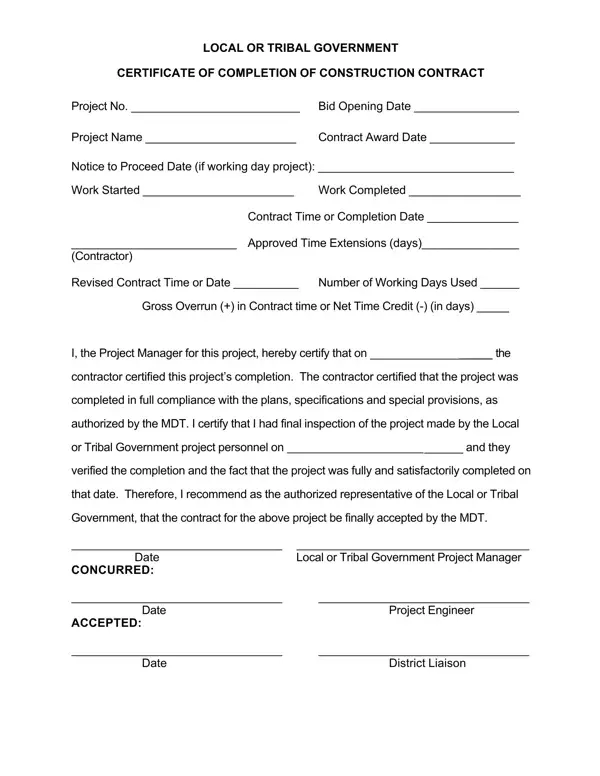
A certificate of completion in construction is a formal document that marks the official end of a building project. The issuing authority, typically a local or tribal government body, confirms that the contractor has fulfilled every obligation under the original contract.
The form captures critical project milestones that document the full timeline of a construction contract. It records the project number, project name, bid opening date, contract award date, notice to proceed, and the actual start and completion dates. If the project received any approved time extensions due to weather delays, material shortages, or change orders, those are documented as well. A designated project manager reviews the completed work, conducts or supervises a final inspection, and signs the form to confirm that the construction meets all plans and special provisions outlined in the original contract.
Contractors and government agencies file this form at the end of a construction project to trigger final payment and formally close the contract. Without a signed certificate, the project remains technically open. This can delay occupancy permits, extend surety bond obligations, and trigger contract penalty clauses. Subcontractors working under a subcontractor agreement often request a copy for their own records and to release their performance bond. General contractors on large public works projects may also need the certificate before the retainage holdback is released.
After the contractor declares the work substantially complete, a government inspector or authorized representative conducts a final walkthrough of the project site. The inspector checks that every item on the punch list has been resolved and that the finished structure matches the approved construction drawings and specifications. Once the inspector is satisfied, the project manager signs the certificate and recommends final acceptance to the overseeing department, such as a state transportation authority or local public works office. Both the government agency and the contractor retain signed copies for audit, compliance, and warranty tracking purposes.
A certificate of completion should not be confused with a certificate of completion for VA projects, which follows federal guidelines rather than state or local ones. It also differs from a certificate of occupancy, which permits people to occupy the building, and from a certificate of substantial completion, which acknowledges the work is mostly done but may still have minor items remaining. Contractors working on roofing projects may use a separate roofing certificate to document that specific trade work has been completed to manufacturer specifications. Each document serves a distinct purpose in the construction closeout process, and filing the wrong form can cause delays in payment or regulatory approval.
| Question | Answer |
|---|---|
| Form Name | Certificate of Completion Construction Form |
| Form Length | 1 page |
| Fillable? | No |
| Fillable fields | 0 |
| Avg. time to fill out | 15 sec |
| Other names | construction completion certificate, project completion form, contractor certificate of completion, certificate of substantial completion, construction project closeout form |
Certificate Of Completion Construction Form isn’t the one you’re looking for?