
What Is the Ch 109 Form?

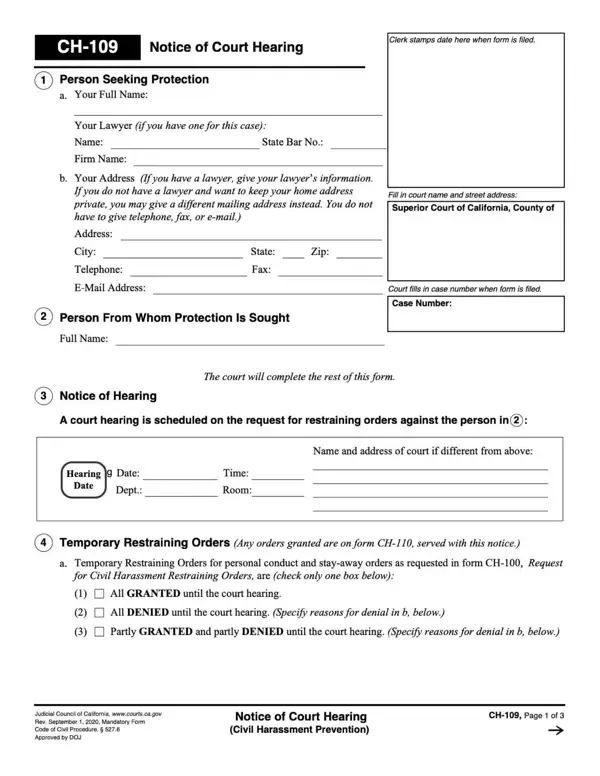
The Ch 109, officially the Notice of Court Hearing on Request for Civil Harassment Restraining Orders, is a legal form issued by California courts when a proceeding has been set for a civil harassment restraining order request. Knowing how to fill out and submit this form is an essential part of the civil harassment process.

What is California civil harassment? California Code of Civil Procedure sections 527.6 and 527.9 allow individuals to seek court protection from stalking, threatening conduct, or violence from someone who is not a domestic partner or close family member. The court system provides legal forms to help individuals seeking protection fill out and submit the necessary documents. Civil harassment restraining order forms are separate from domestic violence forms and cover neighbors, coworkers, acquaintances, and strangers.

How this form fits into the civil harassment process. After the petitioner submits a Request for Civil Harassment Restraining Orders form, the court reviews the legal document. When a judge sets a date, the court clerk issues this form to inform the respondent of the date, time, and location of the proceeding. The respondent must receive copies of all required civil harassment forms, including this document, prior to the proceeding. Service of process is a necessary step before the proceeding can move forward, and legal services are available through authorized California courts and court self-help centers to assist individuals who need help completing these legal forms.

What this document contains. This legal form lists the court name and address, the court case number, the petitioner and respondent names, the scheduled date and time of the proceeding, and whether a court-issued temporary restraining order is in effect. It also explains what the respondent must do before appearing in court, including how to file a written response and the deadline for submitting required documents.

Related civil harassment forms. This form is one of several legal documents used in civil harassment restraining order proceedings in California. Individuals seeking protection typically need to fill out multiple forms throughout the process:

What happens at the proceeding. At the court proceeding set in this form, both the petitioner and respondent may present evidence, witness testimony, and personal statements. A judge reviews whether the conduct meets the legal definition of civil harassment under California law and whether a permanent restraining order is necessary. If sufficient evidence is found, a permanent court order may be issued for up to five years. If the respondent does not appear after receiving this document, a default order may be issued. Legal services and court self-help resources are available through California superior courts for individuals needing guidance on civil harassment forms and court procedures.

How to file a written response. After receiving the Ch 109, the respondent has the legal right to file a written response to the civil harassment petition before the scheduled hearing date. Filing a response allows the respondent to address the petitioner’s claims, submit personal declarations, and contest the request for a restraining order. The deadline for filing a response is specified in this notice. Court self-help centers at California superior courts can assist respondents who need guidance preparing a written response to a civil harassment petition.

What to bring to the hearing. Both petitioners and respondents should arrive at the hearing fully prepared. Bring all copies of civil harassment forms filed with the court, any written declarations or supporting evidence such as text messages, photographs, or police reports, and contact information for any witnesses you plan to call. Confirm the date, time, and department shown in the Ch 109 before leaving, since California counties have multiple courthouse locations. Missing or arriving late to a scheduled civil harassment hearing can result in a default order or the dismissal of your case.

QuestionAnswer
Form NameNotice of Court Hearing (Civil Harassment)
Form NumberCH-109
JurisdictionCalifornia
Form Length3 pages
Fillable?No
Fillable fields0
PurposeNotifies respondent of hearing date in civil harassment case
Issued byCalifornia court clerk
Avg. time to fill out45 sec
Other namesch 109 form, notice of court hearing, california ch 109, ch109, ca court hearing

How to Edit Ch 109 Form Online for Free

FormsPal’s online PDF tool lets you fill out or edit this civil harassment notice directly in your browser. No software downloads or prior legal experience are necessary. Whether you are filling out these legal forms for the first time or a legal assistant completing court documents for a client, follow these steps to fill in the form correctly.

Step 1: Firstly, click the “Get Form” button at the top of this page to open the Ch 109 civil harassment form in the FormsPal online editor.

Step 2: The editor lets you fill in form fields with text, correct existing information in the document, and add a personal signature. All form changes are saved automatically.

Pay close attention while filling out this document. Ensure that all required form fields are completed accurately before submitting.

1. In the first section, fill in the court and case information. Enter the name of the California superior court, the court address and case number, and the full legal names of the petitioner and respondent. Accurate personal information is necessary for valid service of process.

Filling in part 1 of ch 109 california form

2. Next, fill in the schedule fields: the date, time, department, and the court’s address. These fields are required on civil restraining order forms and notify the respondent of the scheduled proceeding.

Ways to prepare ch 109 california form portion 2

3. Fill in the temporary restraining order section. Indicate whether the court has issued a temporary restraining order prior to the proceeding and list any specific protection orders in effect until the proceeding date.

Filling in section 3 in ch 109 california form

4. Complete the respondent instructions section of the document. This section explains the respondent’s rights, the deadline to file a written response, how to contact the court, and what documents to bring to the proceeding.

Stage no. 4 for submitting ch 109 california form

Regarding the scheduled date and respondent instructions fields, make sure you review these carefully. Both of these are the most important sections of this legal form.

5. Since you are near the end of the form, fill in any remaining required fields. In particular, the signature of the court clerk must be completed to finalize the document.

this field, next field, and other fields in ch 109 california form

Step 3: Prior to finishing the form, double-check that all form fields are filled in correctly. As soon as you are satisfied with it, press “Done.” Download the ch 109 fillable form as soon as you register online for a 7-day free trial. Easily use the document in your FormsPal cabinet, with any modifications and changes preserved. Here at FormsPal, we endeavor to make sure that all your information is stored securely.

Frequently Asked Questions

What is the Ch 109 used for?

The Ch 109 is the official Notice of Court Hearing used in California civil harassment restraining order cases. Courts issue this form after a petitioner files a request for a civil harassment restraining order, informing the respondent of the scheduled date, time, and location.

Who must receive the Ch 109 Notice of Court Hearing?

The respondent named in the civil harassment petition must receive this document along with all other civil harassment forms before the proceeding. This service of process is required by California law to give the respondent notice of the proceeding and an opportunity to appear and respond.

What is the difference between the Ch 100 and Ch 109 forms?

The CH-100 is the petition form the victim (petitioner) fills out to request a civil harassment restraining order. The Ch 109 is the court’s response document, setting the scheduled date and notifying both parties. Individuals seeking protection typically need to fill out the CH-100 first, and then receive the Ch 109 from the court. The court then schedules the proceeding based on the petition.

What happens if the respondent does not appear?

If the respondent fails to attend after receiving this notice, a judge may issue the civil harassment restraining order by default. The petitioner presents evidence of the threatening behavior or misconduct, and the court rules on the restraining order request based on the documents and testimony available.

Can the respondent file a written response before the proceeding?

Yes. The respondent can file a written response to the civil harassment petition prior to the proceeding. Filing a response allows the respondent to submit personal statements and contest the restraining order request. This document includes instructions on how and when to file a response with the court, as well as information on any legal services available for respondents seeking assistance.

What is the CH-115 form and when do I need it?

The CH-115 (Proof of Personal Service of Civil Harassment Forms) certifies that the respondent was officially served with civil harassment forms, including the Ch 109. California courts require a completed CH-115 on file before a civil harassment hearing can proceed. The person who served the documents completes and signs the CH-115 and files it with the court clerk.

What are common mistakes when filling out the Ch 109?

Common errors include leaving the case number blank, entering an incorrect court address, using informal names instead of full legal names, and missing the deadline to file a written response. Always confirm the hearing date, time, and department listed in this notice. California counties may have multiple courthouses, so verifying the correct location before the scheduled date avoids missing your civil harassment proceeding.

Can the Ch 109 hearing date be rescheduled?

Yes. Either party may request a continuance (postponement) of the civil harassment hearing by filing a motion with the court before the scheduled date. If a temporary restraining order is in effect at the time of the request, it typically remains active until the rescheduled hearing. Contact the court clerk or a California superior court self-help center for guidance on requesting a continuance in your case.

Related California Civil Harassment Forms

The ch 109 form is part of a series of legal documents used in California’s civil harassment restraining order process. Understanding which forms are needed and when helps ensure the case moves forward without delays:

  • CH-100 – Request for Civil Harassment Restraining Orders, the initial petition filed by the person seeking protection
  • CH-110 – Temporary Restraining Order that a judge may issue before the scheduled hearing date
  • CH-115 – Proof of Personal Service, confirming that the respondent was properly served with all required court documents
  • Civil Harassment Packet – The complete set of California civil harassment forms for the full restraining order process