
Cleaning Disinfecting Care Table Form PDF Details

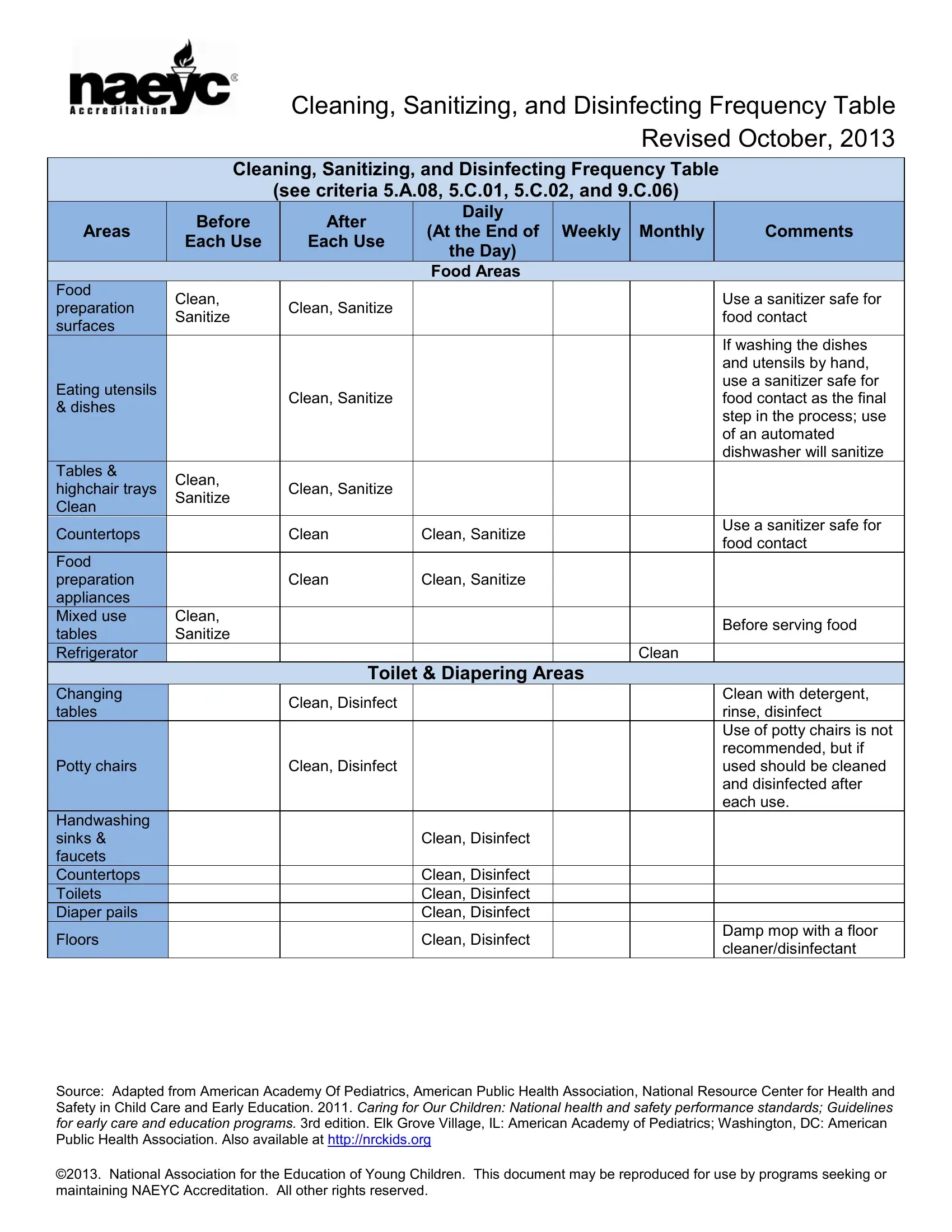
Child care programs require a structured approach to keep their facilities clean, sanitized, and disinfected to protect children from illness. The Cleaning, Sanitizing, and Disinfecting Frequency Table, revised in October 2013, provides the specific guidance child care providers need to maintain safe environments that meet national health and safety standards.

Understanding the Three Connected Processes

Understanding the difference between cleaning, sanitizing, and disinfecting is key to applying the table correctly. Cleaning removes visible dirt and organic matter from a surface using soap and water. This step must always come first, because disinfectant products cannot penetrate grime or debris effectively. Sanitizing reduces germs on a clean surface to a safe level. Food contact surfaces such as high chair trays and feeding tables require sanitizing before each use to prevent the spread of foodborne illness. Disinfecting kills nearly all bacteria and viruses on a clean surface. Diaper changing pads, toilets, and mouthed toys must be disinfected daily or after each use to prevent disease transmission.

How to Prepare a Safe Bleach Solution

A diluted bleach solution is one of the most common and cost-effective disinfectants used in child care settings. To prepare a safe bleach solution, mix one tablespoon of unscented liquid chlorine bleach per quart of water. Apply the solution and keep the surface wet for at least two minutes of contact time before allowing it to air dry. Prepare a fresh bleach solution each day because stored diluted bleach loses its effectiveness. Store all bleach and cleaning products safely out of reach of children at all times.

Selecting the Right Disinfectant Product

When selecting a commercial disinfectant product, check the EPA registration number on the product label to confirm it is approved against the specific pathogens you want to prevent. Always follow label instructions for dilution rates, contact time, and ventilation requirements. Wearing gloves and appropriate protective equipment while working with disinfectant products keeps cleaning staff safe. The frequency table covers everything from food preparation surfaces to door handles and computer keyboards, providing a comprehensive plan for the entire child care facility.

Compliance and NAEYC Accreditation

This resource was adapted by the American Academy of Pediatrics and the American Public Health Association. It aligns with the Caring for Our Children national health and safety standards. Child care programs seeking NAEYC Accreditation will find that following this frequency table helps demonstrate compliance with key accreditation criteria related to hygiene and disease prevention practices. Programs that consistently clean, sanitize, and disinfect according to this schedule create safer environments that support healthy outcomes for children in their care.

QuestionAnswer
Form NameCleaning Disinfecting Care Table Form
Form Length3 pages
Fillable?No
Fillable fields0
Avg. time to fill out45 sec
Other nameseach disinfecting form, sanitize each disinfect, disinfect care, health sanitizing care

How to Edit Cleaning Disinfecting Care Table Form Online for Free

When you would like to fill out sanitize each disinfect, it's not necessary to install any software - just try our PDF editor. The tool is continually maintained by our team, receiving useful functions and growing to be greater. Getting underway is effortless! All you need to do is take the next basic steps below:

Step 1: First of all, access the pdf tool by pressing the "Get Form Button" at the top of this webpage.

Step 2: When you launch the online editor, you will find the document all set to be filled out. Aside from filling out various blanks, you may also perform some other actions with the form, including writing custom textual content, editing the initial text, adding graphics, placing your signature to the form, and much more.

With regards to the blanks of this specific PDF, here's what you should do:

1. To start with, once completing the sanitize each disinfect, begin with the form section that features the next blank fields:

Tips to complete sanitize sanitizing step 1

2. Once your current task is complete, take the next step - fill out all of these fields - Source Adapted from American, and National Association for the with their corresponding information. Make sure to double check that everything has been entered correctly before continuing!

Source Adapted from American, Source Adapted from American, and Source Adapted from American in sanitize sanitizing

Be really careful while filling in Source Adapted from American and Source Adapted from American, as this is where many people make errors.

3. Completing Look for the EPA registration, Refer to Caring for Our Children, Source Adapted from American, and National Association for the is essential for the next step, make sure to fill them out in their entirety. Don't miss any details!

Stage number 3 in filling in sanitize sanitizing

Step 3: Ensure your information is correct and press "Done" to finish the process. Get hold of the sanitize each disinfect when you subscribe to a 7-day free trial. Quickly view the pdf file in your personal account, along with any modifications and adjustments being all saved! Here at FormsPal.com, we strive to be sure that all your information is kept private.

Child care professionals who work with this cleaning frequency table may also need other related forms. The Bathroom Cleaning Log Sheet is useful for tracking daily surface cleaning tasks, while the Cleaning Inspection Form helps program directors conduct facility-wide hygiene audits. Programs that manage child care documentation can also find the Child Care Incident Report and the Childcare Receipt at FormsPal.

Frequently Asked Questions About the Cleaning Disinfecting Care Table

What is the key difference between cleaning, sanitizing, and disinfecting?

Cleaning removes dirt and debris from a surface. Sanitizing reduces germs to safe levels on food contact surfaces. Disinfecting kills nearly all pathogens on non-food contact surfaces. A surface must be cleaned before it can be effectively sanitized or disinfected.

How do I prevent the spread of germs when cleaning between areas?

Use separate cloths or paper towels for different zones, especially between food preparation surfaces and diaper changing areas. Change gloves between tasks and wash your hands thoroughly to prevent spreading bacteria from one wet surface to another.

Which surfaces require daily disinfecting in child care settings?

The frequency table specifies that toilets, diaper changing pads, and mouthed toys must be disinfected daily. Frequently touched surfaces such as door handles should also be disinfected each day to reduce the risk of illness in child care facilities.