
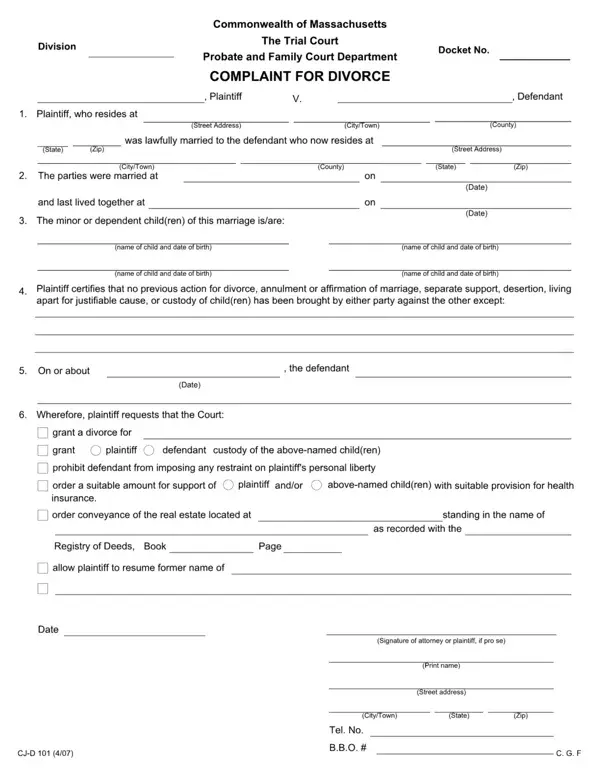
Filing for divorce marks a significant turning point in an individual's life, involving a complex legal process that begins with the Complaint for Divorce form. This form is the initial document filed by one spouse seeking to end the marriage, setting the legal process in motion. It outlines the basic information about both parties, the marriage, grounds for divorce, and any claims for relief such as child support, custody, alimony, or division of property.
A complete Complaint for Divorce requires identifying information for both spouses, including full legal names and current addresses. You will also need the date and location of the marriage, the full names and dates of birth of any minor children, the date of separation, and the legal grounds on which you are filing. The petitioner, meaning the spouse who files the complaint, must specify whether the divorce is contested or uncontested. An uncontested divorce moves faster through the court system because both parties agree on the terms, while a contested divorce may require hearings, mediation, or a full trial.
When choosing grounds for divorce, petitioners face two broad categories. No-fault divorce is available in all 50 states and allows a couple to end their marriage without assigning blame to either party. Common no-fault grounds include irreconcilable differences, irretrievable breakdown of the marriage, and incompatibility. Fault-based divorce is still recognized in many states and requires proof of wrongdoing by one spouse. Recognized fault grounds include adultery, abandonment for a period of at least one year, physical or mental cruelty, substance abuse, and conviction of a felony. Choosing the appropriate grounds depends on your state's laws and your specific situation. Related forms such as the Original Petition for Divorce serve a similar purpose in states that use petition-based filings.
The relief section of the complaint is where you ask the court for specific outcomes from the divorce. Common requests include equitable division of marital property and debts, spousal support or alimony, legal and physical custody of any minor children, a parenting time schedule, and child support calculated under state guidelines. Courts in community property states including California, Texas, Arizona, Nevada, and Washington divide marital assets equally by default. The remaining states follow equitable distribution, meaning assets are divided fairly but not necessarily in equal shares. If you need a broader resolution document, a Marital Divorce Settlement Agreement can help both parties formalize agreed terms before presenting them to the court.
Once the complaint is filed with the appropriate court and the filing fee is paid, the petitioner must serve a copy of the complaint on the respondent. Most states require formal service of process carried out by a sheriff, a licensed process server, or certified mail with return receipt. The respondent typically has 20 to 30 days after service to file a written answer. If no response is filed, the petitioner may request a default judgment. From initial filing to final decree, an uncontested divorce can be finalized in as little as 30 to 90 days in many states. A contested divorce involving property disputes or child custody disagreements can take one to three years or more depending on the complexity of the case and the court's schedule. For temporary arrangements during the process, a Temporary Custody Form may help establish interim parenting rights while the case is pending.
| Question | Answer |
|---|---|
| Form Name | Complaint For Divorce Form |
| Form Length | 5 pages |
| Fillable? | Yes |
| Fillable fields | 69 |
| Avg. time to fill out | 15 min 7 sec |
| Other names | divorce form in hindi, hindu divorce application form pdf india download, hindu divorce application form pdf, hindu divorce application form pdf in hindi |
Complaint For Divorce Form isn’t the one you’re looking for?