
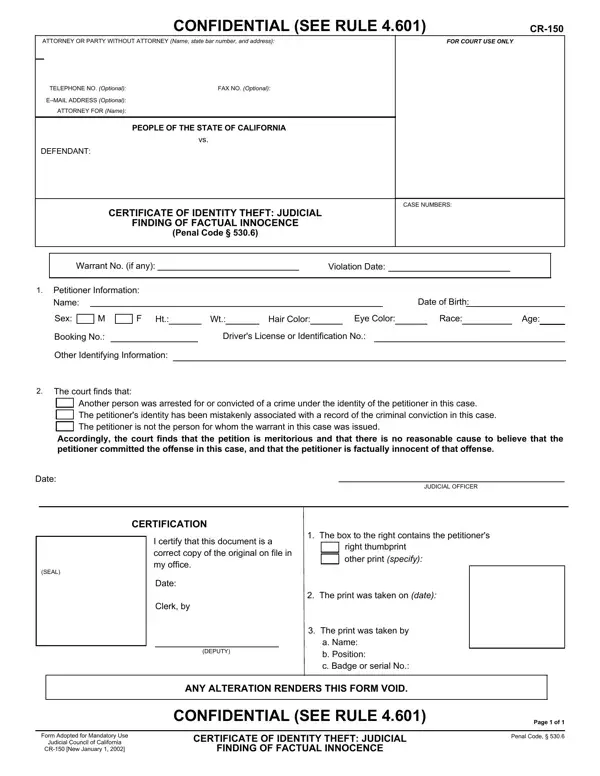
The CR-150 form, officially the Certificate of Identity Theft: Judicial Finding of Factual Innocence, is a California court document used to correct criminal records that resulted from identity theft. Under Penal Code § 530.6, the form gives victims a legal path to prove that another person was arrested or convicted using their identity. Once approved by a judicial officer, the finding clears the petitioner from any wrongful association with criminal activity in official records.
The CR-150 is for California residents whose personal identity was stolen and used by another individual during a criminal arrest or conviction. If your name appears in law enforcement or court records because of someone else's actions, you may petition for a judicial finding of factual innocence. This form is particularly valuable for people who face barriers to employment, housing, or professional licensing because of a false criminal record linked to their name.
Identity theft victims may also need to file an FTC Identity Theft Affidavit to formally report the theft to federal agencies. For other California criminal court documents, the CR-101 California form covers related petition procedures.
The form collects the following information from the petitioner and the court:
The form is governed by Rule 4.601 of the California Rules of Court, which requires the document to remain confidential after filing. This confidentiality clause protects the petitioner's sensitive personal information from public access. Once filed with the court clerk and certified, the CR-150 serves as official documentation that can be used to request corrections in law enforcement and state records.
For other California court filings, the California Judicial Council forms page provides access to a broad range of official court documents.
What does the CR-150 form certify?
It certifies a court's finding that the petitioner is factually innocent of a crime they were falsely linked to because of identity theft. The finding is made under Penal Code § 530.6 of California law.
Who can file the CR-150?
Any California resident who can demonstrate that another person was arrested or convicted using their name and identifying information may file this petition. An attorney is not required, but legal advice is recommended for complex cases.
Is the CR-150 form confidential?
Yes. Rule 4.601 of the California Rules of Court classifies this form as confidential. The court restricts access to the completed document in order to protect the victim's identifying data.
How long does it take to process a CR-150 petition?
Processing times vary by county and the workload of each superior court. Contact the clerk's office in the county where the crime was charged for current timelines and filing requirements.
Can I use FormsPal to complete the CR-150 form?
Yes. The FormsPal online PDF editor allows you to fill out, sign, and download the CR-150 form without installing any software. Use the button at the top of this page to get started.
| Question | Answer |
|---|---|
| Form Name | Cr 150 Form |
| Form Length | 1 pages |
| Fillable? | No |
| Fillable fields | 0 |
| Avg. time to fill out | 15 sec |
| Other names | ca cr certificate, california identity innocence, ca cr identity, ca 150 judicial form |